The British Lion’s Roar: A Chronicle of the MG6
In the annals of automotive history, few brands evoke the same blend of nostalgia and poignant evolution as MG. A name synonymous with plucky British sports cars, the MG story took a dramatic and controversial turn in the 21st century. Following bankruptcy and a buyout by China’s SAIC Motor, the brand needed a bold statement to signal its revival. That statement was the MG6. A car designed to blend British styling cues with modern practicality and Chinese manufacturing scale, the MG6’s story is a fascinating tale of reinvention, ambition, and adaptation across two distinct generations. This is the complete history of the MG6, from its ambitious debut to its current role as a champion of performance in the value segment.
The Genesis: A Phoenix from the Ashes
To understand the MG6, one must first understand the context of its birth. In 2005, the MG Rover Group collapsed, leaving the Longbridge plant and the iconic MG brand in limbo. The subsequent purchase by SAIC Motor, one of China’s automotive giants, was met with both hope and skepticism. Could a brand built on the heritage of lean, driver-focused roadsters be successfully integrated into a state-owned Chinese conglomerate?
The first answer came in 2007 with the MG TF, a re-launched mid-engine sports car. While it kept the flame alive, it was an old design. A truly new model was needed to showcase SAIC’s intent and to compete in the mainstream global market. The chosen format was the C-segment hatchback, a fiercely competitive arena dominated by European, Japanese, and Korean stalwarts. Thus, the project began as the “MG550,” a codename hinting at a target engine size and market position.
The goal was to create a car that felt European in its driving dynamics and styling but could be produced cost-effectively in China for global export. It was a high-wire act of brand management.
.
NO MORE dead batteries with this:

.
Generation One: The Birth of a “Sports Fastback” (2011-2018)
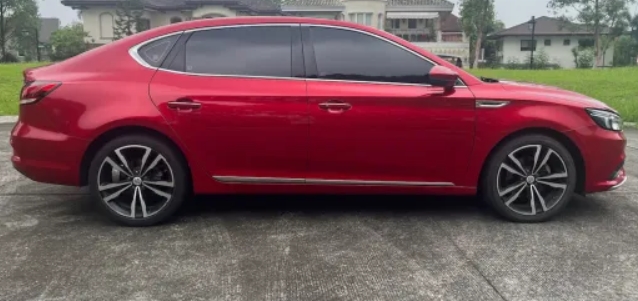
The world first laid eyes on the production-ready MG6 at the 2011 Auto Shanghai motor show. Unveiled to the public in the UK in the summer of the same year, the car arrived with a distinctive and muscular design. It was officially classified as a “Sports Fastback,” a five-door liftback that prioritized a sweeping, coupe-like silhouette over the pure practicality of a traditional estate or the ubiquitous hatchback.
Design and Underpinnings:
Styled under the watchful eye of MG’s Design Director, Anthony Hatter, the MG6 featured a prominent “honeycomb” grille, a nod to classic MGs, flanked by aggressive angular headlights. The rear was its most defining feature: a steeply raked windscreen and tailgate that gave it a dynamic, purposeful stance. Built on the ROVER 75-derived platform, it shared its wheelbase with the contemporary MG 6 but featured a completely new body and extensively re-engineered suspension to create a more engaging driving experience.
Underpinnings were a mix of old and new. The front suspension was a MacPherson strut setup, while the rear employed a sophisticated multi-link system. Brakes were a strong point, with ventilated discs all around, often praised for their feel and performance.
Engines and Transmissions:
At launch, the MG6 was offered with two diesel engines and one petrol engine, all sourced from parent company SAIC’s parts bin:
- 1.8L TCI-Tech Petrol: A turbocharged unit producing 160 PS (158 hp) and 215 Nm of torque. It was paired with a 5-speed manual or a 5-speed automated manual transmission (AMT), the latter known for its somewhat jerky and unrefined operation.
- 1.9L DTi-TECH Diesel: A twin-turbocharged diesel available in two states of tune:
- 120 PS: Paired with a manual transmission.
- 150 PS: Offered with both manual and AMT options.
Trim Levels (First Generation, UK Market Focus):
The initial MG6 range in the UK was straightforward, reflecting its entry-level market positioning:
- S: The base model, but surprisingly well-equipped. It included 16-inch alloy wheels, air conditioning, a radio/CD player with MP3 compatibility, and four electric windows.
- SE: The mid-tier trim, which added climate control, a trip computer, front fog lights, and cruise control.
- TSE (GT): The flagship trim. It boasted 18-inch alloy wheels, leather upholstery, heated front seats, a premium sound system, Bluetooth connectivity, and the more powerful 150 PS diesel engine as standard.
MG also launched the “MG6 GT” model, which was a special edition celebrating the brand’s launch at the 2011 Goodwood Festival of Speed. It featured a distinctive white and green livery, black 18-inch wheels, and bespoke interior trim.
Facelift (2015): The Infusion of “Magnette”
Despite positive reviews for its handling and build quality, the first-generation MG6 struggled to gain significant sales traction. Its AMT transmission was a major drawback, and its engines, while adequate, lacked the refinement of key rivals like the Ford Focus and Volkswagen Golf.
In 2015, MG introduced a significant facelift to reinvigorate the model. The most notable change was the introduction of the “Magnette” name for the sedan/saloon version of the car (in certain markets like Australia), while the fastback continued as the “MG6.” This facelift was a major step forward.
- Exterior Changes: The front end was completely redesigned with a new, more elegant grille, swept-back headlights with LED daytime running lights (a first for MG), and a redesigned front bumper. The rear received new LED tail lights and a subtly restyled bumper.
- Interior Changes: The interior saw the most dramatic improvements. The old, clunky dashboard was replaced with a new, modern design featuring a prominent touchscreen infotainment system with satellite navigation (standard on SE and TSE models). The materials were upgraded, the instrument cluster was redesigned, and overall perceived quality took a significant leap.
- Engine and Tech Upgrades: The diesel engines were discontinued in the UK, leaving the 1.8L turbo petrol as the sole powerplant. However, it was tweaked for slightly better efficiency. The dreaded AMT was finally dropped in favour of a conventional 6-speed manual transmission, which was far more suited to the car’s character. MG also added keyless entry and push-button start to the TSE model.
This facelifted model, often referred to as the “post-2015 MG6,” is the version most enthusiasts consider the most complete and desirable of the first generation.
Generation Two: A Clean Slate for a New Era (2021-Present)
After the first-generation MG6 was discontinued in 2018 (in the UK, it remained on sale in China for a little longer under the “Roewe 6” nameplate, as the MG brand was still in a transitional phase), the future of the MG6 nameplate was uncertain. However, MG’s own fortunes had dramatically improved. The launch of the all-electric MG EZS and the stylish MG HS had seen the brand’s sales boom in the UK and Europe, re-establishing it as a credible, value-for-money mainstream brand.
With the brand’s identity now firmly focused on delivering stylish, tech-laden cars at accessible price points, the time was right to re-enter the C-segment. The result was the all-new, second-generation MG6, which premiered in November 2020.
A New Philosophy: The MG6 PHEV
Crucially, this new MG6 was launched not as a conventional petrol or diesel car, but as a Plug-in Hybrid Electric Vehicle (PHEV). This was a bold and astute move. It allowed MG to leapfrog the competition by offering a car with a large electric-only range, low CO2 emissions (attracting tax benefits), and a combined power output that put it in “hot hatch” territory, all at a price point its rivals could not match.
Platform and Powertrain:
Based on the same platform as the popular MG HS, the new MG6 was a more conventional five-door liftback, doing away with the fastback styling of its predecessor. The PHEV system was comprehensively engineered:
- Engine: A 1.5L turbocharged petrol engine (119 kW / 160 PS).
- Electric Motor: A 100 kW (136 PS) electric motor.
- Battery: A 11.1 kWh lithium-ion battery pack.
- Combined Output: A formidable 291 PS (214 kW) and 480 Nm of torque.
- Performance: 0-62 mph in a blistering 6.9 seconds.
- EV Range: An official electric-only range of 32 miles (51 km) under WLTP testing.
This powertrain was paired with a 10-speed automatic transmission (mixing gears for the engine and a single-speed drive for the electric motor) and was exclusively front-wheel drive. No pure petrol or diesel versions were offered for Western markets, underscoring MG’s pivot towards electrification.
Trim Levels (Second Generation, UK Market Focus):
The trim structure of the new MG6 was a masterclass in MG’s modern value proposition:
- Plug-in Hybrid T5: The entry point, but still exceptionally well-equipped. Key features included 17-inch alloy wheels, a 10.1-inch touchscreen infotainment system with Apple CarPlay and Android Auto, a 7-inch digital instrument cluster, keyless entry, push-button start, automatic LED headlights, and dual-zone climate control. A suite of safety features, including Active Emergency Braking, Lane Keep Assist, and Adaptive Cruise Control, was also standard.
- Plug-in Hybrid T5 Style: Added a host of exterior styling upgrades, including a two-tone black roof, body-coloured door handles, and bespoke 17-inch diamond-cut alloy wheels. Inside, it featured premium faux-leather upholstery with contrasting piping.
- Plug-in Hybrid T5 Luxury: The flagship model. This added the highest level of comfort and technology, including electrically adjustable front seats (with heating), a panoramic sunroof, a 6-speaker premium audio system, an upgraded camera system, and parking sensors all around.
The MG6 in the wider world
While the second-generation MG6 found a strong following in the UK, Australia, and parts of Europe, its global footprint was more varied. In China, the MG6 has a dedicated and passionate following, with MG offering numerous special editions and the track-focused “XPower” model, which pushes the PHEV system to over 400 horsepower. This highlights the car’s potential as a performance platform.
However, the MG6 as we know it is reaching the end of its lifecycle. In late 2023, MG announced that it would discontinue the PHEV version of the MG6 in the UK and other key European markets. This decision reflects the shifting tides of the automotive industry. With tightening emissions regulations and the rapid growth of the pure EV market, a PHEV of this size and cost is becoming less commercially viable. The brand’s focus has now shifted entirely to its new line of EVs, such as the MG4, MG5, and MG ZS EV.
Future Outlook and Legacy
The MG6 is not currently slated for a direct successor. Its role as a bridge between the internal combustion past and the fully electric future has been largely served. Its story is a microcosm of the MG brand’s own incredible journey.
The legacy of the MG6 is twofold. The first generation proved that SAIC was serious about MG. It was a flawed but fundamentally good car that was fun to drive and built with integrity. It laid the groundwork, rebuilding the brand’s reputation from the ground up. The second generation was a masterstroke of market timing and engineering value. It delivered “hot hatch” performance with zero-emission commuting capability for the price of a mid-range family car, genuinely shocking the establishment and cementing MG’s new identity as a champion of the consumer.
In the end, the MG6 was never the best-selling car in its class, but it was arguably one of the most important. It roared a defiant “we’re back” in its first incarnation and then quietly and efficiently demonstrated how to make performance and efficiency accessible to all in its second. It was the car that took MG from a fading memory into the modern era, proving that the British lion, now powered by Chinese ingenuity, could not only walk again but run with the fastest in the pack.