The Crowned Cruiser: History of the Austin Princess
In the annals of British automotive history, few nameplates evoke the distinct atmosphere of mid-century Britain quite like the Austin Princess. For decades, the Princess was a symbol of understated luxury, a vehicle designed not for the thrill-seeker, but for the discerning executive, the government official, and the family that valued comfort above all else. It was a car that bridged the gap between the utilitarian Austin Cambridge and the stately Wolseley 6/99, offering a unique blend of space, style, and mechanical durability.
Though the nameplate has long since vanished from the roads—save for the occasional preserved classic—its evolution tells a story of shifting automotive trends, corporate mergers, and the relentless pursuit of the “business class” sedan. This article explores the complete history of the Austin Princess, tracing its lineage from its 1947 debut to its final iterations in the late 1950s, examining the models, trim levels, and the legacy it left behind.
The Genesis: Post-War Aspirations (1947–1952)
The Austin Princess was born out of the austerity of post-war Britain. In 1947, Austin introduced the A125 Sheerline, a large, imposing car designed to compete with the likes of Humber and Rover. However, Austin recognized a gap in the market for a vehicle that offered more space than a standard saloon but was slightly less ostentatious than a full-blown luxury car.
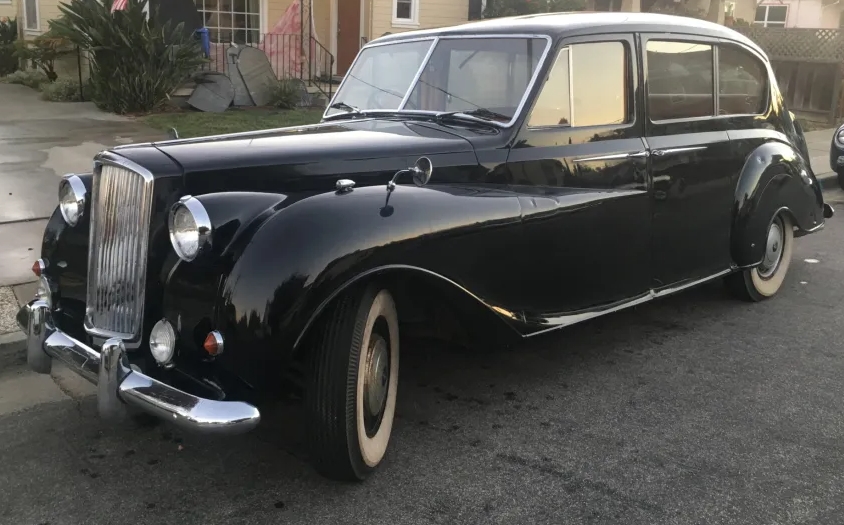
The solution was the Austin Princess, launched in October 1947. It shared its chassis and mechanical underpinnings with the Sheerline but featured a distinct body style. The defining characteristic of the first-generation Princess was its “pontoon” styling—smooth, rounded fenders that blended seamlessly into the body, a departure from the separate wings of pre-war designs.
Body Styles and Availability
- Standard Saloon (1947–1952): A four-door sedan with a spacious interior and a bench seat front.
- Landcrab (1949–1952): A unique, two-door, four-light estate car. It was a niche vehicle, designed for the export market (particularly Australia and South Africa) where rugged utility was prized. It featured a fold-flat rear seat and a timber-framed body.
Trim and Specification The early Princess was not sold in distinct “trim levels” as we know them today. Instead, it was a single, well-equipped specification. The interior was appointed with leather cloth upholstery, walnut veneer dashboard trim, and comprehensive heating and ventilation systems. It was marketed as a car for the “captain of industry.”
Mechanicals
- Engine: 2.5-liter (2510cc) straight-six pushrod engine (B-Series derived).
- Output: Approximately 70 brake horsepower (bhp).
- Transmission: 4-speed manual with synchromesh on the top three gears. Overdrive was available as an option.
- Suspension: Independent front suspension with coil springs—a sophisticated feature for the time—combined with a rigid rear axle.
The Transition: The A99 and A99 Westminster (1952–1956)
By 1952, the automotive landscape was changing. The Sheerline was discontinued, and the Princess underwent a significant facelift and mechanical upgrade, becoming the Austin A99. This model is often considered the quintessential Princess, embodying the era’s design ethos.
The A99 retained the 2.5-liter engine but significantly uprated its output to 90 bhp, thanks to a higher compression ratio and improved carburetion. This transformed the car from a sedate cruiser to a genuinely brisk performer for its size.
Styling Changes The A99 featured a new, more modern front grille, revised headlights, and a slightly lower roofline. The rear window was enlarged, improving visibility. The interior received a refresh with improved instrumentation and more ergonomic controls.
The “Westminster” Badge In 1954, the model was rebranded as the Austin A99 Westminster. The addition of the “Westminster” name was a marketing strategy to align the Princess more closely with the prestigious Wolseley brand (which also used the Westminster name on its 6/99 model). While the Austin Princess and Wolseley Westminster were mechanically identical, the Austin featured a simpler, vertical-bar grille, whereas the Wolseley sported the iconic vertical “waterfall” grille and dual-tone paintwork.
Trim Levels (A99/A99 Westminster) While still relatively standardized, the A99 Westminster offered two distinct levels of opulence:
- Standard: Featured durable wool cloth upholstery, basic chrome trim, and a sliding sunroof.
- De Luxe: Upgraded with leather upholstery, deep-pile carpets, a heater and demister as standard, and additional exterior chrome trim (including window surrounds and wing mirrors).
The Final Generation: The A105 and Vanden Plas (1956–1959)
As the 1950s progressed, consumer tastes shifted toward higher performance and more flamboyant styling. To keep the Princess competitive, Austin introduced the A105 in 1956. This was the most powerful and luxurious iteration of the Princess line.
Mechanical Evolution The A105 utilized a bored-out version of the 2.5-liter engine, now displacing 2.6 liters (2639cc). This “Blue Streak” engine produced 100 bhp, allowing the large sedan to reach speeds of over 90 mph. The transmission was upgraded to a fully synchromesh 4-speed manual, with overdrive standard on most export models.
Styling and Features The A105 was visually distinct. It featured a bold, horizontal bar grille, wrap-around rear windows, and larger tailfins. The interior was a showcase of British craftsmanship, featuring comprehensive instrumentation, walnut dashboards, and improved sound deadening.
The Vanden Plas Connection In a move to compete directly with the Rover P5 and Humber Super Snipe, Austin introduced the Austin A105 Vanden Plas in 1956. This was the top-tier model.
- Vanden Plas Trim: This was not merely a badge change. The Vanden Plas featured coachbuilt bodywork by Vanden Plas (who were renowned for bespoke coachbuilding). It included a vinyl roof, leather upholstery, Wilton carpets, a heated rear window, and a comprehensive radio.
- The “Countryman”: While not officially badged as a Princess, the A105 estate car (launched in 1956) carried the Princess lineage forward. It featured a steel roof and timber framing, offering a luxury alternative to the utilitarian Ford Zephyr estate.
The End of the Line (1959)
Production of the A105 continued until 1959. By this time, the BMC (British Motor Corporation) was reorganizing its model ranges. The large Austin saloons were being phased out in favor of the new Farina designs (specifically the Austin A55 Cambridge Mk II), which were smaller and more fuel-efficient. The Princess nameplate was retired, marking the end of Austin’s dedicated “executive” saloon line for several years.
Technical Specifications Summary (Evolution Overview)
| Feature | Austin Princess (1947) | Austin A99 Westminster (1954) | Austin A105 Vanden Plas (1956) |
|---|---|---|---|
| Engine | 2.5L Straight-6 | 2.5L Straight-6 | 2.6L Straight-6 |
| Power | 70 bhp | 90 bhp | 100 bhp |
| Top Speed | ~80 mph | ~85 mph | ~90-95 mph |
| 0-60 mph | ~24 seconds | ~18 seconds | ~15 seconds |
| Transmission | 4-speed Manual (Optional OD) | 4-speed Manual (Optional OD) | 4-speed Manual (Standard OD) |
| Suspension | IRS (Front), Rigid (Rear) | IRS (Front), Rigid (Rear) | IRS (Front), Rigid (Rear) |
| Brakes | Drum (11 inches) | Drum (11 inches) | Drum (11 inches) |
| Body Style | Saloon, Estate | Saloon | Saloon, Estate |
Ownership Experience and Engineering
The Austin Princess was renowned for its “ride and handling” compromise. The independent front suspension (IFS) was advanced for a British saloon of the late 1940s and 1950s. It utilized double wishbones and coil springs, which provided excellent road isolation. However, the rear suspension was a standard live axle with semi-elliptic leaf springs, which could be somewhat bouncy on uneven roads.
The “Blue Streak” Engine The 2.5-liter and later 2.6-liter engines are legendary for their durability. These pushrod six-cylinder units were smooth, torquey, and relatively quiet. They were designed for long-distance cruising and could easily cover hundreds of thousands of miles with basic maintenance. The engine’s layout—long stroke and undersquare—gave it excellent low-end torque, making the heavy car feel responsive in city driving.
Interior and Comfort The Princess was designed with comfort in mind. The seats were wide and flat, offering support rather than aggressive bolstering. The dashboard layout was driver-centric, with clear, round gauges. The heating system was effective, a crucial feature in the damp British climate. The large glass area provided excellent visibility, contributing to the car’s commanding road presence.
.

.
The Legacy and Future Outlook
The Austin Princess holds a unique place in automotive history. It was a car that democratized luxury; while it lacked the prestige of a Rolls-Royce or the sporting pedigree of a Jaguar, it offered a level of comfort and space that was accessible to successful professionals and fleet buyers.
Survival and Collectibility Today, the Austin Princess is a rare sight. The vast majority of the 20,000+ units produced (across all variants) succumbed to rust and obsolescence. However, for the classic car enthusiast, the Princess represents a “sleeping giant.”
- Market Status: Values remain relatively modest compared to contemporaries like the Jaguar Mk 1 or Rover P5. This makes them an entry-point into classic motoring.
- Parts Availability: Mechanical parts are generally available due to the shared engine architecture with the Austin A50/A55 Cambridge and the Austin Metropolitan. However, trim items and specific body panels (particularly for the estate models and Vanden Plas variants) are becoming increasingly difficult to source.
- The “Gentleman’s Express”: There is a growing appreciation for these “under-the-radar” classics. They are increasingly seen at classic car shows as alternatives to the ubiquitous Morris Minor or Ford Anglia.
Future Outlook The future of the Austin Princess is one of niche preservation. It is unlikely to see a revival as a nameplate, as the automotive market has shifted entirely toward SUVs and crossovers. However, the ethos of the Princess—spacious, comfortable, six-cylinder motoring—is echoed in modern luxury sedans like the BMW 5 Series or Mercedes E-Class.
For the classic car market, the Princess is poised for a slow appreciation. As the generation that grew up with these cars ages, there is a nostalgia for their simple mechanics and lack of electronic complexity. The A105 Vanden Plas, in particular, is the most desirable due to its rarity and luxury appointments. It represents the peak of Austin’s pre-Farina design language.
Conclusion
The Austin Princess was more than just a car; it was a statement of intent. It proved that a mass-produced British saloon could offer luxury, space, and reliability without breaking the bank. From the post-war austerity of the 1947 A125 to the flamboyant fins of the 1956 A105, the Princess evolved to meet the changing demands of the British motorist.
While the nameplate disappeared in 1959, its spirit endured. The lessons learned in balancing comfort and performance in the Princess line informed the development of future BMC products. Today, the Austin Princess remains a dignified relic of a bygone era—a crowned cruiser of the British roads, waiting to be rediscovered by a new generation of enthusiasts.