The Crowned Jewel: A Comprehensive History of the Daewoo Royale
The Rise of the Industrial King
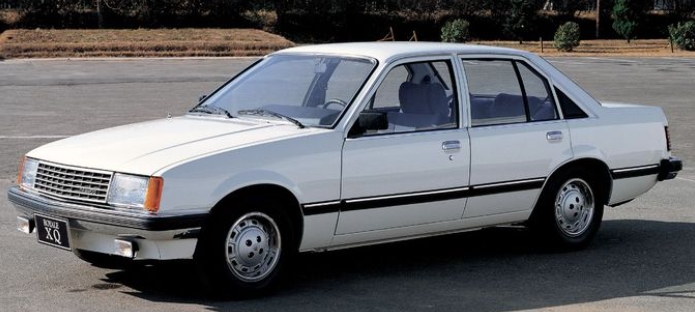
In the annals of automotive history, few vehicles encapsulate the industrial ambition of a nation quite like the Daewoo Royale. While many Western consumers know Daewoo for its late-90s economy cars like the Lanos and the Nubira, in South Korea, Daewoo was once a symbol of unbridled luxury and corporate prestige. The Royale was not merely a car; it was a statement. It represented the transition of the Korean automotive industry from licensed production of basic transport to the creation of indigenous luxury vehicles designed to compete with the best of Germany and Japan.
Produced from 1991 to 1999, the Daewoo Royale was based on the Opel Rekord E and the subsequent Omega A. However, the story of the Royale is one of adaptation, distinct styling, and a relentless pursuit of comfort. This article traces the evolution of the Daewoo Royale, detailing its various models, trim levels, and its enduring legacy in the used car market today.
.
THIS might be a great place to get your new car from!
Or for those who are into the “car flipping” business, here’s an excellent resource for you!

.
Part I: The Genesis (1991–1995)
The Debut: 1991 In March 1991, Daewoo Motors unveiled the Royale at the Seoul Motor Show. At the time, Daewoo’s primary passenger car lineup consisted of the Pontiac LeMans (a badge-engineered model) and the small Tico. The luxury market in South Korea was dominated by Hyundai’s Sonata and the emerging Grandeur (a stretched Mitsubishi platform). Daewoo needed a flagship.
To accelerate development, Daewoo utilized the GM-Opel connection, basing the car on the second-generation Opel Rekord E (specifically the Rekord E2). While the chassis, suspension (MacPherson strut front, coil-sprung live axle rear), and some body pressings were shared with the Opel, Daewoo significantly restyled the exterior to create a unique identity.
Model and Trim Evolution (1991–1995)
The initial lineup was focused on executive comfort rather than outright sportiness. The cars were heavy, aerodynamic (drag coefficient Cd 0.32), and notably quiet.
- The Standard (1991–1995):
- Engine: 2.0L S-TEC I4 (B20D/E engine). This was a Daewoo-developed SOHC engine, producing around 114–126 horsepower depending on the tune. It offered smooth power delivery but was not built for high-revving performance.
- Transmission: 5-speed manual or a 3-speed automatic (later upgraded to a 4-speed).
- Key Features: Manual windows (base), cloth upholstery, AM/FM radio with cassette player, and halogen headlights.
- The Royale SOHC (1991–1995):
- As the name suggests, this trim utilized the 2.0L SOHC engine. It was the volume seller and the primary competitor to the Hyundai Sonata.
- Trim Level Variations: Early trims were spartan. By 1993, Daewoo introduced a mild refresh that added power windows, a digital dashboard (in some high-end trims), and upgraded fabric patterns.
- The Royale EFI (1993–1995):
- This was the technology flagship. It featured Electronic Fuel Injection (EFI) on the 2.0L engine, offering better cold starts and fuel efficiency compared to the carbureted base models.
- Exterior: Chrome side moldings, slightly better alloy wheels, and the addition of a passenger-side mirror (which was optional on the base models).
- Interior: The EFI trim marked the beginning of the “luxury” focus, featuring upgraded wood grain accents on the dashboard (imitation), velour seats, and a more sophisticated center console.
- The Royal 2.0 (1994–1995):
- In 1994, the “Royal 2.0” trim was introduced to bridge the gap between the standard and the upcoming second generation. This trim typically included the more powerful 126hp version of the 2.0L engine, rear seat armrests, and a trips computer.
Part II: The Evolution and Refinement (1995–1999)
In late 1995, Daewoo launched a facelifted model, internally designated as the “New Royale.” While visually similar to the previous generation to the untrained eye, the changes were substantial. This era coincided with Daewoo’s aggressive global expansion plan, leading to the car being exported as the Daewoo Prince and eventually the Daewoo Omega in Europe.
The 1995 Facelift: Bigger and Bolder
The 1995 model year saw the introduction of larger bumpers, a revised grille, and clearer headlamps. The most significant change, however, was under the hood and in the rear cabin.
Model and Trim Evolution (1995–1999)
- Royale 2.0 SOHC (1995–1999):
- The entry-level model remained the 2.0L SOHC.
- Transmissions: By this time, the 3-speed automatic was phased out in favor of a Japanese-built 4-speed automatic, which significantly improved highway fuel economy and refinement.
- Safety: Dual airbags became optional on this trim (rare for Korean cars of this era) and ABS was available as an option on higher trims.
- Royale 2.0 EFI (1995–1999):
- The mid-tier trim continued with the EFI engine.
- Comfort: This era introduced the “Brougham” package in some domestic market trims, which focused on rear-seat comfort. Features included reclining rear seats (a hallmark of Korean luxury), curtains for the rear windows, and upgraded sound insulation in the floor panels.
- Royale 2.2 (1997–1999):
- In 1997, Daewoo addressed the demand for more torque by introducing the 2.2L inline-4 engine (T-2200). This engine produced roughly 135 horsepower and significantly improved the car’s drivability, especially when fully loaded with passengers.
- Exterior: The 2.2 models were often identified by specific alloy wheel designs and a “2.2” badge on the trunk lid.
- Interior: The 2.2 trim often came with automatic climate control (a luxury feature at the time), a premium sound system with four speakers (upgraded from the base two), and leather upholstery options.
- Royale Saloon / Royale Elegance (High-End Trim):
- The top-tier trim, often badged as “Elegance” in the domestic market, was the pinnacle of Daewoo luxury.
- Features: This trim level included wood grain interior accents (real on limited editions), leather seats, power seats for the driver, a trip computer, and alloy wheels as standard.
- Safety: This was the first trim to consistently offer ABS and dual airbags as standard equipment, a response to increasing safety awareness in the late 90s.
- Technology: Some limited editions of the Elegance trim came with a built-in car phone (an analog cellular unit) and a CD player, which was cutting-edge technology in 1996-1997.
Part III: Technical Specifications and Driving Experience
Throughout its production run, the Daewoo Royale was defined by its “soft road” characteristics. It was never designed to be a sports sedan like a BMW 3 Series or a Toyota Supra. Instead, it competed directly with the Toyota Crown and the Nissan Cefiro.
- Suspension: The ride was tuned for compliance. The suspension soaked up potholes and rough road surfaces common in developing Asian cities of the 90s. The rear coil-sprung live axle provided a smooth ride but could be somewhat unruly at high speeds or during sudden maneuvers.
- Engine Character: The S-TEC and T-2200 engines were known for their reliability and smoothness. While not particularly powerful by modern standards, the torque was sufficient for city driving. The engines were chain-driven (in the later 2.2L), reducing maintenance costs compared to belt-driven competitors.
- Cabin Noise: One of the Royale’s biggest selling points was its acoustic insulation. Daewoo used thick glass and extensive sound-deadening materials, making the cabin remarkably quiet for a car in its price range.
Part IV: The Export Market and the Daewoo Omega
For readers outside of South Korea, the Royale might be more familiar as the Daewoo Prince or the Daewoo Omega.
- The Prince (1991–1997): This was the export version of the early Royale. It was marketed heavily in the Middle East and Southeast Asia. The trim levels were similar to the domestic market, though often stripped down for price competitiveness. The “Super Saloon” was the top export trim, featuring the 2.0L SOHC engine, A/C, and power steering.
- The Omega (1997–1999): In Europe, the facelifted Royale was sold as the Omega. It gained a reputation for being spacious and value-packed. The European trims were generally well-equipped, often featuring 2.2L engines and ABS. However, Daewoo’s distribution network in Europe was weak, and the Omega struggled to compete with established players like the Opel Omega and Ford Scorpio, despite being based on the former’s platform.
Part V: Legacy and Discontinuation
The End of an Era By 1998, the automotive world was changing rapidly. Safety standards were becoming stricter (impacting the Royale’s safety crash ratings, which lagged behind newer designs), and design trends were shifting toward sharper, more aerodynamic shapes. The Royale, with its rounded, “bubble-like” silhouette, was beginning to look dated.
Daewoo underwent a massive corporate restructuring in 1999, culminating in the sale of the company to General Motors (eventually becoming GM Daewoo). The Royale nameplate was retired. Its spiritual successor was the Daewoo Arcadia (a rebadged Holden Commodore), and later, the GM Daewoo Magnus. However, the Royale remained the last Daewoo sedan to be entirely developed in-house under the old Daewoo philosophy of “We are the best.”
Current Status and Future Outlook Today, the Daewoo Royale enjoys a cult following, particularly in South Korea, Indonesia, and parts of the Middle East.
- The “Oldtimer” Scene: In South Korea, the government introduced a tax break for classic cars (over 20 years old). This led to a resurgence in interest in the Royale. Well-preserved examples of the 1997-1999 Royale Elegance are now sought-after collector’s items. Restomod shops in Seoul offer services to restore these cars with modern suspension, LED lighting, and upgraded sound systems, keeping the classic silhouette but improving performance and safety.
- The Used Car Market: In export markets like the Philippines and Indonesia, the Royale (often the 2.2L trim) is prized as a second-hand family car. It is valued for its spacious interior (it can comfortably seat five adults) and the relative ease of maintenance due to its mechanical simplicity.
- Parts Availability: While parts availability was a concern in the 2000s, the shared DNA with the Opel Omega has allowed enthusiasts to source parts from European suppliers or salvage yards. Many suspension and brake components are interchangeable with the Opel, keeping these cars on the road.
Conclusion: A Symbol of Ambition
The Daewoo Royale was more than just a vehicle; it was a manifestation of the “Miracle on the Han River.” It proved that South Korea could build a luxury car that offered comfort, space, and reliability without the exorbitant price tag of its European or Japanese rivals.
While the Daewoo brand has faded into history, replaced by Chevrolet and Cadillac under the GM umbrella, the Royale remains a nostalgic touchstone. It represents a time when Daewoo dared to dream of global automotive dominance. For those who own one today, it is not just a car, but a piece of history—a heavy, smooth-riding cruiser that carried the hopes of a rising industrial nation on four wheels.