The Daewoo Chairman’s Journey: The Rise, Stagnation, and Legacy of South Korea’s First Luxury Sedan
In the automotive landscape of the late 1990s, a new contender emerged from South Korea, aiming to challenge the established dominance of the German “Big Three” (Mercedes-Benz, BMW, Audi) and the Japanese luxury contingent (Lexus, Infiniti, Toyota Crown). This contender was the Daewoo Chairman. A vehicle born from a partnership with Mercedes-Benz, the Chairman represented Daewoo Motor’s ambitious attempt to legitimize the South Korean automotive industry on the global stage.
Though the nameplate is now defunct—fading into obscurity following the collapse of the Daewoo conglomerate and the subsequent sale of its automotive division to General Motors—the Chairman remains a fascinating case study in badge engineering, corporate ambition, and the complexities of the automotive market in East Asia.
Genesis: The Mercedes-Benz Connection (1991–1997)
To understand the Daewoo Chairman, one must look back to 1991. Daewoo Motor, then a rising force in the Korean domestic market, sought to break into the lucrative luxury sector. Rather than developing a platform from scratch, Daewoo entered into a technology transfer agreement with Mercedes-Benz.
The result was the utilization of the W124 chassis—the underpinnings of the Mercedes-Benz E-Class of that era. However, Daewoo did not simply clone the E-Class; they re-engineered the chassis to suit the specific tastes of the Korean market. The wheelbase was stretched significantly to offer rear-seat passengers unparalleled legroom, a critical factor in a country where chauffeur-driven vehicles were common among corporate executives and government officials.
After years of development and testing, the first-generation Chairman was officially launched on May 27, 1997.
First Generation (1997–2008): The Long Reign
While the Chairman was launched in 1997, it is often associated with the 1998 model year in export markets. The first generation (designated CH 1) had an exceptionally long production life, spanning over a decade with various facelifts and engine updates.
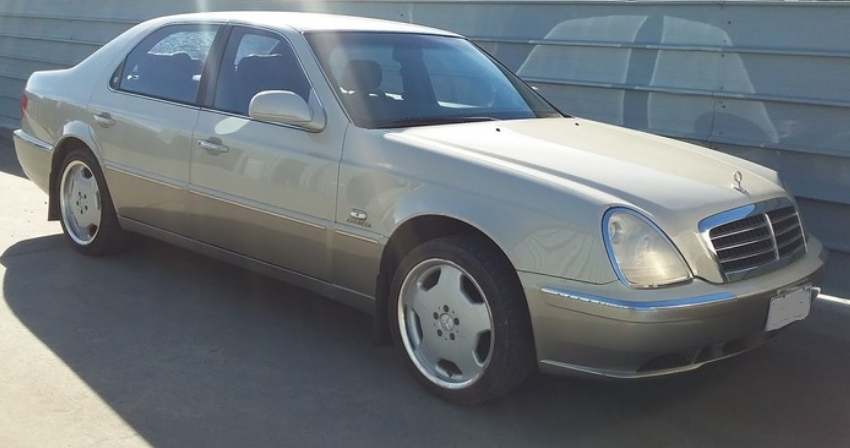
Exterior Design and Styling The first generation Chairman featured a conservative, stately design that bore a passing resemblance to the Mercedes-Benz E-Class of the mid-90s but with distinct Korean styling cues. It featured a chrome-heavy grille, vertical taillights, and a roofline that prioritized interior headroom over sporty aesthetics. The car was designed to project authority and stability.
Engine Lineup The Chairman’s powertrain options evolved significantly over its decade-long run, moving from older Mercedes-Benz designs to newer GM-based engines.
- The Mercedes-Benz Era (1997–2000):
- 2.0L Inline-4 (M111): Producing approximately 136–150 horsepower, this was the entry-level engine, often paired with a 4-speed automatic transmission.
- 2.8L Inline-6 (M104): A 2.8-liter straight-six engine derived from Mercedes-Benz technology, offering smoother power delivery and better performance for the heavy chassis.
- 3.2L Inline-6 (M104): The top-tier engine for the early years, producing around 220 horsepower. This was the engine of choice for the “Chairman L” trim, offering V8-like smoothness.
- The GM Era (2000–2008): Following the Asian Financial Crisis and Daewoo’s restructuring, the reliance on Mercedes engines was phased out in favor of General Motors powerplants (specifically the “T-Engine” series) to reduce costs and royalties.
- 2.0L Turbo (T20): A turbocharged four-cylinder offering improved efficiency.
- 2.5L Inline-6 (T25): Replacing the Mercedes 2.8L, this engine offered similar performance figures (approx. 155–160 hp) but with improved emissions compliance.
- 3.2L Inline-6 (T32): The flagship engine, producing roughly 220–230 horsepower. It provided adequate acceleration for a vehicle weighing nearly 1,800 kg (4,000 lbs).
Trim Levels and Models The Chairman was not sold as a single entity but rather a hierarchy of trims that denoted status and equipment levels. In the Korean market, the trim levels were distinct badges:
- Chairman CM (Classic Model): The base model, typically equipped with the 2.0L or 2.5L engine. It featured cloth seats, basic audio systems, and manual climate control in early iterations.
- Chairman SM (Super Model): The mid-range option. This trim added velour or leather seating, power windows, and improved sound insulation. It was the most popular choice for corporate fleets.
- Chairman LM (Luxury Model): The high-end trim. The LM featured the 3.2L engine, wood grain trim, dual-zone automatic climate control, and premium audio systems. The rear seats were often upgraded with power adjustments and leg rests.
- Chairman HM (Himma): Introduced later in the lifecycle, the “Himma” (a name derived from a word meaning “aspiration” or “zeal”) was the ultra-luxury variant. It featured unique badging, 17-inch alloy wheels, and in some versions, a rear-seat entertainment system—a rarity in Korean cars of that time.
Interior and Technology The interior was the Chairman’s strongest selling point. The stretched wheelbase (2,910mm) allowed for a “limousine” feel. The rear seats were the throne; they reclined, offered footrests, and provided a quiet, isolated cabin environment.
Technology-wise, the Chairman was ahead of its time in the Korean market. It featured a “smart” cruise control system (in later models), a navigation system (introduced around 2001), and a premium sound system. However, compared to its German rivals, the materials—while plush—lacked the tactile precision and longevity of Mercedes or BMW interiors. The plastics were softer but prone to wear, and the electronics occasionally suffered from reliability issues.
The Facelifts The Chairman underwent minor facelifts in 1999, 2002, and 2005. The 2002 facelift was significant, as it marked the full transition to GM engines and a redesigned front fascia with a more prominent chrome grille and clearer headlamps. The 2005 update focused on safety, adding side airbags and ESP (Electronic Stability Program) as standard on higher trims.
.

.
Market Performance and Cultural Impact
In South Korea, the Chairman was a status symbol. It was the car of choice for mid-level executives and government officials who couldn’t afford a Mercedes S-Class but wanted a vehicle that signaled success. It dominated the “Executive Sedan” segment, outselling foreign competitors on home soil due to its price advantage and rear-seat comfort.
However, the Chairman struggled in export markets. In the Middle East and parts of Europe, it was marketed as a budget luxury car. While it offered space for the price, it failed to shake the perception of being a “copy” of a Mercedes. The badge “Daewoo” was associated with economy cars (like the Matiz and Lanos), making it difficult to command premium pricing.
The End of an Era: Second Generation (2008–2011)
By 2008, the first-generation Chairman was severely outdated. The chassis was based on 1990s technology, and safety standards had evolved. Daewoo (now owned by GM Daewoo) launched the second-generation Chairman (code name CH 2).
Design and Engineering The second generation was a radical departure. It abandoned the Mercedes-Benz W124 roots entirely. Instead, it utilized the GM Epsilon II platform, shared with the Opel Insignia and Chevrolet Malibu. However, to maintain the “Chairman” ethos, the wheelbase was stretched significantly (to 2,838mm, though still shorter than the previous generation’s stretch).
The design was modernized with a large, vertical chrome grille, projector headlamps, and a more aerodynamic profile. It looked less like a Mercedes and more like a generic, modern sedan.
Trim Levels and Engines The second generation simplified the lineup, though the “Himma” trim remained.
- Engines:
- 2.0L LPG: A dedicated LPG engine, popular for taxi and fleet use (though the Chairman Himma was rarely used as a taxi).
- 2.0L Turbo (Gasoline): A direct-injection turbo engine producing around 220 horsepower.
- 2.0L Diesel (VCDi): A turbodiesel option, offering high torque and fuel efficiency.
- Trims:
- Chairman C: The base model.
- Chairman S: The standard luxury trim.
- Chairman H (Himma): The flagship, featuring premium leather, a sunroof, and advanced infotainment.
The Downfall Despite the update, the second-generation Chairman faced insurmountable challenges. By 2008, the global financial crisis had hit, and GM Daewoo was restructuring. The Korean luxury market had shifted; younger executives preferred imported German cars, which had become more affordable due to free trade agreements.
The Chairman felt like a relic of a bygone era. It lacked the rear-wheel-drive dynamics expected in a luxury sedan (the second gen was front-wheel drive), and the brand image of Daewoo was collapsing. Sales plummeted.
Production End Production of the Chairman ceased in April 2011. GM Daewoo discontinued the nameplate to focus on global brands like Chevrolet. The factory that produced the Chairman was retooled to produce the Chevrolet Malibu, effectively marking the end of Daewoo’s luxury aspirations.
Legacy and Future Outlook
Today, the Daewoo Chairman is a rare sight on roads, even in South Korea. The first generation is occasionally kept by enthusiasts who appreciate its “old money” aesthetic and the unique blend of Korean luxury with German mechanical DNA. In the used car market, early Chairman models are known for being incredibly cheap to buy but expensive to maintain, as parts for the Mercedes-sourced engines and transmissions have become scarce.
Is there a future for the Chairman? Currently, there is no indication that the Chairman nameplate will return. The brand “Daewoo” no longer exists in the automotive sector; it was fully rebranded as Chevrolet in most markets. Furthermore, the automotive industry is pivoting toward electrification. GM (General Motors) is unlikely to revive a defunct Korean luxury badge when it has its own premium electric portfolio (Cadillac Lyriq, etc.).
However, the Chairman’s spirit lives on in an unexpected place: the used car market in North America. Through “grey market” imports, some first-generation Chairman L models have found their way to the US and Canada, prized by JDM (Japanese Domestic Market) enthusiasts who are looking for something different. They offer the presence of a classic Mercedes E-Class but with a fraction of the purchase price.
Conclusion
The Daewoo Chairman was a vehicle of contradictions. It was a Korean car with a German heart, a budget luxury vehicle that aspired to be elite, and a symbol of corporate might that ultimately fell victim to corporate collapse. For over a decade, it defined the executive commute in South Korea, offering a quiet, comfortable ride that prioritized the passenger over the driver.
While it never achieved global dominance, the Chairman succeeded in its primary mission: it proved that South Korea could build a luxury car. It paved the way for the Genesis brand (Hyundai’s luxury division), which today competes credibly on the world stage. In that sense, the Chairman was not a failure, but a necessary stepping stone in the evolution of the Korean automotive industry. It was the Chairman that sat in the boardroom first, allowing the rest of the industry to follow.