The Daewoo Nexia Legacy: The Rise, Resilience, and Reinvention of a Daewoo Icon
In the automotive world, few vehicles capture the tumultuous economic shifts of the late 20th and early 21st centuries quite like the Daewoo Nexia. Often overlooked in the grand narrative of automotive history, the Nexia was a product of ambition, geopolitical maneuvering, and a desperate bid for global relevance. While it began its life as a humble budget sedan, its evolution tells a story of brand transformation that spanned continents, corporate entities, and decades of production.
The Genesis: A Western Heart in an Eastern Body
To understand the Daewoo Nexia, one must first look to its predecessor, the Daewoo LeMans (sold in some markets as the Cielo). In the late 1970s, General Motors (GM) had entered a joint venture with the South Korean government to form GM Korea. This partnership produced the GM Korea Compact, which was based on the German Opel Kadett E. When GM exited the venture in 1982, Daewoo Motors took full control of the factory and the platform.
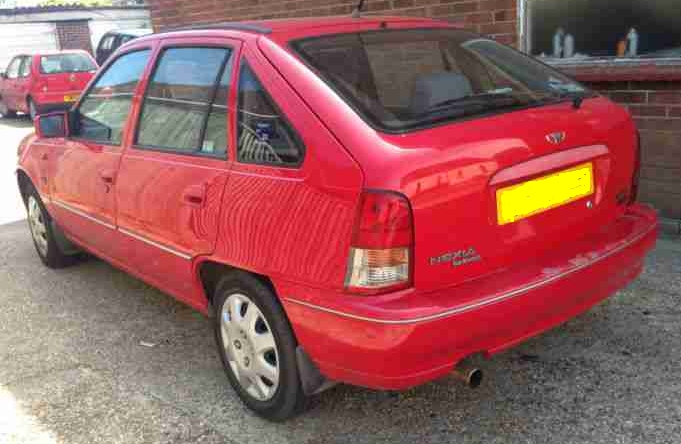
The Nexia (internal code name: X2i) was essentially a heavy facelift and rebranding of the Daewoo LeMans, which itself was a derivation of the Opel Kadett E. It retained the Kadett’s robust chassis, suspension geometry, and fundamental engineering. However, Daewoo sought to distinguish the car visually and mechanically to signal a new era of independence.
Production of the Daewoo Nexia began in late 1994 in South Korea. The vehicle was designed to be a budget-friendly family car, competing against the Hyundai Elantra and Kia Spectra. It was powered by a range of GM-sourced engines, primarily the reliable 1.5-liter and 1.6-liter inline-four units, featuring both SOHC (Single Overhead Camshaft) and DOHC (Double Overhead Camshaft) configurations.
.
THIS might be a great place to get your new car from!
Or for those who are into the “car flipping” business, here’s an excellent resource for you!

.
The First Generation (1994–1997): The Birth of a Global Player
The initial Nexia was characterized by its boxy, utilitarian aesthetic. While the LeMans had a softer, European look, the Nexia introduced a sharper front fascia with clear-lens headlights (a modern touch for the time) and a distinct grille featuring the Daewoo hexagonal emblem.
Model Variations and Trim Levels (1994–1997):
Daewoo’s naming conventions were often region-specific, leading to a confusing array of trim designations. However, the core hierarchy generally remained consistent:
- Base/S: The entry-level model. In South Korea, this was often referred to as the “Nexia S.” It featured a 1.5-liter SOHC engine (88 hp), a 4-speed manual transmission, and steel wheels with hubcaps. Interior amenities were sparse, including basic cloth seats, manual windows, and manual door locks.
- SE/XL: The mid-range trim. This usually added a 1.5-liter DOHC engine (99 hp), power steering, a tachometer, and rear electric windows. In the UK and European markets, the “Es” trim offered similar upgrades, including a CD player and body-colored bumpers.
- CDX/CDi: The top-tier luxury trim. This model featured the 1.6-liter DOHC engine (105 hp), alloy wheels, a sunroof, air conditioning (a significant selling point in budget cars of the 90s), and upgraded interior fabrics. In the UK, the “CDX” also included ABS (Anti-lock Braking System) as an option or standard depending on the year.
The Nexia’s interior was a mix of dated Opel design and Daewoo’s attempt at modernity. It utilized hard, durable plastics, but the layout was ergonomic. The rear bench offered decent legroom for a compact sedan, making it a practical choice for small families.
The Transition Period: Global Exports and the Daewoo Rebrand (1997–1999)
By 1997, Daewoo was aggressively expanding its global footprint. The Nexia was exported to over 100 countries, though it was often rebranded. In Poland, for example, the car was sold as the Daewoo-FSO Nexia due to the company’s acquisition of the FSO factory in Warsaw. In Vietnam, it became a staple of the nascent taxi industry due to its low running costs.
During this period, the mechanical lineup remained largely unchanged, but the trim levels began to diversify based on local preferences. In the UK, the lineup was simplified to the 1.5i and 1.6i, with the “Si” trim bridging the gap between the base and premium models.
The most significant change occurred in 1998: Daewoo Motors underwent a massive corporate restructuring. The Nexia, along with the Lanos and Nubira, was rebranded under the “Daewoo Classic” line in some markets (like South Korea) to maintain sales figures while the company prepared next-generation models.
The Second Generation and the General Motors Era (2000–2002)
The turn of the millennium brought a seismic shift. While a completely new compact sedan based on the Suzuki Ignis platform (the Daewoo Kalos) was in development, Daewoo needed to keep the aging Nexia competitive. In 2000, a significant facelift was introduced, primarily for the South Korean and export markets.
Facelift Changes:
- Exterior: The car received a more aerodynamic look with a revised front bumper, a new grille, and updated taillights. The side mirror indicators were integrated, and the rear license plate garnish was reshaped.
- Interior: The dashboard received a slight update with a new center console and improved audio systems. The seats were redesigned for better bolstering.
However, the most critical development occurred in 2002. Following Daewoo’s bankruptcy in 1999 and subsequent acquisition by General Motors, the Nexia was rebranded as the GM Daewoo Nexia. This was a transitional period where GM sought to maximize the profitability of existing Daewoo assets before replacing them with global platforms (like the Chevrolet Aveo).
Model Variations (2000–2002):
Under the GM Daewoo banner, the Nexia continued with similar trim levels but with updated nomenclature:
- GSI: The sportier variant. This trim often featured the 1.6-liter DOHC engine (now tuned to approximately 109 hp), a tighter suspension setup, and sportier 15-inch alloy wheels. It also included a leather-wrapped steering wheel and gear knob.
- GLS: The luxury variant. Focused on comfort, this model included automatic climate control, power mirrors, and sometimes wood-grain interior accents (a popular feature in the Asian market at the time).
- Basic: The fleet model. Stripped of most amenities to reduce costs, this was primarily sold to taxi companies and government fleets.
It is important to note that by this time, the Nexia was becoming increasingly outdated compared to competitors like the Toyota Corolla and Honda Civic. The chassis, dating back to the Opel Kadett E of 1984, was nearly two decades old. However, its simplicity and low price point kept it relevant in developing markets.
The Final Years and Rebranding (2002–2008)
In 2002, the successor to the Nexia, the Daewoo Kalos (known as the Chevrolet Aveo in most markets), was launched. In South Korea, the Nexia was discontinued in 2002. However, the car’s life was far from over.
Due to the Nexia’s massive popularity in Eastern Europe and Central Asia—where it was celebrated for its durability, ease of repair, and parts compatibility with older Opel models—GM Daewoo continued production for these specific markets.
The Chevrolet Nexia Era (2008–2016): In 2008, GM Daewoo underwent another major rebranding strategy. To streamline its global offerings under the Chevrolet badge, the Nexia (still based on the 1994/2000 facelifted platform) was renamed the Chevrolet Nexia.
This was the “zombie” phase of the Nexia’s life. Produced primarily in Uzbekistan (at the Uz-Daewoo plant) and Vietnam, the Chevrolet Nexia remained a budget car for the next eight years.
Chevrolet Nexia Trim Levels (2008–2016): The trim levels were simplified for the budget-conscious buyer:
- Base: 1.5L engine, manual windows, steel wheels.
- LS: Added power windows, central locking, and a radio/CD player.
- LT: The highest spec, offering alloy wheels, fog lights, and sometimes a sunroof (depending on the market).
The Chevrolet Nexia was finally phased out in most markets around 2015/2016, replaced by the modern Chevrolet Cobalt and the updated Chevrolet Aveo (Sonic). It remains a common sight on the roads of Russia, Kazakhstan, Ukraine, and parts of the Middle East today.
Technical Specifications Overview
Throughout its life, the Nexia relied on a few key engine codes:
- G15MF: A 1.5-liter SOHC 8-valve engine (roughly 88 hp). Known for its “non-interference” valve design, meaning a snapped timing belt wouldn’t destroy the engine—a major selling point for reliability.
- X15XF: A 1.5-liter DOHC 16-valve engine (roughly 99 hp). A more modern design with better top-end power.
- T16SED: A 1.6-liter DOHC 16-valve engine (roughly 105-110 hp). This was the performance option, offering respectable acceleration for the early 1990s.
All engines were paired with either a 5-speed manual transmission or a 3-speed automatic (later a 4-speed in premium trims). The automatic transmission was notorious for being sluggish and fuel-inefficient, making the manual the preferred choice for enthusiasts and economy-minded drivers.
Cultural Impact and Legacy
The Daewoo Nexia holds a unique place in automotive history. It was one of the first attempts by a South Korean manufacturer to offer a “world car” that balanced Western engineering (Opel roots) with Asian affordability.
In South Korea, it bridged the gap between the company’s early, primitive cars and the more refined vehicles of the 2000s. In Europe, it gained a cult following among budget buyers and tuning enthusiasts in Eastern Europe. The “Nexia” name became synonymous with value and durability.
However, the Nexia also highlighted the weaknesses of Daewoo. By relying on an outdated platform for too long, the brand struggled to shed its “budget” image in developed markets. When the financial crisis hit in 1999, the Nexia’s aging technology contributed to Daewoo’s inability to compete with Japanese rivals.
Future Outlook: Is There a Modern Equivalent?
Today, the Daewoo Nexia exists only in the used car market and in the memories of automotive historians. There are no plans to resurrect the nameplate. The automotive landscape has shifted dramatically toward SUVs, crossovers, and electrification—segments where the Nexia’s humble sedan roots have no place.
However, the spirit of the Nexia lives on in Chevrolet’s budget offerings in developing markets. The Chevrolet Onix and Chevrolet Cobalt, sold in Latin America and parts of Asia, serve the same purpose: providing basic, reliable transportation at an accessible price point. These modern cars, however, benefit from contemporary safety standards, fuel efficiency, and connectivity that the Nexia could never offer.
Conclusion
The Daewoo Nexia was more than just a car; it was a testament to the rapid industrialization of South Korea and the complexities of the global auto industry. From its origins as a reskinned Opel to its final days as a Chevrolet, the Nexia was a survivor.
Produced from 1994 to 2016 in various forms, it offered a range of models—from the spartan Base trim to the surprisingly well-equipped CDX and GSI variants. While it may not have been the fastest or the most beautiful car of its era, its longevity proves that in the automotive world, utility and affordability often triumph over fleeting trends. For the millions of drivers who relied on it, the Nexia was simply a dependable companion on the road of life.