The DeSoto Firedome: Evolution of Chrysler’s Early Hemi-Powered Full-Size Car
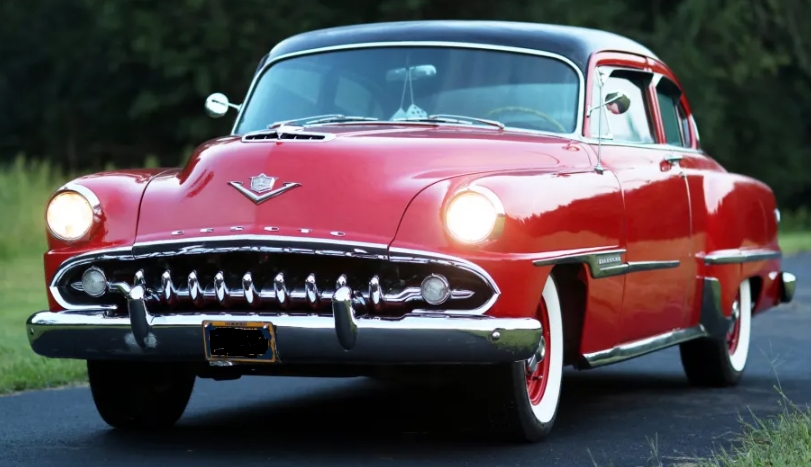
The DeSoto Firedome was one of the most significant automobiles produced by the DeSoto division of Chrysler Corporation during the 1950s. Manufactured from 1952 through 1959, the Firedome marked a major technological milestone for the brand: it introduced modern V8 power to DeSoto automobiles and helped define the company’s position in the competitive mid-century American car market.
Over its seven-year production run, the Firedome evolved dramatically—from a premium flagship model powered by a new Hemi V8 engine to a mid-range car in the DeSoto lineup. With multiple body styles, evolving trim packages, and increasingly powerful engines, the Firedome reflected both the optimism of the 1950s automotive industry and the eventual challenges that led to the end of the DeSoto brand.
Origins of the Firedome and DeSoto’s Early 1950s Strategy
The Firedome debuted for the 1952 model year, replacing the aging DeSoto Custom as the division’s top model. Its introduction coincided with Chrysler’s effort to modernize its brands with more powerful engines and updated styling.
One of the most important innovations was the introduction of the “FireDome” Hemi V8 engine, a hemispherical-combustion-chamber powerplant that delivered significantly better performance than the inline-six engines used previously. This was the first time DeSoto had offered a V8 engine since 1931.
The Firedome was positioned as a full-size six-passenger car designed for families seeking both luxury and performance. It quickly became a centerpiece of DeSoto’s lineup.
.
THIS could come in handy for your auto garage (and everywhere else!):

.
1952: The First Firedome
The 1952 Firedome marked a turning point for DeSoto.
Key Features
- Engine: 276 cubic-inch Hemi V8
- Power output: about 160 horsepower
- Top speed: roughly 100 mph
The car offered improved acceleration compared with earlier DeSotos and featured Chrysler’s typical front-engine, rear-wheel-drive layout.
Body Styles Offered
Early Firedome models were available in several configurations:
- 4-door sedan
- 2-door coupe
- 2-door convertible
- 5-door station wagon
These options gave buyers a wide range of choices, from family transport to stylish personal cars.
1953: Increased Power and Strong Sales
For 1953, the Firedome received mechanical improvements and minor styling updates. Horsepower increased from 160 to 170 hp, improving overall performance.
The year also marked DeSoto’s 25th anniversary, which helped boost sales. Production reached over 64,000 vehicles, making the Firedome one of the brand’s most successful models of the decade.
Body Styles (1953)
- 2-door club coupe
- 2-door convertible
- 4-door sedan
- 5-door station wagon
Interior comfort features such as radios and optional accessories were becoming more common, reflecting the growing emphasis on luxury in American cars.
1954: Refinements and New Trim Options
The 1954 Firedome introduced several improvements and options.
Notable Updates
- Increased horsepower to 170 hp
- Introduction of Chrysler’s PowerFlite automatic transmission
- Additional luxury trim packages
One of the most interesting additions was the Coronado trim package, which offered distinctive tri-tone paint schemes and upgraded interior materials.
The Coronado version helped enhance the Firedome’s image as a stylish and modern automobile.
1955: Repositioning in the DeSoto Lineup
A major shift occurred in 1955 when DeSoto introduced the new DeSoto Fireflite as the brand’s luxury flagship.
As a result, the Firedome moved from top-of-the-line status to the entry-level model within the DeSoto range.
Mechanical Updates
- Engine displacement increased to 291 cubic inches
- Output rose to approximately 185 horsepower
Body Styles (1955)
- 2-door Sportsman hardtop
- 4-door sedan
- 4-door hardtop
- convertible
- station wagon
Even though it became the least expensive DeSoto model, the Firedome still offered impressive performance thanks to its Hemi engine.
1956: Improved Performance and Production Growth
The 1956 Firedome continued to evolve with additional power and mechanical updates.
Key Specifications
- Engine: 330 cubic-inch Hemi V8
- Power: around 230 horsepower
This increase in power helped keep the Firedome competitive in a market where horsepower was becoming an important selling point.
Body Styles (1956)
- 2-door hardtop (Sportsman)
- 2-door Seville hardtop
- 4-door sedan
- 4-door hardtop
- station wagon
- convertible
Production was strong, with tens of thousands of Firedomes built during the year.
1957: Forward Look Styling Revolution
In 1957, Chrysler introduced a dramatic new styling direction known as the Forward Look, designed by renowned stylist Virgil Exner.
The Firedome received:
- dramatic tailfins
- lower body lines
- a massive grille and bumper assembly
These design changes made the car appear longer, sleeker, and more futuristic than previous models.
Lineup Position
Beginning in 1957, the Firedome moved again in the DeSoto hierarchy. With the introduction of the DeSoto Firesweep, the Firedome became a mid-range model between the Firesweep and Fireflite.
Body Styles (1957)
- 2-door hardtop
- 4-door sedan
- 4-door hardtop
- convertible
- station wagon
1958: High Horsepower Era
The 1958 Firedome continued with the Forward Look design but featured even stronger engines.
Performance
- Optional 361 cubic-inch V8
- Horsepower exceeding 300 hp
- Top speed around 115 mph
These specifications made the Firedome one of the most powerful cars available in the DeSoto lineup.
However, the 1958 recession significantly hurt sales across the American auto industry, particularly for large luxury vehicles.
1959: Final Year of the Firedome
The 1959 model year marked the last appearance of the Firedome.
Engine
- 383 cubic-inch V8
- More than 300 horsepower
Body Styles (1959)
- 2-door Sportsman hardtop
- 4-door sedan
- 4-door Sportsman hardtop
- convertible
The convertible was the rarest version, with only a few hundred produced.
In 1959, buyers could choose from an extraordinary range of paint options, including 26 single colors and nearly 190 two-tone combinations, reflecting the flamboyant styling trends of the era.
Despite these choices, declining sales forced Chrysler to discontinue the Firedome after the 1959 model year.
Trim Levels and Model Hierarchy
Unlike modern vehicles, the Firedome itself was not divided into numerous trim packages. Instead, it was one series within the broader DeSoto lineup.
DeSoto Model Hierarchy (Late 1950s)
- DeSoto Firesweep – entry level
- DeSoto Firedome – mid-range
- DeSoto Fireflite – luxury model
- DeSoto Adventurer – high-performance flagship
Within the Firedome line, the primary differences came from body styles and special appearance packages rather than separate trim levels.
Engine Development Across the Years
One of the defining characteristics of the Firedome was its steadily increasing engine power.
| Year Range | Engine | Horsepower |
|---|---|---|
| 1952 | 276 Hemi V8 | ~160 hp |
| 1953–1954 | Improved Hemi V8 | ~170 hp |
| 1955 | 291 Hemi V8 | ~185 hp |
| 1956 | 330 Hemi V8 | ~230 hp |
| 1958 | 361 V8 | ~300 hp |
| 1959 | 383 V8 | 300+ hp |
These upgrades reflected the horsepower race that characterized the American automobile industry during the late 1950s.
The End of the Firedome and DeSoto
Although the Firedome had been an important model for the brand, DeSoto itself faced serious challenges by the end of the decade.
Several factors contributed to the division’s decline:
- internal competition within Chrysler
- falling sales during the late 1950s recession
- quality-control issues
The Firedome was discontinued after the 1959 model year, and the entire DeSoto brand ceased production in 1961.
Collectibility and Legacy
Today, the DeSoto Firedome is recognized as a significant classic car for several reasons:
- early use of Chrysler’s Hemi V8 technology
- distinctive 1950s tailfin styling
- relatively low surviving numbers
Models from 1957–1959, featuring the Forward Look design, are especially popular among collectors.
Future Outlook
Interest in mid-century American automobiles continues to grow among collectors and historians. As a result, well-preserved Firedomes are becoming increasingly desirable.
Because the DeSoto brand disappeared decades ago, surviving Firedomes represent an important piece of automotive history. Their combination of bold styling, powerful engines, and historical significance ensures that they will remain valued by enthusiasts for years to come.
The DeSoto Firedome played a crucial role in the history of the DeSoto division and the broader Chrysler Corporation. Produced from 1952 to 1959, it introduced modern V8 power to the brand, evolved through multiple styling eras, and adapted to changing market conditions.
From its origins as a top-of-the-line luxury car to its final years as a mid-range model, the Firedome demonstrated the technological progress and stylistic ambition of 1950s American automobiles. Today, it remains a fascinating reminder of an era when horsepower, chrome, and bold design defined the American automotive landscape.