The Enduring Benchmark: A Deep Dive into the Mercedes-Benz E-Class
In the vast and competitive world of the automobile, few nameplates command the same level of universal respect as the Mercedes-Benz E-Class. It is more than just a car; it is a global institution, a benchmark for executive sedans, and a rolling testament to German engineering, safety, and luxury. For decades, it has been the vehicle of choice for discerning professionals, comfortable families, and even rugged taxi fleets, a testament to its incredible breadth of capability. This is the story of the E-Class, a lineage of excellence that predates its official name and continues to define the heart of the Mercedes-Benz brand.
.

.
A Lineage Forged in Post-War Progress
While the “E-Class” designation was officially introduced in 1993, the car’s true ancestry dates back to the mid-20th century. The models that form its direct lineage are considered the foundation upon which its reputation was built.
- The “Ponton” (W120/W121, 1953-1962): This was the first post-war Mercedes-Benz with a modern, monocoque “unibody” construction, a revolutionary safety feature at the time. Its slab-sided “pontoon” styling gave it its nickname and set the stage for a new era of automotive design.
- The “Fintail” (W110, 1961-1968): Known for its American-inspired tail fins (which Mercedes insisted were functional parking aids), the W110 introduced further safety innovations, including front and rear crumple zones.
- The Stroke-8 (W114/W115, 1968-1976): A clean, elegant, and modern design, the “/8” (denoting its 1968 launch year) became a global success. It was renowned for its almost indestructible build quality and comfortable ride, with many examples covering millions of kilometers as taxi cabs around the world.
- The Legendary W123 (1976-1985): Often cited as the pinnacle of Mercedes-Benz durability, the W123 is a legend. It refined the formula of its predecessor with timeless styling, superior comfort, and an even greater sense of being “over-engineered.” It was offered as a sedan, coupe, and, for the first time, a factory-built estate (wagon), codenamed S123.
- The W124 (1984-1995): The immediate predecessor to the official E-Class, the W124 was a technical masterpiece. It introduced a multi-link rear suspension, advanced aerodynamics, and a host of safety features like airbags and ABS. It was in 1993, during the W124’s mid-cycle facelift, that Mercedes officially adopted the “E-Class” nomenclature. The “E,” which had previously stood for Einspritzung (fuel injection) and followed the engine numbers (e.g., 300 E), was moved to the front (e.g., E 320) to denote the model class.
The Official Generations of the E-Class
First Generation: W124 Facelift (1993-1995)
While technically a continuation of the previous model, this facelift marked the birth of the E-Class name. It solidified the model’s position as the brand’s executive core.
- Models and Trims: A vast array was available, from the frugal E 200 Diesel to the powerful E 320 with its inline-six petrol engine. The highlights were the V8-powered E 420 and the legendary E 500, a high-performance sedan developed in collaboration with Porsche. The high-performance AMG variants, like the E 36 AMG and the ultra-rare E 60 AMG, laid the groundwork for future super-sedans.
- Body Styles: Sedan, Estate (S124), Coupe (C124), Cabriolet (A124).
Second Generation: W210 (1995-2002) – The Four-Eyed Face
The W210 represented a dramatic design departure with its distinctive quad-oval headlights, a look that would define Mercedes for a decade. It was a larger, more spacious car that focused on enhancing comfort and introducing new technology.
- Models and Trims: This generation saw the introduction of new V6 engines (replacing the inline-sixes) in models like the E 320 and E 430 (V8). The diesel lineup was revolutionized with the introduction of Common-rail Direct Injection (CDI) technology in models like the E 220 CDI and E 320 CDI, offering immense torque and fuel efficiency.
- AMG Models: The E 50 AMG was the initial offering, soon replaced by the iconic E 55 AMG, featuring a potent 5.4-liter naturally aspirated V8 that made it one of the fastest sedans in the world.
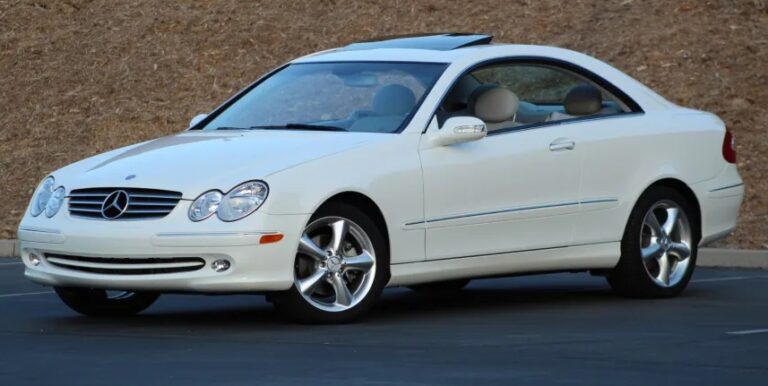
- Body Styles: Sedan and Estate (S210). The coupe and cabriolet roles were filled by the separate CLK-Class (C208).
Third Generation: W211 (2002-2009) – A Return to Elegance
The W211 refined the quad-headlight design into a more cohesive and elegant form. It was a technological powerhouse, debuting features like the electro-hydraulic Sensotronic Brake Control (SBC) and optional Airmatic air suspension. Despite some early electronic teething issues, it matured into a superbly comfortable and capable long-distance cruiser.
- Models and Trims: The lineup was extensive. Petrol models ranged from the supercharged four-cylinder E 200 Kompressor to the E 350 (V6) and E 500 (V8). The CDI diesel engines continued to grow in popularity and power. 4MATIC all-wheel drive was also more widely available.
- AMG Models: The E 55 AMG was a legend, its 5.4-liter supercharged V8 producing a staggering 469 horsepower, making it a true muscle car in a business suit. This was later replaced by the E 63 AMG, which featured a new, high-revving 6.2-liter naturally aspirated V8.
- Body Styles: Sedan and Estate (S211). The CLK-Class (C209) continued as the two-door equivalent.
Fourth Generation: W212 (2009-2016) – The Angular Approach
Breaking from the rounded shapes of its predecessors, the W212 adopted a sharper, more angular design language, including a modern reinterpretation of the “Ponton” rear fender line. The quad headlights were squared off, a controversial but distinctive choice. Its 2013 facelift was significant, merging the headlights into single units and smoothing the overall design.
- Models and Trims: This generation emphasized efficiency with the BlueEFFICIENCY and later BlueTEC diesel models. Petrol engines became more advanced with direct injection, found in models from the E 250 CGI to the E 550 (badged E 500 in Europe). The first E-Class Hybrid, the E 400 Hybrid, was also introduced.
- AMG Models: The E 63 AMG initially continued with the 6.2L V8 before transitioning to a more efficient and monstrously powerful 5.5-liter twin-turbo V8, which also brought the option of 4MATIC all-wheel drive to the AMG for the first time.
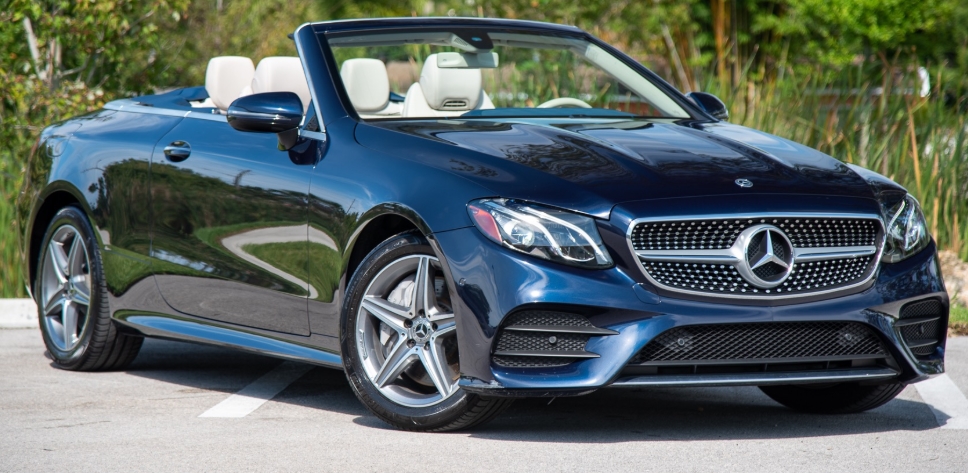
- Body Styles: Sedan and Estate (S212). Crucially, this generation saw the return of the Coupe (C207) and Cabriolet (A207) to the official E-Class family, though they were based on a modified C-Class platform.
Fifth Generation: W213 (2016-2023) – The Tech-Infused S-Class Junior
The W213 represented a quantum leap in technology and luxury, borrowing heavily from the flagship S-Class. Its design was fluid and aerodynamic, and the interior was dominated by a stunning dual-widescreen display that merged the instrument cluster and infotainment system into a single pane of glass. It introduced a suite of semi-autonomous driving features called Drive Pilot.
- Models and Trims: The engine lineup was thoroughly modernized. New inline-six-cylinder petrol and diesel engines with 48-volt mild-hybrid technology (EQ Boost) were introduced in models like the E 450 and E 400d. Plug-in hybrid models (E 300 e and E 300 de) also became prominent.
- AMG Models: The Mercedes-AMG E 63 S became the undisputed king of the segment, with its 4.0-liter twin-turbo V8 producing over 600 horsepower, channeled through a sophisticated all-wheel-drive system that included a “Drift Mode.” A milder AMG E 53, with a powerful and smooth mild-hybrid inline-six, bridged the gap to the top model.
- Body Styles: Sedan (W213), Estate (S213), Coupe (C238), Cabriolet (A238), and the rugged, high-riding All-Terrain estate.
The Future Outlook: The W214 and the Bridge to Electric
The latest generation, the W214, launched for the 2024 model year, represents a transitional phase for the E-Class. It serves as a bridge between the internal combustion engine’s past and an all-electric future.
- Design and Tech: The exterior design smooths the lines of its predecessor, incorporating new headlight and taillight designs featuring the three-pointed star motif. The interior is even more tech-focused, dominated by the optional MBUX “Superscreen” which extends across the passenger side of the dashboard. It integrates apps like TikTok and Zoom, highlighting a focus on the in-car digital experience.
- Powertrains: The focus has shifted heavily towards electrification. All launch models, from the four-cylinder E 200 and E 220 d to the more powerful inline-sixes, feature at least 48-volt mild-hybrid technology. The plug-in hybrid models offer significantly increased all-electric driving ranges, often exceeding 100 kilometers (62 miles), making daily commuting possible without using the petrol engine.
- The Future: The W214 is widely considered to be the last E-Class to be developed on a dedicated internal combustion engine platform. Mercedes-Benz is heavily invested in its all-electric “EQ” lineup, with the EQE sedan already serving as the E-Class’s battery-electric counterpart. The future of the nameplate beyond this generation will likely be fully electric, carrying the legacy of its ancestors into a new era of propulsion. Furthermore, the E-Class coupe and cabriolet models have been merged with their C-Class counterparts into a new, single model: the CLE-Class.
Conclusion: An Unwavering Legacy
The Mercedes-Benz E-Class is more than the sum of its parts. It is a story of constant evolution, a vehicle that has consistently set the standard for what a mid-size luxury car should be. From the bomb-proof durability of the W123 to the digital intelligence of the W214, its core tenets have remained unchanged: an unwavering commitment to safety, an unparalleled sense of comfort, and a quiet, confident projection of success. While the automotive world pivots towards an electric future, the E-Class stands as a profound legacy—a benchmark that has been, and for one final generation, will continue to be, the best or nothing.