The Evolution of the Geely GX3 Pro: China’s Urban Subcompact SUV
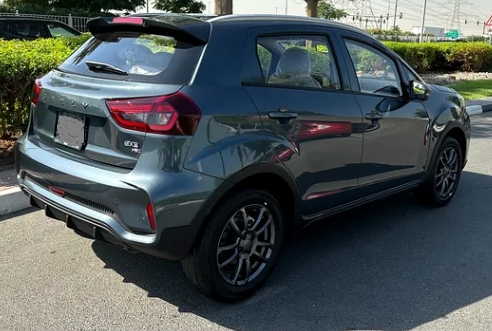
The Geely GX3 Pro is a subcompact crossover SUV developed by Chinese automaker Geely Auto as a modernized successor to the earlier Geely GX3/Yuanjing X3 small SUV. Situated in the highly competitive budget-friendly SUV segment, the GX3 Pro combines compact dimensions, practical cabin space, and improved technology to appeal to urban drivers in emerging markets around the world. This article traces the evolution of the GX3 Pro, its production timeline, trim offerings, technical specifications, market reception, and future outlook.
Origins and History: From Yuanjing X3 to GX3 Pro
The Geely GX3 Pro traces its lineage back to the Geely Yuanjing X3 (also known as the Geely GX3 in global markets), a subcompact crossover first introduced in 2017 as part of Geely’s effort to broaden its small SUV lineup. The original Yuanjing X3 was a straightforward 5-seat vehicle powered by a naturally aspirated 1.5-liter inline-4 gasoline engine, producing around 103 hp and 142 Nm of torque, with choices of manual and automatic transmissions.
In 2021–2022, Geely introduced a refreshed and more modern version called the GX3 Pro — initially positioned as a facelifted and updated small SUV that sought to combine contemporary styling and improved comfort with the original’s compact practicality. The Pro moniker denoted enhancements in styling, interior features, and drivetrain calibrations aimed at keeping the platform competitive in markets where affordable crossovers dominate.
.

.
Production Timeline: Years Produced
- 2017–2022 — Geely Yuanjing X3/GX3: The base subcompact crossover launched in China and select export markets, establishing the platform that would later be developed into the GX3 Pro.
- 2022–Present — Geely GX3 Pro (Facelift/Pro): The updated iteration, marketed internationally as GX3 Pro, began production with a facelift in 2022 and continues through at least 2026 in various regions.
Unlike many global mainstream models, the GX3 Pro has been largely sold in emerging markets — including the Philippines, Middle East, Central America, and parts of Africa and Latin America — rather than in Western Europe or North America.
Technical Overview: Platform and Powertrain
The GX3 Pro is based on a front-engine, front-wheel-drive layout and retains the core of the earlier Yuanjing X3 platform, with the following key mechanical features:
Engine
- 1.5 liter naturally aspirated inline-4 gasoline engine
- Approx. 102–113 hp and around 140–143 Nm of torque, depending on tuning and market specification.
- The engine has dual variable valve timing (DVVT) for improved efficiency and emissions performance.
Transmission Options
- 5-speed manual transmission — offered in base or value-oriented trims.
- Continuously Variable Transmission (CVT) — provides smoother, more efficient cruising and simulated multi-gear response in some markets.
The GX3 Pro does not offer all-wheel drive (AWD); it remains strictly front-wheel-drive (FWD) across all configurations.
Dimensions
- Length: 4,005 mm
- Width: 1,760 mm
- Height: 1,575 mm
- Wheelbase: 2,480 mm
These compact dimensions make the GX3 Pro well suited for urban mobility while still offering usable cargo volume and a flexible seating layout.
Design: Exterior and Interior
The GX3 Pro presents a modern and slightly rugged appearance for its class. Key design features include:
- Hexagonal grille with sleek LED daytime running lights and fog lamps that give the front end a more dynamic presence.
- Sporty exterior lines and flared wheel arches, which contribute to a crossover-style silhouette.
- A practical interior with seating for up to five passengers, and rear seats that fold down to expand cargo space from around 400 liters to as much as 1,000 liters.
- Standard interior amenities often include an 8-inch touchscreen infotainment system, Bluetooth, USB connectivity, and leather-wrapped multifunction steering controls on higher trims.
Safety-oriented features such as dual front airbags, ABS with EBD, electronic stability control (ESC), and hill start and hill descent controls are commonly offered, depending on trim and market.
Trim Levels and Models Offered
Trim names and specific equipment vary significantly by market, reflecting local preferences, pricing strategies, and regulatory differences. However, across markets in Asia, the Middle East, and Central America, the GX3 Pro has been offered in multiple trim levels and configurations.
Typical Trim Variants by Region
In markets such as the Philippines and Lebanon, common trim or variant structures include:
- GX3 Pro S / Base (Manual) — entry-level trim with manual gearbox, cloth seating, basic infotainment, and standard safety features.
- GX3 Pro Comfort (CVT) — mid-range trim with continuously variable transmission, sunroof, enhanced infotainment, and automotive conveniences.
- GX3 Pro with Sunroof / Premium — higher-spec models with sunroof, enhanced interior materials, and more advanced connectivity features.
- Regional comparisons such as GX3 Pro GK and GX3 Pro GF identify variants with different levels of comfort and technology packages, including options like leather steering wheels, push-button start, and rear cameras.
In some export dealer materials, variants may be distinguished by additional standard features such as power windows, cruise control, infotainment enhancements, and rear parking sensors.
Market Reception and Use Cases
The GX3 Pro has been positioned as an affordable yet modern urban crossover for buyers seeking practical daily transportation with some SUV styling. In the Philippine market, the model quickly rose to a top spot in the small SUV segment shortly after its August 2023 launch, demonstrating strong sales performance relative to competition in its price class.
Drivers have generally praised the GX3 Pro for its value proposition, fuel efficiency, and functional cabin space, although feedback often notes that performance figures are modest and that advanced driver aids are limited compared to more expensive competitors. Real-world fuel consumption ranges reported around 12–16 km/L (approximately 6–8.3 L/100 km), making it efficient for city commuting and daily driving.
Future Outlook
Looking ahead, the GX3 Pro is expected to remain in production through at least the mid-2020s, continuing as an accessible entry point into the SUV segment for budget-conscious buyers in developing markets. The vehicle’s powertrain and platform are mature and proven, enabling Geely to keep costs low while offering modern design and features.
However, the automotive industry’s shift toward electrification may influence the future of the GX3 Pro platform. Variants of the underlying GX3 architecture have already been rebadged or reworked into electric formats under other names — for example, the Geometry EX3 / Kungfu Cow EV under Geely’s electric sub-brand, and similar variants under the Livan X3 Pro banner in certain regions.
While the GX3 Pro itself has not yet been offered in an all-electric version, its continued evolution may see hybrid or electric adaptations if Geely decides to electrify its subcompact crossover offerings more broadly — especially as emissions regulations tighten and consumer demand shifts toward low-emission models.
Conclusion: Practical and Accessible Urban Mobility
The Geely GX3 Pro has carved out a niche as an affordable, practical, and modestly equipped subcompact SUV that appeals to urban drivers and cost-conscious buyers in international markets. Evolving from the earlier Yuanjing X3 platform into a more contemporary package in 2022, the GX3 Pro blends manageable size, usable cargo space, and modern tech features into a compelling entry-level SUV proposition.
With multiple trim levels tailored to regional preferences and continued production through the mid-2020s, the GX3 Pro represents Geely’s strategy of leveraging proven architecture in a competitive price segment, while leaving the door open for future enhancements — potentially including electrified drivetrain options — as global automotive trends continue to evolve.