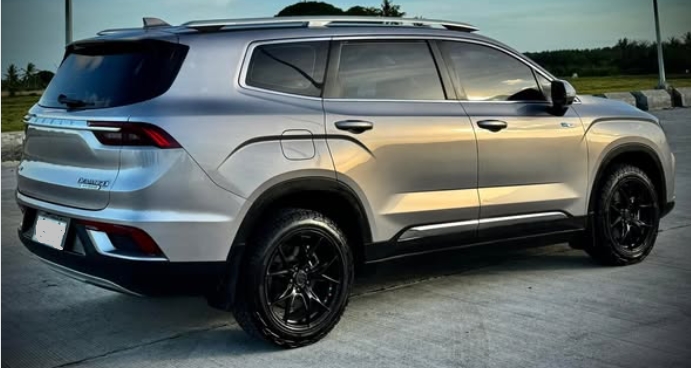
The Evolution of the Geely Okavango: History of The 7-Seat SUV
Since its global rollout in the early 2020s, the Geely Okavango has become one of the most prominent midsize SUV offerings from Chinese automaker Geely Auto. Positioned as a family-oriented seven-seat SUV with ample space, competitive pricing, and a feature-rich offering, the Okavango represents Geely’s strategy to expand its presence in international markets. This article explores its origins, production timeline, trim levels, technical evolution, market reception, and future outlook.
Origins and Introduction: A Global Family SUV (2020)
The Geely Okavango is essentially the overseas export name for the Geely Haoyue, a midsize SUV that Geely introduced in the domestic Chinese market in 2020. In China, the Haoyue nameplate debuted in 2020 as part of Geely’s effort to broaden its SUV portfolio beyond smaller crossovers. When marketed outside China — especially in regions such as the Middle East, Southeast Asia, and Latin America — it took on the international name Okavango, inspired by the Okavango Delta in Botswana.
The Haoyue platform, codenamed VX11 during development, was designed to compete in the increasingly competitive midsize SUV category with a focus on seven-seat flexibility, family-friendly features, and a balance of performance and comfort.
Platform and Powertrain: Architecture and Engines
Mechanically, both the Haoyue and international Okavango are based on Geely’s NL midsize SUV platform, which prioritizes interior space and structural rigidity. Early versions were powered by:
- 1.5-liter turbocharged three-cylinder engine with mild-hybrid assistance (48V electric motor synergy) — yielding around 190 horsepower and 300 Nm of torque, paired with a 7-speed wet dual-clutch transmission (7DCT). This setup prioritized fuel efficiency and everyday usability.
- In later export markets and mid-cycle updates, a 2.0-liter turbo gasoline engine producing around 218 horsepower and 325 Nm of torque became available, also with a 7DCT. This more potent powertrain delivered better highway performance and load-carrying ability, particularly for families with seven passengers and cargo.
All engines powered primarily the front wheels, although all-wheel drive options have occasionally been mentioned for select versions, particularly in rise-to-power trims.
.

.
Trim Levels and Model Years: 2020–2026
Across different markets, the Okavango was offered with a range of trims over its production run. These varied by region and year, but generally included:
2020–2022: Initial Launch and First Variants
When it first arrived in international markets following its late-2020 launch, the Okavango lineup was typically structured around entry-level, mid-range, and higher-end configurations. For example, in the Philippines shortly after its launch:
- Comfort — Base trim with essential features and hybrid powertrain.
- Urban — Middle trim adding more convenience tech, such as 360° cameras and power-adjustable seats.
- Urban Plus — Top of the line with panoramic sunroof, adaptive ADB Matrix LED headlights, and fully digital instrument cluster.
These early trims established the Okavango as a compelling value SUV with modern features that often outpaced competitors at similar price points.
2023–2024: Expanded Engine Options and Continued Global Sales
By 2023 and 2024, the Okavango continued to offer both the 1.5-liter mild-hybrid and the 2.0-liter turbo options across multiple markets. Trim designations followed regionally appropriate naming conventions (for example, GK, GF, and variants indicating equipment levels in Middle Eastern markets).
In markets like Kazakhstan and Panama, the Okavango was presented as a family-focused SUV with seven-seat flexibility — independent 2-3-2 seating with up to 32 possible seat configurations and a maximum cargo volume of over 2,360 liters with rear seats folded.
2025–2026: Facelifts, New Variants, and Feature Additions
In 2025, the Okavango — corresponding to the second-generation Geely Haoyue L in China — underwent its first major global update. Patent disclosures and industry reports indicated this refreshed model would include exterior styling tweaks, revised grille design, and a new engine lineup that further refined efficiency. Leaks suggest the option for 5-seat and 6-seat versions in addition to the traditional 7-seat layout.
Regional offerings such as the Okavango Elite began appearing in dealer-specific catalogs around 2026, often enhancing comfort and tech content (power mirrors, LED lighting, premium infotainment, and leather upholstery).
Interior and Technology: A Modern Family Experience
Across its model years, the Okavango has emphasized interior comfort, flexibility, and technology. Common features include:
- Spacious 7-seat layout with individual adjustments and numerous configuration options.
- Large infotainment displays with touchscreen interfaces and connectivity features such as Apple CarPlay (though Android Auto support has varied by region).
- Advanced safety and driver aids, including Blind Spot Detection (BSD), Rear Cross Traffic Alert (RCTA), Intelligent Cruise Control, Automatic Emergency Braking, and multi-camera views.
- Comfort-oriented amenities such as three-zone climate control, CN95 air filtration systems, and adaptable seating arrangements.
These elements positioned the Okavango as a modern SUV capable of meeting the demands of families, long-distance travelers, and daily commuters alike.
Market Reception and Global Footprint
While detailed global sales figures for the Okavango specifically are limited, reviews and owner feedback across geographies — from the Middle East to Southeast Asia — suggest growing consumer interest in the model’s space, features, and competitive pricing. Owner discussions have noted generally positive impressions of comfort and practicality, albeit with some concerns about infotainment limitations and parts availability in select regions.
This reception mirrors Geely’s international strategy, which leverages globally marketed versions of domestically successful SUVs like the Haoyue to expand its brand recognition beyond China. The collaboration between Geely and Volvo (for powertrain development and platform refinement) also contributes to its technical credibility.
Future Outlook: Electrification and Continued Expansion
Looking ahead, the Okavango’s evolution is likely to align with broader automotive trends, particularly electrification and connectivity:
- Electrified Powertrains: Early iterations already integrate 48V mild-hybrid support, and future models could adopt stronger hybrid or plug-in hybrid systems — especially as emissions regulations tighten globally.
- Expanded Seating Configurations and Customization: Reports from patent filings suggest potential offerings with 5-seat configurations alongside traditional layouts.
- Connectivity and Autonomous Aids: As competition increases, refreshed Okavango models are likely to include richer connectivity features and advanced driver assistance suites (ADAS) to remain competitive with rivals from other global brands.
Additionally, the underlying Haoyue platform continues to evolve in China, with new powertrain options such as Volvo-sourced 2.0-liter turbo engines expanding performance choices.
Conclusion: A Key Player in Geely’s SUV Lineup
The Geely Okavango represents more than just another SUV in the global marketplace — it symbolizes Geely’s strategic aim to offer confident, spacious, and well-equipped family vehicles at competitive prices. From its introduction in 2020 as a midsize, seven-seat SUV, through successive trims and updates, the Okavango has maintained a focus on practicality, modern technology, and evolving consumer expectations.
While trim names and specifications have varied across markets and years, the underlying mission remains consistent: provide a versatile SUV platform that balances comfort, technology, and performance. With future updates likely to introduce additional electrification and cabin advancements, the Okavango — and its Haoyue counterpart — will continue to be a central part of Geely’s global SUV strategy well into the latter 2020s.