The Evolution of the Hennessey (Dodge) Viper: From Dodge Supercar to Bespoke Performance Icon
When people talk about Hennessey Performance Engineering (HPE), one of the very first cars most enthusiasts think of is the souped-up Viper—a vehicle that transformed America’s native sports car into something even more extreme. Unlike the Shelby Cobra (which was a factory-built performance legend), the Hennessey Viper isn’t a production car sold directly by an OEM. Instead, it represents a series of high-performance, often limited-edition upgrades built around the Dodge Viper platform that have defined Hennessey’s early reputation and helped cement the company’s place in automotive history.
This article traces the evolution of the Hennessey Viper—from its earliest upgrade packages in the 1990s to the powerful Venom packages of the 21st century—placing those builds in context with the underlying Viper generations, their trim levels, and modern performance outlook.
The Dodge Viper: The Foundation (1992–2017)
Before discussing the Hennessey Viper specifically, it’s important to understand the foundation: the Dodge Viper sports car. The Viper was produced by Dodge from the 1992 model year through 2017 (with some hiatus years), making it one of America’s most recognizable and visceral performance cars.
Across five generations, the Viper evolved:
- First Generation (SR I; 1992–1995): The original Viper RT/10 roadster burst onto the scene with a massive 8.0 L V10 producing ~400 hp, a minimalist design philosophy, and intense performance.
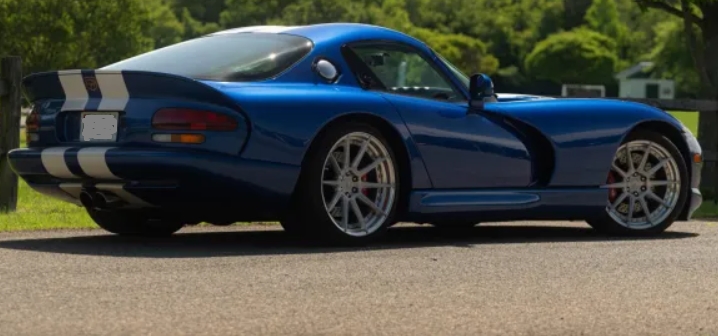
- Second Generation (SR II; 1996–2002): Added the coupe variant GTS and improvements including increased power and chassis refinement.
- Third Generation (ZB I; 2003–2006): Rebranded as the Viper SRT-10 with over 500 hp from an updated 8.3 L V10, bodywork and dynamics modernized.
- Fourth Generation (ZB II; 2008–2010): A brief return following a production pause, with 8.4 L engines making around 600 hp and special editions inspired by racing success.
- Fifth Generation (VX I / SRT Viper; 2013–2017): A final major revision with modern suspension, braking, and electronics, producing 640–650 hp but ultimately ending production due to slow sales and regulatory challenges.
The Viper also included several trim and special models during its life, including the ACR (American Club Racer), TA (Time Attack), GTS-R (race-oriented), and highly collectible Final Edition runs in 2010 and 2017.
.
THIS could come in handy for your auto garage (and everywhere else!):

.
Hennessey Takes the Viper to a New Level
Origins: Venom 500 and 550 (Early–Mid 1990s)
In the early 1990s, Hennessey was just beginning its journey as a performance specialist. The company’s founder, John Hennessey, started by modifying engines and building performance parts for many muscle cars and sportscars. When the Dodge Viper debuted, its raw potential was obvious to tuners.
The first Hennessey-branded Viper upgrade was the Venom 500, which transformed a stock Viper’s output — originally around 400 hp — to approximately 500 hp. Building on that success, HPE soon introduced the Venom 550 with approximately 550 hp, thanks to improved headers, valve train upgrades, and increased engine performance.
These early upgrades earned Hennessey performance credibility and put the first generation Viper into a new league of powerful machines capable of “supercar-level” acceleration.
Venom 600 and 650R (Mid-1990s)
As the Viper evolved, so did Hennessey’s packages. By 1995–1996, HPE was offering the Venom 600, typically achieved via a stroker kit and component enhancements boosting displacement and power. That same era brought the Venom 650R, which became legendary among enthusiasts.
The Venom 650R took a Viper GTS and pushed it to roughly 650 horsepower, using forged internals, bespoke camshafts, improved intake and exhaust components, and other engine upgrades. This car was one of the earliest to help Hennessey break the 200 mph barrier—a significant milestone for tuner-built cars in the mid-1990s.
Owners typically sent their Vipers to HPE’s Texas facility for these conversions, receiving engine, suspension, and brake enhancements fit for highway blasts or open road competition.
Venom 800R: Displacement for Power (Late 1990s)
In 1999, Hennessey unveiled the Venom 800 — a significant engineering leap. This package included increasing the Viper’s V10 displacement to about 9.5 liters, adding internal reinforcements, and extensively modifying engine components to produce roughly 810 hp without forced induction.
The Venom 800 wasn’t just about peak numbers; it also demonstrated Hennessey’s philosophy of “no replacement for displacement” on steroids. With that much displacement and power, the cars accelerated aggressively and achieved reported top speeds exceeding 230 mph in controlled environments.
Venom 1000 Twin Turbo (2000s)
As the new millennium began, Hennessey pushed the envelope farther. The Venom 1000 Twin Turbo became the most famous — and most feared — Viper build of its era. Offered as either a complete car or upgrade package, this version used an 8.55 L twin-turbocharged V10 producing roughly 1,000 bhp and over 1,100 lb-ft of torque.
With only a theoretical run of about 24 vehicles, the Venom 1000 was an ultra-limited, ultra-powerful showpiece that eclipsed nearly all street cars of its time. Its performance metrics—0-60 mph in the low 3-second range and top speeds well above 200 mph—placed it among the quickest road-legal vehicles of its day.
Gen-Specific Hennessey Upgrades (2010s)
When Dodge revived the Viper name as the SRT Viper for the 2013 model year, Hennessey didn’t hesitate to continue its tradition. Using twin-turbo setups and upgraded internals, HPE offered versions of the Venom 1000 on the Gen-5 Viper that claimed power outputs up to ~1,120 hp—an astonishing figure compared to the factory’s 640 hp baseline.
These “mild” and “full” upgrade paths catered to owners who wanted explosive straight-line performance or those seeking high-end drag strip prowess, with adapted aerodynamics, cooling, and chassis tweaks necessary to handle the power.
How Hennessey Builds Differ from Dodge Trims
Importantly, Hennessey vehicles aren’t “factory trims” in the same way as the Dodge Viper’s regular lineup (RT/10, GTS, ACR, TA, GTS-R, etc.). Instead, HPE offers aftermarket performance packages or complete builds based on existing Viper platforms.
Where Dodge trims historically focused on varying levels of performance and track readiness (for example, the ACR track-focused package or Final Edition collectible models), Hennessey upgrades are about pushing performance far beyond stock specifications—oftentimes doubling horsepower and outright speed.
Legacy and Cultural Impact
Hennessey’s relationship with the Viper did more than just increase numbers on a dyno chart—it helped cultivate the idea that American sports cars could be world-class monsters. The early successes with the Venom 650R and Venom 800 brought press coverage and attention that helped Hennessey grow into the broader exotic and hypercar tuning and manufacturing business it is today.
For many owners, owning a “Hennessey Viper” wasn’t just about performance—it was about being part of an exclusive club of drivers who pushed the boundaries of what a naturally aspirated or forced-induction V10 could do.
Future Outlook
Even though production of the Dodge Viper officially ended in 2017, the legacy of the Hennessey Viper lives on. Enthusiasts still bring older Vipers to HPE for upgrades, restoration, and bespoke builds, and the company continues to expand its own lineup (like the Venom F5 hypercar) while honoring its roots.
While no official new Dodge Viper is currently in production, the enthusiasm for high-performance, American-built supercars remains strong. Hennessey’s role in that story—with its early focus on Viper performance—will always be a key chapter in automotive tuning history.
Conclusion
The Hennessey Viper isn’t a single car or a singular trim level. Instead, it is a chronicle of evolution—a progression from modest performance upgrades in the 1990s to jaw-dropping hypercar-level builds in the 21st century. Whether it was a Venom 500 in the hands of a first-generation Viper owner or a 1,120 hp twin-turbo beast sitting in a collector’s garage, Hennessey’s Vipers represent bold expressions of American muscle, tuner ingenuity, and the unending pursuit of speed.