The Evolution of the Koenigsegg CC Series (CC8S CCX CCXR): A Legacy of Speed, Innovation, and Performance
The Koenigsegg CC Series represents one of the most significant milestones in the world of hypercars. From its humble beginnings in the early 2000s to becoming a household name synonymous with cutting-edge performance, the CC Series embodies the Swedish brand’s commitment to pushing the boundaries of automotive engineering. As Koenigsegg’s first production car lineup, the CC Series laid the foundation for the company’s success in creating some of the world’s fastest, most technologically advanced, and luxurious hypercars. In this article, we’ll explore the evolution of the Koenigsegg CC Series, the various models and trim levels offered over the years, the vehicle’s innovations, and its impact on the automotive industry.
Koenigsegg’s Humble Beginnings: The Birth of the CC Series
Founded in 1994 by Christian von Koenigsegg, Koenigsegg Automotive AB’s mission was clear from the start: to create the world’s ultimate supercar. Christian’s passion for automobiles, combined with his desire to push the limits of performance, led him to design a car that would eventually set the stage for the company’s future success.
The CC Series, short for “Christian von Koenigsegg,” was Koenigsegg’s first production car line. The series debuted in the early 2000s, marking a pivotal moment in the evolution of hypercars. At the time, Koenigsegg had already earned a reputation for innovation, but the CC Series would bring their vision into the mainstream, making waves within the automotive industry for its extraordinary engineering, performance, and exclusivity.
Koenigsegg CC Concept (2000)
The first step toward the creation of the CC Series was the introduction of the Koenigsegg CC Concept in 2000. This prototype showcased many of the design elements that would later be refined in the CC models. The car featured a lightweight carbon fiber chassis, a 4.7-liter V8 engine producing around 250 horsepower, and advanced aerodynamics. Though the CC Concept never entered production, it proved to be the foundation for what would eventually become the Koenigsegg CC8S.
.

.
Koenigsegg CC8S (2002 – 2004)
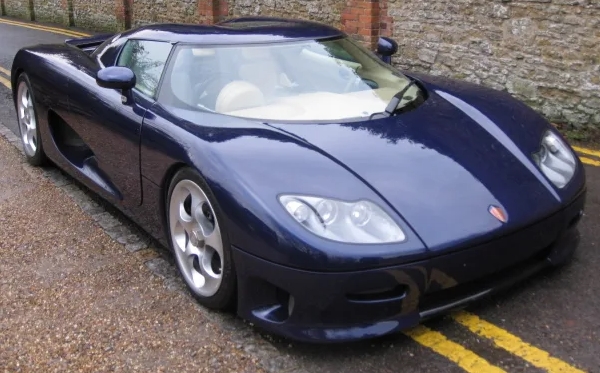
In 2002, Koenigsegg officially introduced the CC8S, their first production car. It was designed to compete with the likes of the Ferrari Enzo and the Porsche Carrera GT, offering unmatched performance and craftsmanship. The CC8S featured a 4.7-liter twin-supercharged V8 engine, producing 660 horsepower and 553 lb-ft of torque. This allowed the car to accelerate from 0 to 60 mph in just 3.2 seconds and reach a top speed of over 240 mph, making it one of the fastest cars in the world at the time.
The CC8S also featured advanced engineering, including an all-carbon-fiber monocoque chassis and a six-speed manual transmission. The car was also equipped with a sophisticated suspension system that provided both agility and stability at high speeds, making it a true performance machine. The interior of the CC8S was a blend of luxury and sport, with leather upholstery, carbon fiber accents, and state-of-the-art technology.
Key Features of the CC8S:
- Engine: 4.7L V8, twin-supercharged
- Power Output: 660 horsepower
- 0-60 mph: 3.2 seconds
- Top Speed: 240 mph+
- Chassis: Carbon fiber monocoque
- Production: 2002-2004
Koenigsegg CCX (2006 – 2010)
In 2006, Koenigsegg unveiled the CCX, a model that was intended to meet stricter environmental and safety regulations, particularly those in the United States and the European Union. The CCX (short for “Competition Coupe X”) was an evolution of the CC8S, featuring a redesigned engine, improved aerodynamics, and better crash protection.
The CCX featured a 4.7-liter twin-supercharged V8 engine, which was capable of producing an impressive 806 horsepower and 920 Nm (679 lb-ft) of torque. This allowed the car to accelerate from 0 to 60 mph in just 3.2 seconds, with a top speed exceeding 245 mph. The CCX also utilized a more refined carbon fiber monocoque, which improved structural rigidity and overall handling.
One of the most notable upgrades with the CCX was its attention to safety and environmental concerns. Koenigsegg worked hard to ensure that the CCX complied with all global safety standards, incorporating advanced systems like airbags, traction control, and stability control. Additionally, the CCX was capable of running on E85 ethanol, making it one of the first high-performance cars to embrace alternative fuels.
Key Features of the CCX:
- Engine: 4.7L V8, twin-supercharged
- Power Output: 806 horsepower
- 0-60 mph: 3.2 seconds
- Top Speed: 245 mph+
- Fuel Compatibility: E85 ethanol
- Production: 2006-2010
Koenigsegg CCXR (2006 – 2010)
Released alongside the CCX was the Koenigsegg CCXR, a variant of the CCX that was designed to run on E85 ethanol, which offered higher performance due to the increased power output. The CCXR’s 4.7-liter V8 engine produced a staggering 1,018 horsepower and 1,060 Nm (783 lb-ft) of torque. This allowed the car to achieve an astonishing top speed of over 250 mph.
The CCXR’s ability to run on E85 ethanol, a biofuel that is more environmentally friendly than traditional gasoline, highlighted Koenigsegg’s commitment to performance without compromising environmental responsibility. In addition, the CCXR’s improved aerodynamics, carbon fiber bodywork, and advanced suspension system allowed for superior handling and cornering capabilities.
Key Features of the CCXR:
- Engine: 4.7L V8, twin-supercharged
- Power Output: 1,018 horsepower
- 0-60 mph: 3.1 seconds
- Top Speed: 250 mph+
- Fuel Compatibility: E85 ethanol
- Production: 2006-2010
Koenigsegg Agera (2010 – 2018)
Though technically a successor to the CC Series, the Koenigsegg Agera was heavily influenced by the foundation laid by the CCX and CCXR. The Agera debuted in 2010 and became one of Koenigsegg’s most successful and iconic models. Its introduction marked the end of the CC Series, as Koenigsegg shifted its focus to new technologies and innovations. The Agera featured a 5.0-liter twin-turbo V8 engine, producing over 1,000 horsepower, and was designed to achieve top speeds in excess of 270 mph.
Though the Agera replaced the CC series, many of the innovations that defined the CC models, such as the lightweight carbon fiber monocoque, the focus on aerodynamics, and the use of advanced materials, continued to influence the design of subsequent Koenigsegg cars.
Key Features of the Agera:
- Engine: 5.0L V8, twin-turbocharged
- Power Output: 1,000+ horsepower
- Top Speed: 270 mph+
- Production: 2010-2018
The Legacy of the CC Series
The Koenigsegg CC Series was instrumental in establishing the brand’s reputation for producing world-class hypercars. Each model in the series introduced groundbreaking technologies that were ahead of their time, from the lightweight carbon fiber monocoque chassis to the use of alternative fuels like E85 ethanol. The CC8S, CCX, and CCXR paved the way for future Koenigsegg models, such as the Agera and Jesko, which would continue to push the limits of performance and engineering.
The CC Series also demonstrated Koenigsegg’s ability to adapt to market demands, whether it was building cars that complied with environmental and safety regulations or offering cutting-edge features like active aerodynamics and advanced traction control systems.
The Future Outlook for Koenigsegg’s Hypercar Lineup
As Koenigsegg looks to the future, the legacy of the CC Series will continue to influence the company’s designs. With the introduction of the Koenigsegg Jesko, Regera, and the upcoming Gemera, Koenigsegg is moving toward a more hybridized and sustainable future without sacrificing the performance and luxury that defines the brand.
The Koenigsegg CC Series remains a milestone in the evolution of hypercars, and its innovations have paved the way for the brand to become one of the most prestigious manufacturers in the automotive world. The series laid the foundation for Koenigsegg’s reputation as a pioneer in performance engineering, and its influence will continue to be felt for many years to come.
Conclusion
The Koenigsegg CC Series, spanning from the introduction of the CC8S in 2002 to the CCX and CCXR models, helped establish the Swedish brand as a leader in the hypercar world. Through continuous innovation, world-record-breaking performance, and a commitment to sustainability, Koenigsegg’s CC Series marked the beginning of an exciting legacy. Though the CC models have now been succeeded by newer models like the Agera, the CC Series remains a cornerstone of Koenigsegg’s history and an enduring symbol of engineering excellence.