The Evolution of the Shelby Cobra: Birth of an American Legend
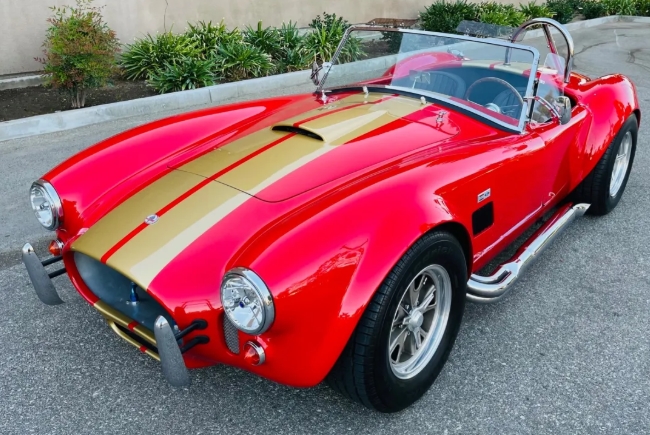
The Shelby Cobra stands as one of the most iconic sports cars in automotive history — a bold blend of British chassis engineering and raw American V8 power. Conceived in the early 1960s by racing legend Carroll Shelby, the Cobra’s story is one of performance innovation, limited production exclusivity, and a legacy that still captivates collectors, racers, and enthusiasts more than six decades later.
Origins: From AC Ace to Shelby Cobra (1961–1962)
The roots of the Cobra trace back to the AC Ace, a lightweight British roadster built by AC Cars in Surrey, England. Carroll Shelby, fresh off his success as a racing driver, saw massive potential in the nimble AC chassis but felt it needed serious power to compete with America’s best. He convinced Ford Motor Company to supply small-block V8 engines and began collaborating with AC to create a high-performance sports car.
The prototype, designated CSX2000, appeared in 1962. This first Shelby Cobra featured a 4.3 L Ford 260-cu-inch V8 mounted into the AC Ace chassis, creating a powerful, lightweight roadster weighing roughly 2,000 lb. Shelby’s team at their Los Angeles facility completed and tuned these early cars before delivery.
.
THIS could come in handy for your auto garage (and everywhere else!):

.
The Mark I Cobra: Early Production (1962–1963)
Production of the Cobra Mark I officially began in 1962. Though initially fitted with the 260 cu in (4.3 L) Ford V8, Shelby quickly shifted to the larger 289 cu in (4.7 L) V8 — offering more torque and horsepower for both street and racing applications.
Key Details of the Mark I:
- Years Produced: 1962–1963
- Engine Options: 260 cu in and 289 cu in Ford V8s
- Body Style: 2-door open roadster
- Features: Lightweight aluminum body panels, independent suspension, and a 4-speed manual gearbox.
The Mark I established the template for what the Cobra would become — a brutally effective blend of light weight and power.
The Mark II Cobra: Refined Performance (1963–1965)
In 1963, Shelby introduced the Mark II Cobra, with improvements inspired by racing experience and feedback. The most notable change was a refined handling package, including revised suspension geometry and rack-and-pinion steering — upgrades that made the Cobra more balanced on road and track alike.
Key Details of the Mark II:
- Years Produced: 1963–1965
- Primary Engine: 289 cu in Ford V8 (at approximately 330–350 hp)
- Trim Variants:
- Standard road cars
- FIA homologation racing versions
- “Competition” race-prepared models
- Special editions like the Dragonsnake (factory drag-oriented performance package)
It was during this period that the Cobra stepped fully into international competition, earning acclaim in SCCA races and on circuits around the world.
The Daytona Coupé: Aerodynamics and World Titles (1964–1965)
By 1964, Cobra had proven dominant on short, twisty road courses but lacked high-speed prowess against Ferrari in international GT racing. In response, Shelby commissioned designer Peter Brock to develop a sleeker, fastback version of the 289 Cobra — the Shelby Cobra Daytona Coupé.
Key Facts:
- Production: Only 6 original Daytona Coupés were built.
- Years of Race Activity: 1964–1965
- Purpose: Aerodynamic efficiency to compete in FIA World Sports Car Championship races
- Achievements: Won the 1965 FIA GT World Championship, beating Ferrari’s 250 GTO on multiple fronts.
The Daytona remains one of the rarest and most celebrated Cobras ever built, combining historic racing success with stunning design.
The Mark III Cobra: Big-Block Power (1965–1967)
Shelby’s next evolution brought a radical shift: the introduction of the big-block Ford 427 cu in (7.0 L) V8. This engine delivered massive torque and horsepower — transforming the Cobra into one of the fastest production cars of its era.
The switching of leaf springs to coil-spring suspension, along with widened tires and chassis reinforcements, allowed the 427 Cobra to handle the extra power without sacrificing agility.
Key Details of the Mark III:
- Years Produced: 1965–1967
- Primary Engine: 427 cu in V8 (with some unique units fitted with Ford’s 428 for U.S. street use)
- Variants:
- Street-tuned 427 roadsters
- Competition and race-ready versions
- 427 S/C Semi-Competition models with race-oriented specifications
- A handful of prototype and experimental builds
- Notable: The 427 outran many rivals in American road races, though homologation challenges limited its official international competition.
Production Numbers and Rarity
Despite its fame, the original Shelby Cobra was produced in very limited numbers. Estimates suggest:
- Total Original Cobras (1962–1968): ~998 cars
- Small Block (289) Cars: ~655 units
- Big Block (427) Cars: ~343 units
Within these totals, numerous subcategories existed — from pure street cars to factory competition and special builds, further enhancing the model’s collectible mystique.
Trim Levels and Notable Variants
Over its original lifecycle, the Shelby Cobra lineup included multiple trim levels and variants tailored to different purposes:
🏁 Street and Road Models
Standard production roadsters powered by:
- Ford 260 V8 (early production)
- Ford 289 V8
- Ford 427 V8 (later units)
These offered blistering acceleration and raw performance for the era.
🏎 Competition Models
Designed specifically for racing:
- FIA-homologated 289 roadsters
- Track-prepared 427 race cars
- Daytona Coupés for high-speed GT competition
These models often featured lighter components, race fuel systems, and stripped interiors.
⚙ Semi-Competition (S/C) Models
Bridged the gap between street and race cars, providing:
- Performance upgrades (suspension, brakes)
- Road-legal comforts
- Track-friendly capabilities
🐍 Special Editions
Exotic one-offs like the Dragonsnake and highly tuned semi-competition examples added further lore to the Cobra legacy.
After the 1960s: Continuations and Modern Revivals
When Shelby American ended original production in the late 1960s, the Cobra legend didn’t end — it transformed.
Continuation Series
Starting in the 1990s and continuing today, Shelby American and AC Cars have offered officially sanctioned continuation Cobras, built with modern techniques but faithful to the originals. These include:
- CSX7000 – 289 FIA Cobra: A faithful racing continuation of the small-block Cobra.
- CSX8000 – 289 Street Cobra: Street-oriented continuation models.
- CSX4000/6000 Series: Various licensed continuation cars built in period style.
- CSX9000 – Modern Daytona replica: Modern homage to the original Daytona Coupé.
Shelby has also explored limited-edition Cobras for anniversaries and special celebrations, keeping the name alive for new generations of enthusiasts.
Replicas and Legacy Builds
Due to its legendary status, countless replicas and tribute models have been crafted by third-party manufacturers around the world. While not original Cobras, many strive to recreate the experience and performance of the originals at more attainable prices.
Cultural Impact and Future Outlook
Today, the Shelby Cobra sits at the intersection of American muscle and classic sports car culture. Its influence extends far beyond its production years — inspiring cars, films, memorabilia, and even modern performance vehicles that evoke Cobra styling or spirit. Market values for original Cobras have soared, with well-preserved examples fetching millions at auction.
Looking forward:
- Continued demand for continuation and tribute models ensures the Cobra legacy endures.
- Modern interpretations — blending classic design with new powertrains — are likely to appear as manufacturers revisit vintage icons for today’s buyers.
- Enthusiast communities and racing organizations keep the Cobra’s performance heritage alive in historic racing and collector events.
Conclusion
From its humble beginnings as a British roadster with an American heart, to its position as one of the most revered sports cars of all time, the Shelby Cobra has earned its place in automotive legend. Through limited production, varied trim levels, and a remarkable racing record, the Cobra continues to captivate — a testament to Carroll Shelby’s vision and the enduring thrill of pure performance.