The Evolution of the Toyota Harrier
The Toyota Harrier is a pivotal model in Toyota’s lineup, renowned for pioneering the luxury SUV segment in Japan and beyond. Since its inception in 1997, the Harrier has undergone significant transformations in design, technology, and positioning, reflecting broader trends in automotive engineering and consumer preferences. This article provides a detailed chronological account of the Toyota Harrier’s evolution, including production years, model variants, and trim levels offered throughout its history.
Origins and First Generation (1997–2003)
Introduction and Concept
Launched in 1997, the Toyota Harrier was initially developed for the Japanese domestic market (JDM), with the aim of combining the comfort and luxury of a sedan with the utility and commanding view of an SUV. It was built on the Toyota MC platform, sharing much of its engineering with the Lexus RX, which was introduced in North America around the same time.
Design and Features
The first-generation Harrier featured a sleek, coupe-like design with a unibody construction, emphasizing ride comfort and handling dynamics. It was powered primarily by petrol engines, with a 2.2-liter 4-cylinder (3S-FE) and a 3.0-liter V6 (1MZ-FE) engine.
Trim Levels
In Japan, the initial trims included:
- Standard: Basic features with manual transmission options.
- X: Added more comfort and convenience features.
- G: Top-tier trim with leather seats, sunroof, and premium audio.
Market Variants
In North America, the model was rebadged as the Lexus RX 300, but the Harrier remained a popular choice in Japan and other Asian markets.
Second Generation (2003–2013)
Development and Launch
The second-generation Harrier was introduced in 2003, showcasing a more refined exterior and interior. It adopted a more SUV-like stance, with increased ground clearance and a more angular design language.
Design and Features
This iteration was built on the Toyota MC platform (similar to the Toyota Camry and Lexus RX). The engine lineup expanded, including:
- 2.4-liter 2AZ-FE 4-cylinder
- 3.3-liter 3MZ-FE V6 (later replaced by the 2GR-FE V6 in some markets)
- Diesel variants in select markets like Japan and Europe, notably the 2.2-liter 1AD-FTV turbo-diesel.
Powertrains
- Front-wheel drive (FWD) and all-wheel drive (AWD) options.
- Transmission choices included 4-speed automatic, 5-speed automatic, and later CVT.
Trim Levels
In Japan, the second-generation Harrier was offered in:
- Standard/Basic: Entry-level, basic features.
- Premium: Upgraded interior, better audio systems, and additional safety features.
- Elegance/Elite: Top trims with luxury features like leather seats, wood trim, and advanced infotainment.
In other markets, the Harrier was available primarily in FWD and AWD configurations, with trim levels varying by region.
Special Editions
Throughout this period, Toyota released limited editions to boost sales, such as the “Black Leather Package” and “Luxury Package.”
Third Generation (2013–2020)
Reintroduction and Design Philosophy
The third-generation Toyota Harrier was unveiled in 2013, marking a significant shift towards a more sophisticated, coupe-like crossover design. It was based on the Toyota New Global Architecture (TNGA), providing improved handling, safety, and ride quality.
Design and Technology
The exterior featured a more aggressive, aerodynamic profile, with a prominent grille, sleek LED headlights, and a lower stance. Inside, the focus was on luxury and technology, with high-quality materials and advanced infotainment systems.
Powertrain Options
- 2.0-liter 8AR-FTS turbocharged 4-cylinder (in some markets)
- 2.5-liter hybrid system (Toyota Hybrid System II)
- 2.5-liter gasoline engine paired with hybrid technology, emphasizing fuel efficiency.
Hybrid Focus
The third-generation Harrier placed a strong emphasis on hybrid models, aligning with Toyota’s global push for eco-friendly vehicles. The hybrid models combined a 2.5-liter Atkinson-cycle engine with electric motors, offering excellent fuel economy.
Trim Levels
In Japan and other markets, trim levels included:
- G: Base trim with standard features.
- Premium G: Included leather seats, premium audio, and advanced safety features like Toyota Safety Sense.
- Z: Top-tier, with optional all-wheel drive, panoramic sunroof, and luxury interior features.
In the North American market, the Harrier’s equivalent was the Lexus RX, but in markets like Southeast Asia and Australia, the Harrier was available as a standalone model with similar trim options.
Special Editions
Limited editions included the “Black Edition,” with unique black exterior and interior accents, and the “Luxury Edition” with upgraded features.
Fourth Generation (2020–Present)
Latest Model and Innovations
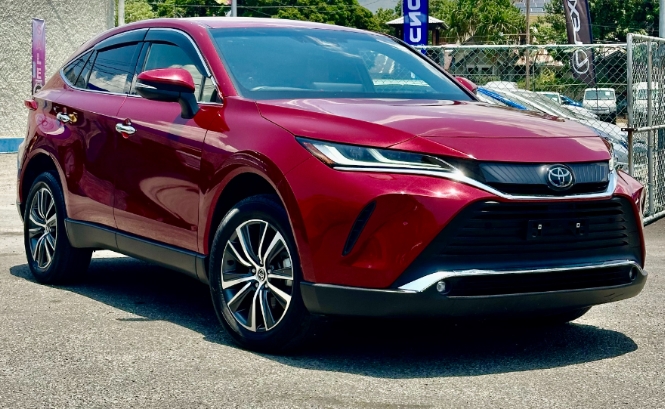
The most recent Toyota Harrier debuted in 2020, representing the fourth generation. It built upon the TNGA platform, offering a more stylish, aerodynamic design, with a focus on premium comfort and advanced safety.
Design and Features
The exterior design is characterized by sharp lines, a prominent grille, and sleek LED lighting. The interior emphasizes luxury, with high-quality materials, digital instrument clusters, and large touchscreen infotainment systems compatible with Apple CarPlay and Android Auto.
Powertrain Options
- 2.0-liter turbocharged petrol engine with CVT transmission.
- 2.5-liter hybrid system, now with improved battery technology and efficiency.
- All-wheel drive (AWD) systems are available across most trims.
Trim Levels
In Japan, the trims include:
- G: Standard with essential features.
- Z: Higher trim with luxury features, advanced safety, and premium interior options.
- S: Sportier trim with styling accents and performance enhancements.
In other markets, the Harrier is positioned as a luxury crossover, with trim levels aligned with local preferences, often including standard safety packages, premium audio, and leather interiors.
Technological Advancements
The latest Harrier incorporates Toyota’s latest safety suite, Toyota Safety Sense 2.0, featuring adaptive cruise control, lane departure alerts, and pre-collision systems. It also offers hybrid models with improved fuel economy and reduced emissions.
Notable Variants and Special Editions over the Years
Throughout its production history, the Toyota Harrier has seen numerous special editions and regional variants:
- Japan Market: Frequently received special editions such as the “Black Package,” “Luxury Package,” and “Limited” editions with unique styling cues.
- Asian Markets: Variants often included diesel options or hybrid emphasis, reflecting regional preferences.
- North America and Europe: Rebadged versions of the Lexus RX, with the Harrier primarily serving as a luxury crossover in Japan.
.
RepairSurge Online Repair Manuals Replace Bulky Books With Reliable Digital Information!
Faster And Cheaper Than Traditional Printed Manuals, Users Get Instant Access To The Repair Information They Need For Any Car, Truck, Van or SUV:
.
Summary of Production Years and Key Models
| Generation | Production Years | Notable Models & Variants | Key Features |
|---|---|---|---|
| 1st Gen | 1997–2003 | Standard, X, G trim levels | 2.2L 4-cylinder, 3.0L V6, unibody SUV |
| 2nd Gen | 2003–2013 | Standard, Premium, Elegance | Expanded engine lineup, diesel options, more SUV-like design |
| 3rd Gen | 2013–2020 | G, Premium G, Z trims | TNGA platform, hybrid emphasis, luxury features |
| 4th Gen | 2020–present | G, Z, S trims | Advanced safety, hybrid technology, modern design |
Conclusion
The Toyota Harrier has evolved into a sophisticated, versatile crossover SUV that balances luxury, performance, and efficiency. Beginning as a Japan-specific model aimed at blending sedan comfort with SUV utility, it has grown into a globally recognized vehicle with state-of-the-art technology and design. Each generation has reflected Toyota’s commitment to innovation and adaptability, ensuring the Harrier remains relevant in an increasingly competitive market.
Whether as a hybrid, a luxury vehicle, or a practical family SUV, the Harrier’s evolution showcases Toyota’s dedication to meeting diverse consumer needs while maintaining a reputation for reliability and quality. As the model continues into the future, it is poised to incorporate even more advanced technologies, sustainable powertrains, and refined styling, securing its place as a cornerstone of Toyota’s crossover lineup.