The Evolution of the TVR Tasmin: Britain’s Wedge That Redefined TVR’s Future
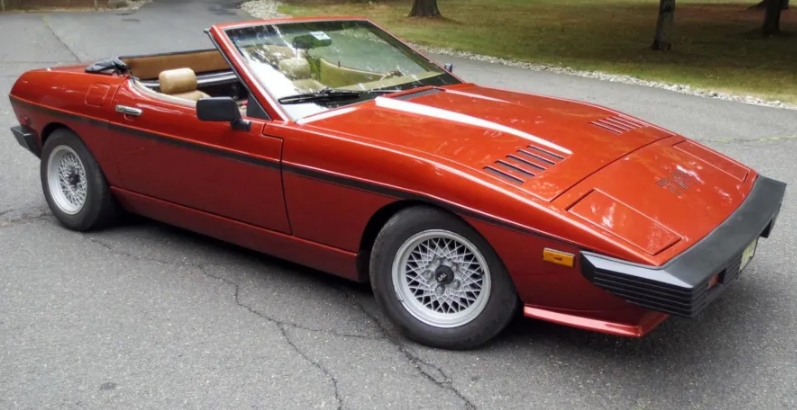
The TVR Tasmin is one of the most pivotal and transformative vehicles in the history of British sports car maker TVR. Launched at the dawn of the 1980s, the Tasmin ushered in a new design language and engineering philosophy that would underpin TVR’s Wedge era throughout the decade. Its angular, wedge‑shaped body marked a stark departure from the more classic sports car forms that preceded it and laid the foundation for a long line of wedge‑bodied TVRs that would follow. Over its production life, the Tasmin nameplate evolved significantly — spawning variants, upgrades, and even giving rise to subsequent models like the TVR 280i and eventually the 350i — before the design ethos transitioned to later wedge derivatives. This article traces the evolution of the Tasmin from its early years through its production run and beyond, detailing the models offered, trim levels available, and the legacy it left within TVR’s storied catalog.
Origins: A New Look for the 1980s
TVR in the late 1970s was a small British sports car maker known for hand‑built, low‑volume vehicles such as the 3000M, 2500M, and 1600M. These models featured traditional curvy bodywork and were aging in comparison to contemporary European and Japanese competitors. When TVR decided to modernize its lineup, it commissioned designer Oliver Winterbottom (formerly of Lotus) to pen a radically different design with crisp lines and an aggressively styled wedge shape that reflected emerging automotive trends of the time.
The result was the TVR Tasmin, unveiled in 1980. It represented the company’s shift toward modern sports car design and engineering — featuring a fiberglass body on a tubular steel spaceframe, front‑engine/rear‑drive layout, and suspension heavily sourced from Ford components.
.

.
Early Production: Tasmin 200 and the First Coupé (1980–1984)
The very first Tasmin cars rolled out of TVR’s Blackpool works in 1980, initially available with multiple engine configurations:
Tasmin 200 (1979/1980–1984)
- Engine: 2.0‑litre Ford Pinto inline‑four
- Power: ~101 hp
- Body Styles: 2‑door coupe and convertible
- Overview: Designed as a budget‑oriented Tasmin variant, the 200 featured a modest four‑cylinder engine and was TVR’s attempt at offering a more affordable sports car. However, this model was not particularly popular with buyers seeking more performance, and sales were limited. Only around 16 coupes and 45 convertibles were produced before the variant was discontinued in 1984.
Original Tasmin Coupe (+2 and Convertible Variants)
In its earliest form, the Tasmin debuted as a 2‑seat coupe. Later in 1981, TVR expanded the range with a 2+2 coupe — offering tiny rear seats that were more symbolic than practical — and a convertible/roadster option. These variants offered flexibility for buyers who wanted either grand touring practicality or open‑top motoring.
Those early Tasmins were powered predominantly by the Ford Cologne 2.8‑litre V6 (later formalized under the 280i badge), which produced roughly 160 hp and allowed respectable performance for the era.
The TVR Tasmin 280i (1984–1987)
By mid‑1984, TVR decided to drop the Tasmin name from its marketing and instead refer to the vehicle primarily by its engine displacement — beginning with the TVR 280i. This decision standardized the naming convention and reflected a broader simplification of the lineup.
The 280i retained the wedge body and Ford Cologne V6 but benefited from a refined version of the engine and improved driveline options, including a five‑speed manual gearbox and an optional three‑speed automatic.
Production of the 280i continued until approximately 1987 (into early 1988 in some records), with an estimated 980 V6 cars produced — including coupes, convertibles, and a limited number of 2+2 variants.
The 280i was appreciated for its sharp handling, distinctive styling, and use of readily available Ford mechanicals — traits that endeared it to enthusiasts even if it lacked the power of later wedge‑series creations.
Evolution into the 350i and the End of the Tasmin Name (1983–1989)
While the 280i served as the mainstay of the early wedge series, TVR realized that many enthusiasts demanded more power and performance than the V6 could deliver. In 1983, leveraging the Tasmin platform, TVR introduced the TVR Tasmin 350i, fitted with a 3.5‑litre Rover V8 producing around 190 hp.
With the V8 underhood, the 350i offered significantly stronger performance, quicker acceleration, and broadened appeal. However, in early 1984, TVR removed the Tasmin prefix from all such models, and the car became known simply as the TVR 350i.
The 350i itself became a significant model in TVR’s lineup, continuing production until 1989 and helping solidify the wedge series’ reputation for raw performance. Approximately 949 units were produced, making it one of the more numerous wedge cars of its era.
Even though the Tasmin name was no longer used on the 350i and later wedge vehicles, its influence endured — the wedge design language and structural architecture lived on in later cars such as the 390SE, 400SE, 420SEAC, and 450SEAC through the late 1980s and early 1990s.
Trim Levels and Variants
Unlike modern cars with formal “trim packages,” the Tasmin and early wedge cars were defined more by engine choice and body style, with only a loose set of distinctions such as coupe, +2, and convertible variants. The key distinctions over its evolution were:
- Tasmin 200 (2.0 L inline‑4) – Budget variant with limited production (1979–1984).
- Tasmin 280i (2.8 L V6) – Core model (1980/81–1987) across coupe, convertible, and +2; later rebranded simply as 280i.
- TVR 350i (3.5 L Rover V8) – Transition variant based on Tasmin design, rebranded as a separate model (1983–1989).
No formal performance “stages” or factory‑designated trim levels (like modern Sport, Luxury, or Track packages) were officially offered under the Tasmin name; customization typically occurred through dealer mods or later owner‑led upgrades.
Technical Attributes and Driving Character
Across its variants, the Tasmin was characterized by a tubular spaceframe chassis clad in fiberglass bodywork — a common TVR construction that emphasized light weight and rigidity.
Front and rear independent suspension, four‑wheel disc brakes, and a front mid‑engine/rear‑drive layout delivered sharp handling and engaging dynamics that became a hallmark of the wedge series.
The choice of engines (from modest 2.0 L four‑cylinders up to the 3.5 L V8) allowed buyers to tailor their experience: the Tasmin 200 appealed to those wanting lightweight sporting feel, the 280i balanced performance and cost, and the 350i offered robust power.
Production Figures and Rarity
In total, approximately 1,167 V6‑powered Tasmins (including early 280i variants) left the factory between 1980 and 1987, with production initially lower in the early years before rising in the mid‑1980s.
By the time the wedge series evolved into later performance derivatives and subsequent designs, the Tasmin’s lineage had firmly established TVR’s wedge design language, which would remain until 1991 before the marque shifted again with newer, more rounded body styles.
Today, surviving Tasmins — particularly early Tasmin 200s, rare 2+2 models, and well‑preserved 280i coupes/convertibles — are prized by enthusiasts for their role in TVR’s evolution and their unmistakable wedge aesthetic.
Influence and Legacy
The Tasmin’s significance cannot be overstated in TVR’s history. With its introduction, TVR pivoted toward a design language that remained consistent through a decade of wedge cars, spawning increasingly powerful derivatives that became folklore among British sports car aficionados. The Tasmin’s wedge silhouette, lightweight construction, and mechanical simplicity influenced many later models and helped TVR build a reputation for raw, driver‑focused sports cars.
Moreover, the Tasmin is often credited as the car that set TVR on a path — under new ownership by enthusiasts like Peter Wheeler — toward greater performance ambitions, leading to some of the company’s most celebrated machines.
Future Outlook
While the original Tasmin ceased production in the late 1980s, TVR as a brand has seen various revival efforts through the 21st century, including attempts to bring back models like the Griffith and plans for modernized versions of classic sports cars. Interest in wedge‑era vehicles remains strong among collectors, and the Tasmin occupies an important place in that narrative.
As TVR navigates potential revival and electrification strategies in the 2020s and beyond, the ethos the Tasmin embodied — innovation, distinctive design, and driver engagement — is likely to continue influencing the brand’s direction.
Conclusion
The TVR Tasmin stands as a defining model in the British marque’s history. Introduced in 1980 with radical wedge styling by Oliver Winterbottom, it evolved from early Tasmin 200 and V6 280i variants into the foundation for V8‑powered successors such as the 350i. Though the Tasmin name receded by the mid‑1980s, its impact persisted through the wedge series that shaped TVR’s identity for a decade. With production numbers that make surviving examples rare today, the Tasmin remains a beloved classic — a car that helped reinvent TVR at a critical juncture and left an enduring legacy in the world of enthusiast sports cars.