The Glasshouse on Wheels: The Enduring Legacy and Electrifying Future of the Tata Sierra
In the annals of Indian automotive history, few vehicles command the same level of nostalgic reverence and forward-looking excitement as the Tata Sierra. It was not merely a car; it was a statement, a bold declaration of intent from a manufacturer known primarily for rugged trucks and commercial vehicles. Launched in an era dominated by staid sedans and utilitarian jeeps, the Sierra was a breath of fresh, audacious air. With its radical design, lifestyle-oriented features, and a cult following that endures to this day, the story of the Tata Sierra is a fascinating journey from a pioneering past to an electrifying future.
The Genesis: A Bold Leap into the Passenger Vehicle Space
To understand the Sierra, one must understand the India of the early 1990s. The country was on the cusp of economic liberalization, and a new generation of consumers was emerging with aspirations that went beyond mere transportation. Tata Engineering and Locomotive Company (TELCO), now Tata Motors, was a dominant force in the commercial vehicle segment. Their ambition, however, was to conquer the passenger vehicle market.
The foundation for this ambition was the Tata Telcoline, a robust and reliable pickup truck launched in 1988 (also known as the Tatamobile 207). Using this proven body-on-frame platform, Tata’s designers and engineers embarked on a project to create something entirely different: a personal, recreational SUV. The result, launched in 1991, was the Tata Sierra.
It was an instant head-turner. Unlike anything else on Indian roads, the Sierra’s most defining feature was its three-door design, dominated by enormous, fixed, wrap-around alpine windows that covered the entire rear section of the vehicle. This “glasshouse” design gave rear passengers an unparalleled panoramic view, creating a unique, airy cabin. It was an audacious piece of design that prioritized style and experience over pure practicality, a concept virtually unheard of in the Indian market at the time.
Design, Features, and Drivetrain: Ahead of its Time
The Sierra’s appeal went far beyond its striking silhouette. For its era, it was remarkably well-equipped, introducing features that were considered premium luxuries. The interior boasted:
- Power Steering: A significant comfort feature that made maneuvering the large vehicle much easier.
- Power Windows: A touch of modern convenience.
- Air Conditioning: An essential feature for Indian climates, which was not yet standard on many cars.
- A Tachometer: A sporty touch for the enthusiast driver.
- Adjustable Steering Column: Allowing for a more comfortable and personalized driving position.
While the dashboard plastics were utilitarian and the ergonomics betrayed its pickup truck origins, these features set the Sierra apart as an aspirational vehicle. It wasn’t just about getting from point A to B; it was about the experience.
Under the hood, the original Sierra was powered by a French-sourced 2.0-litre (1948cc) Peugeot XD88 naturally aspirated diesel engine. This was a workhorse engine, known more for its reliability and torque than outright speed. It produced a modest 63 horsepower and around 120 Nm of torque, mated to a 5-speed manual gearbox. The initial models were rear-wheel drive (4×2). This powertrain was adequate for city cruising and highway journeys, but it truly shone in its ability to tackle rough terrain with its robust suspension and high ground clearance.
.
THIS is GOOD stuff if your car is in need:

.
Evolution: Models and Trim Levels (1991 – 2003)
The Tata Sierra was in production for over a decade, from 1991 to 2003. During its lifecycle, it saw several important updates and was offered in a few key configurations, rather than a wide array of trim levels as is common today.
1. Tata Sierra Standard (1991 – c. 1998)
- Engine: 2.0L Peugeot XD88 Naturally Aspirated Diesel (63 hp).
- Drivetrain: 4×2 (Rear-Wheel Drive).
- Features: This was the launch model. It came with the aforementioned premium features like power steering, power windows, and AC. It established the Sierra’s identity as a stylish, three-door SUV. A 4×4 version was also introduced later for this model, featuring a manual BorgWarner transfer case with a low-ratio gearbox, making it a genuinely capable off-roader for the enthusiast.
2. Tata Sierra Turbo (c. 1998 – 2003)
The most significant update in the Sierra’s life came around 1998. With the introduction of stricter emission norms and a demand for better performance, Tata replaced the aging Peugeot engine with its own, more powerful engine.
- Engine: 2.0L (1948cc) Tata 483 DL TC Turbocharged Diesel.
- Performance: This new engine was a game-changer. The addition of a turbocharger boosted the power output significantly to around 90 horsepower, a near 45% increase. This transformed the Sierra’s driving dynamics, making it much more capable on highways and quicker in acceleration.
- Drivetrain: The Turbo version was available in both 4×2 and 4×4 configurations.
- Cosmetic Updates: The Sierra Turbo also received a minor facelift. This included a revised grille, updated bumpers, new alloy wheel designs, and often, more contemporary-looking body graphics and decals. The interior also saw minor tweaks to keep it fresh.
The Sierra Turbo was the final and most refined iteration of the original model. However, by the early 2000s, the market was evolving. The practicality of five-door SUVs was becoming more appealing, and Tata itself had launched the more family-friendly and immensely successful Safari in 1998. Faced with newer competition and an aging platform, production of the iconic Sierra finally ceased in 2003.
The Legacy: A Flawed but Beloved Icon
The Sierra was never a massive commercial success. Its three-door layout was impractical for many Indian families, rear-seat access was cumbersome, and as an early Tata passenger vehicle, it suffered from its share of reliability niggles and was prone to rust.
Yet, its legacy is monumental. The Sierra was a trailblazer.
- It established Tata as a passenger car manufacturer: It was Tata’s first true passenger vehicle aimed at private buyers, paving the way for the Estate, Sumo, and Safari.
- It created the “Lifestyle SUV” segment in India: Before the Sierra, SUVs were seen as rugged, agricultural vehicles. The Sierra proved that an SUV could be stylish, comfortable, and aspirational.
- It became a cult classic: Its unique design and pioneering spirit earned it a passionate following. Well-maintained Sierras are prized possessions today, cherished by enthusiasts who appreciate its character and historical significance.
The Future Outlook: The Sierra Reborn as an Electric Vehicle
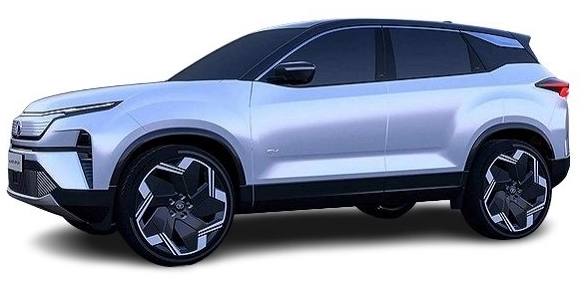
For nearly two decades, the Sierra nameplate lay dormant, living on only in the memories of enthusiasts. Then, at the 2020 Auto Expo, Tata Motors stunned the automotive world by unveiling the Tata Sierra EV Concept. It was a breathtakingly modern reinterpretation of the original, retaining the iconic glasshouse roof and the distinctive silhouette, but reimagined for the electric age.
The response was overwhelmingly positive, prompting Tata to fast-track its development. An updated, more production-ready concept was showcased at the 2023 Auto Expo, confirming the company’s intent to bring the legend back to life.
The upcoming Tata Sierra EV is slated for launch around 2025. Here’s what is known about its future iteration:
- Platform: It is expected to be built on Tata’s advanced, EV-specific Acti.EV architecture or a derivative of it, which promises excellent space, safety, and range.
- Design: While the production model will be a more practical five-door SUV, it will retain the signature design cues of the original, including the large, curved rear windows and a strong, upright stance.
- Powertrain: It will be offered exclusively as an electric vehicle. While exact specifications are yet to be revealed, it is expected to come with single-motor and dual-motor (All-Wheel Drive) options, offering a real-world range of over 500 kilometers on a single charge.
- Positioning: The new Sierra will be positioned as a premium, flagship lifestyle SUV in Tata’s electric portfolio, sitting above the Nexon EV and Punch EV. It will compete with other high-end electric SUVs, banking on its powerful combination of iconic design heritage and cutting-edge technology.
In conclusion, the Tata Sierra is more than just a vehicle; it is a bridge between two eras of Indian motoring. The original was a symbol of a newly confident India, a bold experiment that prioritized style and aspiration. Its impending return as a sophisticated electric vehicle represents the future—a testament to Tata Motors’ transformation into a global leader in EV technology. The glasshouse on wheels, once a dream for a select few in the 1990s, is set to be reborn, proving that a truly iconic design never goes out of style; it simply awaits its moment to be reinvented.