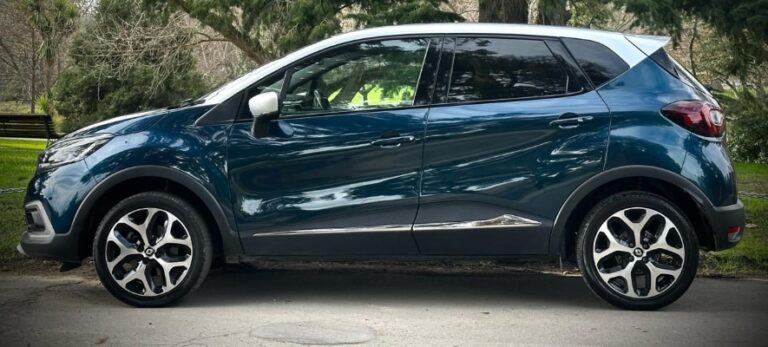
The History of Dacia
From Behind the Iron Curtain to the American Road: The Unlikely Rise of Dacia
To the average American car buyer in the 21st century, the automotive landscape is dominated by familiar titans: Detroit’s Big Three, the reliability of Japan, and the engineering precision of Germany. However, rising rapidly through the ranks—and recently entering the North American market—is a brand with a radically different origin story. This is the history of Dacia, a Romanian automaker that transformed from a symbol of Eastern Bloc scarcity into a global phenomenon of value and rugged simplicity.
The Founding: A Marriage of Necessity and Politics
The story of Dacia begins not in a boardroom, but in the halls of political power in 1960s Romania. The country was under the rule of Nicolae Ceaușescu, the General Secretary of the Romanian Communist Party. In an effort to modernize the nation’s transportation infrastructure and provide a symbol of industrial achievement for the populace, Ceaușescu sought to establish a domestic automobile industry.
The Romanian government initially approached several Western auto manufacturers, including Fiat and Renault, seeking a partnership. They eventually struck a deal with Renault, the French automotive giant. In 1966, the two nations signed a technical and financial agreement to produce a licensed version of a Renault car in Romania.
On November 6, 1966, the company Uzina Autoturisme Pitești (UAP) was founded in the city of Pitești, located roughly 75 miles northwest of Bucharest. The name “Dacia” was chosen, derived from the ancient Roman province of Dacia, which encompassed the territory of modern-day Romania. The goal was ambitious: to motorize a nation where private car ownership was a rare luxury.
The Early Years (1969–1989): The Model 1300 Era
After three years of construction and preparation, Dacia began series production on August 23, 1969. The company’s first vehicle model was the Dacia 1300.
The Dacia 1300 was essentially a rebadged and slightly modified Renault 12. It featured a 1.3-liter inline-four engine, a top speed of approximately 85 mph, and a design that was modern for the time. For the average Romanian citizen, owning a Dacia 1300 was a major status symbol, often accompanied by a waiting list that could stretch for years.
Throughout the 1970s and 1980s, Dacia remained the primary automobile manufacturer in Romania. The factory operations in Pitești were massive, employing thousands of workers and becoming a cornerstone of the national economy. However, the company was strictly a licensed producer; they did not yet have full autonomy in design or engineering.
Hardships and the Rise of Autonomy: The 1980s brought significant hardship. The oil crisis and Western sanctions against the Communist bloc made it difficult to import necessary components and raw materials. Furthermore, the licensing agreement with Renault became strained as the Romanian government sought greater independence from foreign influence. In 1981, the contract with Renault was renegotiated, and eventually, Dacia gained full ownership of the design and the right to modify it. This forced the Romanian engineers to innovate, leading to the development of domestic parts and a gradual “Romanianization” of the car. While quality control during the Ceaușescu era was notoriously inconsistent due to material shortages and strict production quotas, the cars were known for their ruggedness and ease of repair—traits that would define the brand for decades.
The Transition to Free Market (1990–2000)
The execution of Nicolae Ceaușescu on December 25, 1989, marked the end of Communism in Romania and the beginning of a chaotic transition to a market economy. For Dacia, this period was precarious. The factory was still operating with antiquated machinery, and the sudden influx of Western imports made the Dacia 1300 look obsolete.
Despite this, Dacia remained the only viable domestic option. Production continued, and the company released updated versions of the 1300, such as the Dacia 1310 (a facelifted sedan and estate) and the Dacia Sport (a coupé version). While sales in Western Europe were negligible due to failing crash safety tests and emissions standards, Dacia remained dominant in Eastern Europe, Russia, and North Africa.
In 1999, facing the realities of global competition, the Romanian government decided to privatize the company. This led to the first major corporate shift in the company’s history.
The Renault Acquisition (1999)
On July 21, 1999, the French automaker Renault acquired a 51% controlling stake in Automobil Românesc (the successor to UAP) for approximately $50 million USD. By 2000, Renault’s stake had increased to 73.3%, and the company was rebranded as Dacia SA.
This buyout was pivotal. Renault did not simply want to sell French cars in Romania; they saw Dacia as a platform to build a global “value brand.” They brought modern manufacturing techniques, strict quality control, and access to Renault’s vast supply chain.
The Renaissance: The Logan and a New Philosophy (2004–Present)
The true turning point came in 2004 with the launch of the Dacia Logan.
Designed under the code name “X90,” the Dacia Logan was the brainchild of Renault executives looking to create an ultra-affordable car for emerging markets. The engineering mandate was strict: the car had to cost under $5,000 USD (in 2004 currency) to produce, yet meet safety standards in various climates, from the Russian winter to the Brazilian heat.
The Logan was a sedan with a distinct “one-box” design that maximized interior space while minimizing material use. It was unpretentious, reliable, and cheap to fix. The reception was immediate and overwhelming. While Western critics initially mocked its simplicity, the Logan became a massive success in Eastern Europe, Turkey, Russia, and Latin America. It proved that a car didn’t need luxury features to be desirable; it just needed to fulfill its function reliably.
Over the next two decades, the company expanded its lineup to include the Dacia Sandero (a hatchback), the Dacia Duster (a compact SUV), the Dacia Jogger (a hybrid crossover), and the Dacia Spring (an electric city car). In 2021, Dacia underwent a major rebranding, introducing a new logo and the slogan “Driven by Change.”
What Makes Dacia Different?
In a market obsessed with technology, touchscreens, and planned obsolescence, Dacia stands out for its philosophy of “essentialism.”
- Simplicity: Dacia vehicles are famously simple. They utilize proven mechanical components, many of which are derived from older Renault platforms. They avoid complex electronics that are prone to failure and expensive to repair.
- Modularity: Many Dacia models feature modular interiors. For example, the “Smart Media System” in the Sandero Stepway is a removable tablet that serves as the infotainment screen and can be taken out to use as a regular Android tablet—a clever solution that saves manufacturing costs.
- Value: Dacia offers the lowest price-per-square-foot of interior volume of any car brand in Europe. A new Dacia Duster can be purchased for significantly less than a base-model Toyota Corolla or Honda Civic.
- Durability: Dacias are designed to withstand harsh conditions. They have high ground clearance, durable suspension, and rugged materials. This has earned them a cult following among outdoor enthusiasts and budget-conscious families.
Special Events and Marketing Strategies
Dacia’s marketing strategy has evolved from pragmatic to punchy. In the UK, the brand became famous for a series of “Dacia Discounts” on Channel 4’s Gogglebox, where celebrities would unbox the car in a humorous, down-to-earth manner.
In 2013, Dacia sponsored the British Touring Car Championship (BTCC), a move that shocked the racing establishment. A modest Dacia Sandero driven by Aron Smith shocked the field by winning races against much more expensive, purpose-built race cars, further cementing the brand’s “giant-killer” reputation.
In the United States, Dacia is not officially sold by Renault (which exited the US market decades ago). However, in 2022, Dacia made headlines at the Goodwood Festival of Speed in the UK by revealing the “Duster Hype,” a concept designed to test the waters for a potential North American entry. While there are no confirmed plans for a US dealer network as of 2024, Dacia’s parent company, Renault, has announced a return to the US market by 2027, potentially through the mobilize mobility brand, which could utilize Dacia platforms.
Racing Programs
Beyond the BTCC, Dacia has been heavily involved in the Rallye National des Cévennes and the European Rally Championship (ERC). The Dacia Logan Rally2 is a purpose-built race car featuring a 1.6-liter turbocharged engine and a sequential gearbox. It has been competitive in European rallying, proving that the Logan’s chassis is highly adaptable. In Africa, the Dacia Duster has dominated the Dakar Classic rally, winning multiple stages in the classic category due to its rugged suspension and reliability in sand dunes.
Factory Operations
The heart of Dacia remains the Pitești Plant (Uzina Dacia), a sprawling complex that covers over 4 million square feet. It is one of the largest and most modern automotive plants in Eastern Europe.
Following the Renault acquisition, the factory underwent a massive modernization overhaul. Today, the Pitești plant operates with high levels of automation, including robotic welding and painting lines, yet retains a significant human workforce for final assembly. The plant is designed for flexibility; the same assembly line can produce the Logan, Sandero, and Jogger simultaneously. In 2019, a second factory was opened in Morocco (the Tangier plant), which now produces millions of Dacia and Renault models for global export, taking pressure off the Romanian facilities.
US Consumer Reception
It is important to note that Dacia vehicles are not officially sold in the United States. Consequently, there are no US sales figures, and the average American consumer is largely unaware of the brand.
However, among automotive enthusiasts and expatriates who have lived in Europe, Dacia has a reputation similar to that of a budget-friendly, rugged utilitarian vehicle—think of a cross between a Suzuki Jimny and a basic economy car. If Dacia were to enter the US market, experts predict they would compete on price with the Nissan Versa and Kia Rio, but with a focus on versatility rather than just transportation. The reception would likely be mixed: budget buyers would appreciate the low cost, while safety-conscious Americans might be skeptical of the brand’s simplicity compared to the high-tech standards of modern US vehicles.
Best-Selling Model: The Dacia Sandero
While the Dacia Logan launched the brand’s modern era, the Dacia Sandero is its single most popular vehicle. First launched in 2008, the Sandero is a hatchback that offers the practicality of the Logan with a sportier profile.
Why it was popular: The Sandero hit the “sweet spot” between affordability and style. It offered a higher driving position, funky styling, and decent fuel economy. It became the best-selling car to private buyers in the UK for several years and dominates markets in France, Italy, and Brazil.
Sales Figures (Approximate):
- Global Sales (2008–Present): Over 2.1 million units.
- US Sales: 0 (Not sold in the US).
- Recent Annual Sales: In 2023 alone, Dacia sold over 300,000 units of the Sandero globally, making it one of the top-selling cars in Europe.
Current Status and Outlook
Dacia is very much alive and thriving. As of 2024, it operates as a subsidiary of the Renault Group. It has successfully transitioned from a “local” Romanian brand to a global player, selling over 700,000 vehicles annually across 40+ countries.
The company is currently leading the charge in “accessible electric vehicles.” The Dacia Spring, a tiny electric city car, is the cheapest EV in Europe, priced under $20,000 USD (before incentives). This vehicle is crucial to Dacia’s outlook, as it allows budget buyers to enter the EV market without breaking the bank.
In conclusion, Dacia’s history is a testament to the power of pragmatic engineering. From its origins as a licensed producer of French cars under a dictatorship to becoming the world’s most successful “budget” brand under a capitalist giant, Dacia has proven that cars do not need to be expensive to be good. While they have not yet conquered the United States, their influence on the global automotive industry—forcing competitors to lower prices and simplify their offerings—is undeniable. Dacia remains the “people’s car” of the modern era, driven not by status, but by necessity and value.