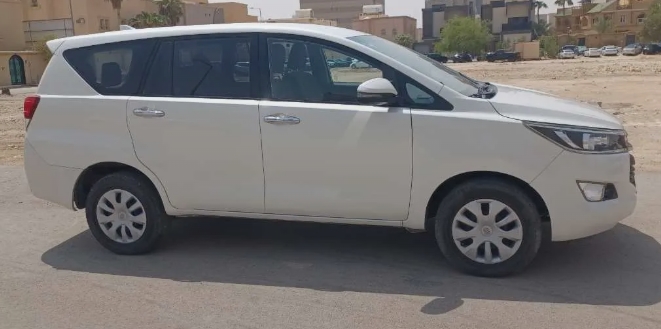
The History of Tata Motors
A Journey Through Innovation and Resilience
Tata Motors Ltd., a part of the larger Tata Group, is one of the most distinguished automotive manufacturers in the world. Founded in 1945, Tata Motors has evolved from its inception to become a global player in the automotive industry, known for its innovative vehicles, significant accomplishments, and a commitment to sustainable development.
Founding and Early Years
Tata Motors was founded by J.R.D. Tata, a pioneering industrialist and philanthropist, who is often referred to as the father of Indian aviation. Born in 1904 into the prominent Tata family, J.R.D. Tata was educated in France and the UK before returning to India to expand his family’s business empire. Under his leadership, Tata Motors began as Tata Engineering and Locomotive Co. Ltd. (TELCO) and initially focused on manufacturing locomotives and other engineering goods.
In 1954, the company was granted permission to produce commercial vehicles. The introduction of the Tata 407 in 1986 marked its entry into the light commercial vehicle segment, leading to significant growth in the company’s portfolio.
Notable Acquisitions and Mergers
Tata Motors made a substantial leap forward in 2004 when it acquired the South Korean automotive manufacturer Daewoo’s commercial vehicle unit, which allowed Tata Motors to expand its reach and product range significantly. In 2008, Tata Motors created waves in the global automotive industry with the launch of the Tata Nano, a compact city car marketed as the world’s cheapest car at a base price of around $2,500.
Later, in June 2008, Tata Motors acquired British luxury car manufacturers Jaguar and Land Rover from Ford for $2.3 billion, marking a significant milestone in the company’s history. This acquisition allowed Tata Motors to tap into the luxury vehicle market while boosting its international profile.
Challenges and Resilience
Tata Motors faced various struggles, particularly during the global financial crisis of 2008-2009, which severely impacted automotive sales worldwide. The company reported a drop in sales, particularly of its commercial vehicles, which account for a significant portion of its revenue. To overcome this hurdle, Tata Motors focused on cost reduction strategies, enhancing operational efficiency, and diversifying its product offerings to include more passenger vehicles and electric vehicles.
Moreover, in recent years, Tata Motors has faced challenges related to the rising costs of raw materials and changing emission regulations. In response, the company has invested heavily in research and development, committing to electric vehicle technology and sustainable practices to ensure its competitiveness in the evolving automotive market.
Innovative Contributions and Accomplishments
Tata Motors is recognized for its commitment to innovation and sustainability. In 2019, Tata Motors unveiled its first fully electric vehicle, the Tata Nexon EV, which received positive reviews for its performance and range, contributing to the growing EV market in India.
The launch of the Tata Harrier in 2019 also marked a significant achievement for the company. This mid-size SUV received acclaim for its design, technology, and safety features, significantly enhancing Tata Motors’ reputation in the consumer market.
Tata Motors has received several awards over the years for its design and innovation, including the “Best Commercial Vehicle of the Year” for the Tata Ace and many accolades for the Tata Nexon’s safety features.
Differentiation in the Automotive Industry
Tata Motors stands apart from other automotive manufacturers due to its emphasis on affordable and sustainable mobility solutions. The company’s flagship models, such as the Tata Nano and Tata Nexon, are designed with a focus on affordability while also incorporating advanced technologies and safety features. This approach has resonated with consumers in emerging markets, where affordability is crucial.
Tata Motors has also undertaken unique marketing campaigns, particularly for the Tata Nano. The “People’s Car” campaign aimed to position the Nano as an accessible and safe alternative for families in India, tapping into the aspirations of millions who were looking to upgrade from two-wheelers to four-wheelers.
Factory Operations and Production
Tata Motors has a robust manufacturing infrastructure with plants spread across India and overseas. The company’s main manufacturing facilities are located in Pune, Sanand, and Jamshedpur, with each plant equipped with state-of-the-art technology and automation to ensure high-quality production. Tata Motors also maintains a significant presence in global markets, with manufacturing facilities in South Korea, Thailand, and South Africa.
The production processes incorporate sustainable practices, including water conservation and waste management, aligning with the company’s vision for a greener future.
Consumer Reception in the U.S.
While Tata Motors is primarily known for its operations in India and emerging markets, its vehicles have also been introduced in the United States. The reception has been mixed, with the Tata Nano receiving attention for its innovative concept but limited success in actual sales. The company has adopted a cautious approach in the U.S. market, focusing more on niche segments and commercial vehicles, such as the Tata Prima and Tata Ace.
Vehicles: Past and Present
The first vehicle produced by Tata Motors was the Tata 697, launched in 1954, which set the stage for the company’s future in the commercial vehicle segment. The latest model, as of 2023, is the Tata Punch, a subcompact SUV that showcases the company’s design evolution and commitment to modern engineering. The Punch has been well-received in India, reflecting the ongoing trend toward compact cars and fuel-efficient vehicles.
In terms of sales, the Tata Nexon has emerged as one of the company’s most popular models, contributing significantly to its revenue. In 2022, Nexon sales reached approximately 100,000 units in India alone, reflecting consumer preference for SUV‘s due to their spaciousness and safety features.
The Future of Tata Motors
As of 2023, Tata Motors continues to operate and is well-positioned for future growth. The company is heavily investing in electric vehicles, aiming to capture a larger market share as the world increasingly shifts toward sustainable transportation solutions. With a goal to expand its electric vehicle lineup and enhance its global footprint, Tata Motors is optimistic about its future prospects.
The outlook for Tata Motors appears positive, driven by innovation, strategic partnerships, and a commitment to sustainability. The company’s pioneering spirit, as embodied by its founder, J.R.D. Tata, remains a guiding force in its journey toward becoming a leader in the global automotive industry.
Conclusion
Tata Motors’ story is one of resilience, innovation, and a commitment to quality and sustainability. From its early days as a locomotive manufacturer to its evolution into a global automotive powerhouse, Tata Motors has successfully navigated challenges and continues to drive forward with a vision for the future. Its commitment to affordable and innovative mobility solutions, coupled with a focus on electric vehicles, sets it apart from other automotive manufacturers and cements its place in the competitive landscape of the automotive industry.