The Honda Ballade: A Legacy of Practicality and Evolution in Compact Sedans
The Honda Ballade, though not as globally recognized as models like the Civic or Accord, holds a significant place in Honda’s automotive history, particularly in certain international markets. As a compact sedan developed primarily for regions outside North America and Western Europe, the Ballade has undergone multiple generations since its debut, evolving with the times while maintaining a focus on efficiency, reliability, and affordability. Spanning over four decades, the Ballade has served as a pragmatic choice for urban commuters, fleet operators, and budget-conscious drivers seeking Honda’s renowned engineering in a smaller package.
Origins and Early Development (1980s)
The Honda Ballade first emerged in 1980 as a distinct model in Japan and select international markets, though it was initially a variant of the third-generation Honda Civic. Positioned above the standard Civic, the Ballade offered a more upscale interior, improved ride comfort, and additional features. It was available in both sedan and hatchback body styles, powered by modest 1.2L and 1.5L inline-four engines paired with manual or automatic transmissions.
Despite sharing underpinnings with the Civic, the Ballade was marketed with slightly more conservative styling and an emphasis on comfort and practicality. It found particular favor in South Africa, where Honda had established a strong manufacturing and distribution presence. Over time, the Ballade became a symbol of dependable transportation in emerging markets, where Honda’s reputation for durability and low maintenance played a crucial role in consumer preference.
Generational Overview
Second Generation (1985–1991)
By the mid-1980s, the Ballade had evolved into its second generation. Still based on the Civic platform (now the fourth generation), the Ballade continued to distinguish itself with a more refined interior, optional power features, and improved suspension tuning for better ride quality. The lineup during this era typically included:
- Ballade 1.5i: Base model with a carbureted 1.5L engine (D15A), manual transmission, and minimal trim.
- Ballade 1.5iS: A higher-trim version featuring fuel injection, power steering, alloy wheels, and upgraded interior finishes.
- Ballade 1.6i: Offered in select markets with a 1.6L engine for added performance.
During this period, the Ballade also served as the basis for the Honda CR-X del Sol in certain markets, highlighting its versatility and engineering value.
.
NO MORE dead batteries with this:

.
Third Generation (1991–1996)
The third-generation Ballade, introduced in 1991, aligned with the fifth-generation Civic platform. While exterior styling remained clean and functional, interior upgrades improved ergonomics and material quality. Safety features such as driver-side airbags became available on higher trims.
Trim levels included:
- 1.3L LX: Entry-level model with basic amenities.
- 1.5L DX: Mid-range variant with improved instrumentation and additional comfort features.
- 1.5L EX: Top-tier model offering power windows, central locking, and enhanced audio systems.
This generation solidified the Ballade’s reputation as a dependable commuter car—especially in South Africa, where it was locally assembled and widely adopted by businesses and government fleets.
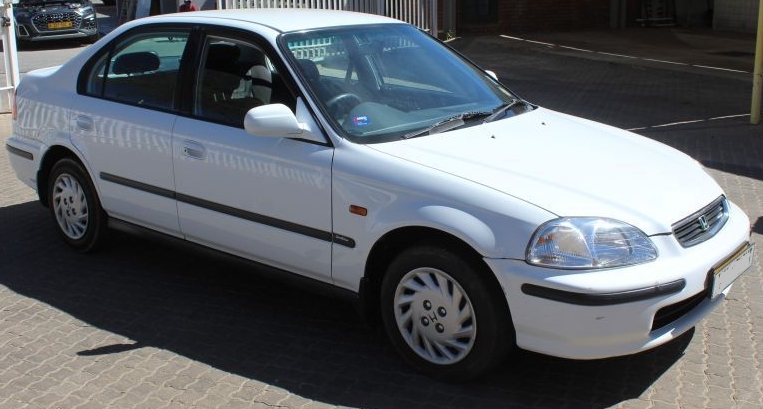
Fourth Generation (1996–2000)
The fourth generation (1996–2000) brought more substantial changes to the Ballade. Now aligned with the sixth-generation Civic’s design language, the sedan featured sharper lines and improved aerodynamics. The engines were updated to include SOHC VTEC (Variable Valve Timing and Lift Electronic Control), enhancing both efficiency and performance.
Available models included:
- Ballade 150i: Featuring a 1.5L VTEC engine (D15B), known for its spirited performance relative to its size.
- Ballade 160i: Equipped with a 1.6L VTEC engine (D16Y), offering marginally better power for highway use.
- Ballade 160iS: A limited-edition sporty variant with body kits, rear spoilers, and upgraded suspension.
This era also saw the introduction of ABS (Anti-lock Braking System) on higher trims, reflecting Honda’s growing emphasis on safety even in compact segments.
South African Revival and Fifth Generation (2014–2020)
After a long hiatus, the Ballade nameplate was revived in 2014—but not globally. Instead, Honda reintroduced the Ballade exclusively for the South African market as a rebadged version of the seventh-generation Honda City (2014–2020). This marked a notable shift: the Ballade was no longer a Civic derivative but was now based on a subcompact sedan platform designed primarily for Asian and African markets.
Manufactured in Thailand and imported into South Africa, the fifth-generation Ballade offered three trim levels:
- Executive: The base model, equipped with 1.5L i-VTEC engine (120 hp), five-speed manual or CVT transmission, ABS, dual front airbags, and basic infotainment.
- Exclusive: Added alloy wheels, automatic climate control, keyless entry, and a touchscreen audio system with Bluetooth and USB connectivity.
- Elite: The top trim featuring leather upholstery, push-button start, automatic headlights and wipers, cruise control, and advanced safety aids like Vehicle Stability Assist (VSA).
All models used Honda’s 1.5-liter Earth Dreams Technology inline-four engine, which delivered strong fuel economy (around 5.6 L/100km combined) and low emissions—making it ideal for urban driving and fleet usage.
Engine and Transmission Specifications (2014–2020)
The 2014–2020 Ballade featured a single engine option:
- 1.5L L15A i-VTEC 4-cylinder: Producing 120 horsepower and 145 Nm of torque.
- Transmission options: 5-speed manual or continuously variable transmission (CVT).
- Front-wheel drive configuration.
The platform provided a roomy interior for its size, with a long wheelbase enhancing rear passenger comfort—unusual for a vehicle in this segment.
Discontinuation and Market Shift (2020)
Production of the fifth-generation Ballade ceased in 2020 as Honda South Africa phased out the model amid restructuring and declining sales. The decision was influenced by shifting consumer preferences towards SUVs and crossovers, as well as Honda’s global strategic focus on electrification and hybrid technology. The Honda City, upon which it was based, continued in other markets, but the Ballade name was retired—once again.
Future Outlook: Is a Return Possible?
As of 2024, there are no official indications that Honda plans to revive the Ballade nameplate. The company’s global strategy is now focused on expanding its electrified lineup, including hybrids, plug-in hybrids, and fully electric vehicles such as the Honda e and upcoming Prologue SUV. In markets like South Africa, Honda’s presence remains limited compared to rivals such as Toyota and Volkswagen.
However, the Ballade’s legacy remains relevant. Its long history demonstrates Honda’s ability to tailor models to regional needs—offering practical, durable transportation that aligns with local infrastructure and economic conditions. Should Honda seek to re-enter emerging markets with an affordable, fuel-efficient sedan in the future, a Ballade revival—perhaps as a hybrid or electric model—could be a viable option.
Cultural and Economic Impact
Particularly in South Africa, the Ballade became more than just a car—it was a workhorse. Its widespread use in taxi fleets, government agencies, and rental companies made it a familiar sight on city streets and rural roads alike. The 2014–2020 model earned praise for its spacious cabin, low running costs, and strong resale value.
Enthusiast communities in South Africa have kept the Ballade’s spirit alive, with owners modifying vehicles for appearance and performance. Online forums and social media groups share maintenance tips, retrofit stories, and appreciation for Honda’s engineering.
Comparison to Competitors
Throughout its production history, the Ballade competed with vehicles such as the Toyota Etios, Nissan Almera, Volkswagen Polo Sedan, and Hyundai Accent. While it may not have matched rivals in marketing presence or sales volume, the Ballade consistently ranked high in reliability surveys and customer satisfaction reports—especially in durability and mechanical soundness.
Its engineering—rooted in proven Honda platforms—ensured longevity with minimal major repairs, a critical factor in markets with limited access to dealership networks and high maintenance costs.
Conclusion
The Honda Ballade is a compelling example of how automakers adapt global platforms for regional success. From its origins as an upscale Civic in 1980 to its modern reincarnation as a rebadged City in South Africa, the Ballade has embodied practicality, efficiency, and Honda’s engineering excellence. While production has ended with the 2020 model, its impact endures.
With over 40 years of intermittent production, the Ballade served generations of drivers who valued reliability over flair. It may never have been a headline-grabber, but in the real world of daily commutes, long-term ownership, and economic constraints, the Ballade proved itself quietly and consistently—a true unsung hero in Honda’s lineup.
As Honda looks toward an electrified future, the principles that defined the Ballade—value, durability, and innovation—remain central to its brand identity. Whether or not the name returns, the spirit of the Ballade lives on in every efficient, thoughtfully engineered Honda that hits the road.
Summary of Production Years and Models:
- 1980–1985: First generation (Civic-based), models: 1.2L, 1.5L, trim levels varied by market.
- 1985–1991: Second generation, models: 1.5i, 1.5iS, 1.6i.
- 1991–1996: Third generation, models: 1.3L LX, 1.5L DX, 1.5L EX.
- 1996–2000: Fourth generation, models: 150i, 160i, 160iS.
- 2014–2020: Fifth generation (rebadged Honda City), models: Executive, Exclusive, Elite.
Though currently discontinued, the Honda Ballade remains a testament to intelligent, market-responsive design in the compact sedan segment.