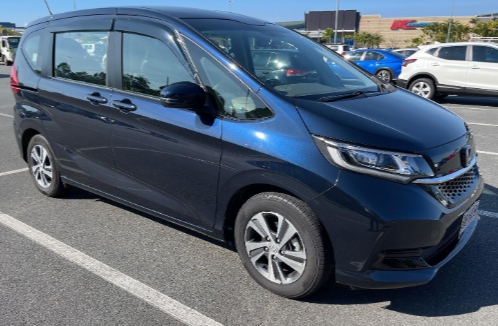
The Honda Freed: Japan’s Masterclass in Compact Versatility
In the vast and varied world of automotive design, true genius often lies not in blistering speed or opulent luxury, but in the intelligent and elegant solution to an everyday problem. For millions of families navigating the dense, bustling urban landscapes of Japan and Southeast Asia, that problem is space. The need for a vehicle that can carry children, groceries, and occasional grandparents, yet still fit into a tight parking space and sip fuel frugally, is paramount. Honda’s answer to this challenge, a vehicle rarely seen outside its home markets, is the Honda Freed—an unsung hero and a masterclass in compact packaging.
The Honda Freed is a compact multi-purpose vehicle (MPV) that perfectly embodies the company’s long-held “Man Maximum, Machine Minimum” design philosophy. It is a vehicle engineered from the inside out, prioritizing passenger room, utility, and ease of use above all else. Its story is one of thoughtful evolution, responding precisely to the needs of its target audience with each successive generation.
A Brief History: The Need for a “Just Right” Minivan
Before the Freed’s arrival in 2008, the Japanese minivan market was largely dominated by larger, mid-size models like the Toyota Noah/Voxy, Nissan Serena, and Honda’s own Step WGN. While immensely practical, these vehicles could be cumbersome in narrow city streets and their larger engines were not always the most economical. At the other end of the spectrum were compact cars and hatchbacks.
Honda identified a crucial gap in the market. There was a growing demand for a vehicle with the core benefits of a minivan—namely three rows of seating and power sliding doors—but with the footprint, fuel economy, and maneuverability of a compact car. The Freed was conceived as the spiritual successor to the first-generation Honda Mobilio, another compact three-row MPV, but was designed to be more refined, spacious, and modern. Based on the globally successful Honda Fit/Jazz platform, the Freed leveraged a proven foundation known for its clever central fuel tank layout, which maximizes interior volume.
.
NO MORE dead batteries with this:

.
First Generation (GB3/GB4/GP3): 2008 – 2016
The first-generation Honda Freed was launched in Japan in May 2008, and its impact was immediate. Its slogan, “Freedom to create the perfect lifestyle,” perfectly captured its versatile nature.
Models and Configurations:
The genius of the first-gen Freed was its array of seating options within a body just 4.2 meters (about 13.8 feet) long.
- Seven-Seater: This version featured a 2-3-2 layout with a second-row bench seat, ideal for larger families.
- Eight-Seater: Offered briefly, this model squeezed in an extra passenger but was less popular and soon discontinued.
- Six-Seater: This quickly became the most popular configuration. It featured a 2-2-2 layout with individual captain’s chairs in the second row. This created a convenient “walk-through” aisle, allowing passengers (usually children) to move from the second to the third row without exiting the vehicle—a hugely practical feature.
- Five-Seater: A two-row version was also available for those who prioritized cargo space over passenger capacity.
Freed Spike (2010):
Recognizing that not all buyers needed a third row, Honda introduced the Freed Spike in 2010. This was a dedicated five-seat, two-row model designed for utility and active lifestyles. It removed the third-row seats entirely, creating a vast and flat cargo area. It featured a reversible, dual-height cargo floor and additional storage compartments, making it perfect for hauling bicycles, camping gear, or other bulky items. The Spike’s more aggressive, panelled-in rear side windows gave it a distinct, van-like appearance.
Powertrain and Trim Levels:
- Engine: The sole engine was Honda’s reliable 1.5-liter L15A i-VTEC four-cylinder, producing around 118 horsepower. It was paired with either a Continuously Variable Transmission (CVT) for front-wheel-drive models or a conventional 5-speed automatic for the optional all-wheel-drive (4WD) variants.
- Trim Levels (Japan): Trims typically included the base G and the more equipped G Aero, which added stylish body kits and larger alloy wheels. The premium Gi Aero trim offered the highest level of features.
Mid-Cycle Refresh and Introduction of the Hybrid (2011):
In 2011, the Freed received a facelift with a new grille and bumper design. The most significant update, however, was the introduction of the Freed Hybrid (GP3) and Freed Spike Hybrid. These models utilized Honda’s Integrated Motor Assist (IMA) system, pairing the 1.5-liter engine with a small electric motor. While not a full hybrid system capable of sustained EV-only driving, IMA provided electric assistance during acceleration, significantly improving fuel economy and making the Freed one of the most efficient three-row vehicles on the market.
Second Generation (GB5/GB6/GB7/GB8): 2016 – 2024
Launched in September 2016, the second-generation Freed was a comprehensive evolution of the original concept. It adopted Honda’s contemporary “Solid Wing Face” design language, giving it a sharper, more modern look. While retaining a similar footprint, Honda’s engineers managed to increase interior space, particularly legroom for all three rows and the walk-through cabin width.
Models and Configurations:
The lineup was streamlined and rebranded for clarity and purpose.
- Freed: This name now referred exclusively to the three-row versions, available in the popular six-seat captain’s chair configuration or the seven-seat bench layout.
- Freed+ (Freed Plus): This was the direct successor to the Freed Spike. It remained a two-row, five-seat model but with a major innovation. The cargo floor was made incredibly low, and the second-row seats could fold completely flat, creating a cavernous, uninterrupted space. The tailgate was also redesigned to be larger and lighter. This design made the Freed+ exceptionally useful for loading heavy items, accommodating a wheelchair, or even serving as a minimalist camper for two—a practice known as shachuhaku (sleeping in the car) that is popular in Japan.
Powertrain and Technology Overhaul:
This generation saw significant upgrades under the hood.
- Gasoline Engine: The standard engine was updated to the 1.5-liter L15B direct-injection DOHC i-VTEC engine, boosting power to around 129 horsepower and improving efficiency, mated exclusively to a CVT.
- Hybrid System: The old IMA system was retired in favor of the far more advanced Sport Hybrid i-DCD (Intelligent Dual-Clutch Drive) system. This paired a 1.5-liter Atkinson-cycle engine with a more powerful electric motor integrated into a 7-speed dual-clutch transmission. This system allowed for EV-only take-offs and low-speed cruising, providing a smoother driving experience and a dramatic improvement in real-world fuel economy. It was also the first time a hybrid minivan in Japan could be optioned with all-wheel drive.
Safety and Trim Levels:
A major selling point for the second generation was the inclusion of the Honda SENSING suite of advanced safety and driver-assistive technologies. This package included features like Collision Mitigation Braking System, Adaptive Cruise Control with Low-Speed Follow, and Lane Keeping Assist, bringing the compact MPV in line with modern safety standards.
- Trim Levels (Japan): The lineup included a basic B, the well-equipped G, and the top-tier EX. In 2019, a mid-cycle refresh introduced the Crosstar trim. This model added rugged styling cues like unique bumpers, roof rails, and a redesigned grille, catering to the growing popularity of crossover-style vehicles. For enthusiasts, Honda also offered a Modulo X version, a sportier trim tuned by Honda’s accessories division with a custom suspension, aerodynamic parts, and exclusive interior details.
The Future Outlook: The Third Generation (2024 Onwards)
In May 2024, Honda officially unveiled the third-generation Freed, signaling the company’s continued commitment to this highly successful model. Sticking to its proven formula, the new Freed focuses on refinement and modernization rather than radical change.
The design has been softened, aligning with Honda’s new, cleaner aesthetic seen on models like the latest Step WGN and Civic. It features a more upright, friendly face and large glass areas to enhance visibility and the sense of interior space. The new generation will continue to be offered in two distinct styles: the standard Freed Air, with a simple and clean design, and the rugged Freed Crosstar, for those wanting a more adventurous look.
The most significant upgrade is in the powertrain department. The i-DCD hybrid system is being replaced by Honda’s latest-generation e:HEV two-motor hybrid system. This is the same highly-regarded powertrain found in the current Fit/Jazz and HR-V/Vezel. It primarily uses the electric motor to drive the wheels, with the gasoline engine acting as a generator, resulting in an exceptionally smooth, quiet, and efficient driving experience that mimics an electric vehicle. The 1.5-liter direct-injection gasoline engine will continue to be offered as the base option.
Inside, the new Freed promises a more modern digital cockpit, larger infotainment screens, and an updated Honda SENSING system with enhanced capabilities, ensuring it remains a competitive and desirable family vehicle for years to come.
Conclusion: A Triumph of Practical Design
The Honda Freed may not have the brand recognition of a Civic or a CR-V on the global stage, but within its intended markets, it is nothing short of a phenomenon. It is a vehicle born from a deep understanding of its users’ lives. The easy-to-use sliding doors, the flexible seating, the walk-through cabin, the exceptional fuel economy, and the city-friendly dimensions are not just features on a spec sheet; they are direct solutions to the daily challenges of a modern family.
For over 15 years and across three generations, the Freed has proven that a car doesn’t need to be large to be spacious, nor complicated to be clever. It stands as a testament to Honda’s engineering prowess and a shining example of how thoughtful, user-centric design can create a vehicle that is not just a tool, but a truly indispensable part of family life.