The Kia Sonet: Charting the Rise of a Subcompact Superstar
In the fiercely competitive landscape of the global automotive market, few segments are as hotly contested as the subcompact crossover SUV category. It is a domain where style, technology, efficiency, and value must converge in a perfectly balanced package. Into this demanding arena, in 2020, Kia Motors launched a vehicle that would not only meet these expectations but often exceed them: the Kia Sonet. A product of meticulous market research and bold design, the Sonet swiftly established itself as a formidable player, particularly in emerging markets, cementing Kia’s reputation as a brand that keenly understands the modern consumer.
Genesis and Strategic Debut (2020 – Present)
The story of the Kia Sonet begins with the brand’s explosive success in India. Following the triumphant launch of the Seltos SUV in 2019, Kia identified a clear opportunity in the sub-4-meter SUV segment, a category uniquely incentivized by Indian tax regulations and immensely popular with urban buyers. The project, internally codenamed QYi, was first showcased as the Kia Sonet Concept at the Auto Expo 2020 in New Delhi. The concept vehicle was a statement of intent, boasting a muscular, aggressive design that was remarkably close to the final production model.
The production version of the Kia Sonet was globally unveiled in August 2020 and officially launched in India in September 2020. Built on the Hyundai-Kia K2 platform, which it shares with its corporate cousin, the Hyundai Venue, the Sonet was engineered primarily at Kia’s Indian R&D center in conjunction with global teams. From the outset, it was positioned as a “Made in India, for the World” product, with the Anantapur plant in Andhra Pradesh serving as the exclusive global production hub.
The Sonet’s launch strategy was predicated on offering unprecedented choice. Kia flooded the market with a dizzying array of engine, transmission, and trim combinations, ensuring there was a Sonet for nearly every budget and preference. This, combined with a feature-rich package and a striking design, led to its immediate and resounding success.
.
NO MORE dead batteries with this:

.
Design Philosophy: “Wild by Design”
Kia marketed the Sonet with the tagline “Wild by Design,” a fitting description for its dynamic and assertive styling. The exterior design is a key pillar of its appeal.
- Front Fascia: The Sonet is fronted by Kia’s signature ‘Tiger Nose’ grille, rendered in a gloss black mesh with a distinctive knurled chrome or red-accented lower bezel, depending on the trim. Flanking the grille are sharp, crown-jewel LED headlamps with integrated “Heartbeat” LED Daytime Running Lights (DRLs), which give the vehicle an unmistakable and premium visual signature.
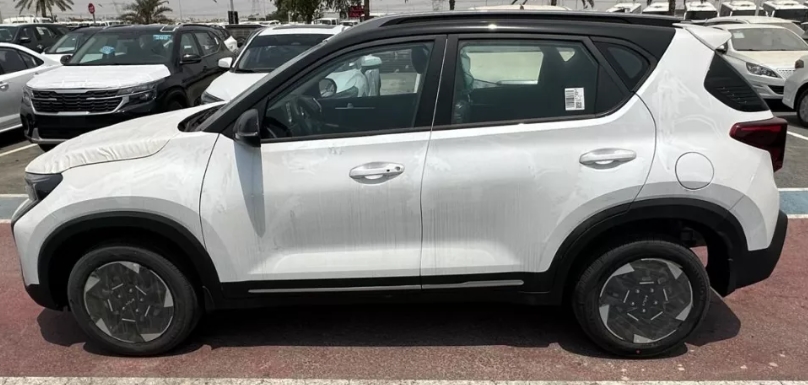
- Side Profile: The profile is characterized by a strong shoulder line, muscular wheel arches with plastic cladding, and a unique C-pillar design that creates a floating roof effect. The inclusion of roof rails and stylish alloy wheels (up to 16 inches) further enhances its rugged SUV stance.
- Rear End: The rear design is equally compelling, featuring “Heartbeat” LED tail lamps connected by a thin reflector strip (a design element that would become a connected light bar in the facelift). A faux skid plate and a sporty bumper complete the look.
Inside, the Sonet continues to impress with a driver-focused cockpit that prioritizes both ergonomics and technology. The dashboard is dominated by a large, seamless housing that integrates the digital instrument cluster and the infotainment touchscreen. The quality of materials, while including hard plastics, is elevated by thoughtful textures, silver accents, and gloss black trim. Sportier GT Line trims add red contrast stitching, a flat-bottomed steering wheel, and alloy pedals to amplify the dynamic feel.
Powertrain and Transmission Options: The Power of Choice
A cornerstone of the Sonet’s success is its extensive range of powertrain options, a strategy borrowed from the Seltos. This variety caters to diverse driving needs, from city commuting to highway cruising.
- Smartstream 1.2L MPI Petrol: This is the entry-level engine, a naturally aspirated four-cylinder unit producing approximately 82 horsepower and 115 Nm of torque. It is paired exclusively with a 5-speed manual transmission. This combination is aimed at budget-conscious buyers seeking reliability and efficiency for urban driving.
- Smartstream 1.0L Turbo-GDi Petrol: For those seeking more spirited performance, the three-cylinder turbocharged gasoline direct injection engine is the answer. It delivers a robust 118 horsepower and 172 Nm of torque. This engine offers two advanced transmission choices:
- A 7-speed dual-clutch transmission (DCT) for lightning-fast, smooth shifts.
- A 6-speed Intelligent Manual Transmission (iMT), a revolutionary clutch-pedal-less manual gearbox that provides the engagement of shifting gears without the hassle of a clutch, ideal for heavy traffic.
- 1.5L CRDi VGT/WGT Diesel: Acknowledging the strong demand for diesel in many markets, Kia offered a highly versatile 1.5-liter four-cylinder diesel engine in two states of tune:
- A Wastegate Turbo (WGT) version producing 99 horsepower and 240 Nm of torque, mated to a 6-speed manual transmission.
- A more powerful Variable Geometry Turbo (VGT) version, generating 114 horsepower and 250 Nm of torque, paired with a sophisticated 6-speed torque converter automatic transmission.
This comprehensive lineup ensures that whether a customer prioritizes fuel economy, performance, or convenience, there is a Sonet variant that fits the bill.
A Deep Dive into Trims and Variants
Kia structured the Sonet’s variant lineup into two distinct lines, each with a clear hierarchy, allowing for progressive feature additions.
1. Tech Line (HT-Line): This is the mainstream family-oriented lineup.
- HTE: The base model, covering essential safety features like dual airbags, ABS with EBD, and rear parking sensors, but with basic amenities.
- HTK: Adds essentials like a basic audio system, steering-mounted controls, and power windows.
- HTK+: A significant step up, this popular trim often introduced features like an 8-inch touchscreen infotainment system with Apple CarPlay and Android Auto, automatic climate control, and projector fog lamps.
- HTX: Moves into premium territory with LED headlamps, a sunroof, keyless entry with push-button start, and cruise control.
- HTX+: The top-spec Tech Line variant, fully loaded with features like a 10.25-inch HD touchscreen, Kia’s UVO connected car technology, a Bose premium seven-speaker sound system, ventilated front seats, and an air purifier.
2. GT Line: This line is aimed at customers seeking a sportier aesthetic and performance-oriented feel.
- GTX+: This single, top-of-the-line trim incorporates all the features of the HTX+ but adds exclusive sporty elements. These include red accents on the grille, bumpers, and side skirts, a flat-bottom steering wheel with GT Line badging, red contrast stitching on the seats and gear lever, and alloy pedals. It was typically available only with the 1.0L Turbo-GDi and 1.5L CRDi VGT engines.
3. X-Line (Introduced in 2022): To keep the lineup fresh, Kia introduced the X-Line, a special edition positioned above the GTX+. It features an exclusive ‘Xclusive Matte Graphite’ exterior paint color, ‘Splendid Sage’ dual-tone interiors, and gloss black exterior accents, creating a more sophisticated and rugged persona.
The 2024 Facelift: A Timely and Tech-Forward Refresh
In late 2023, Kia unveiled the first major facelift for the Sonet, which went on sale in early 2024. This was not merely a cosmetic update but a significant technological leap forward, designed to reassert its dominance in the segment.
Key changes in the facelifted model include:
- Revised Exterior Styling: The Sonet adopts Kia’s latest “Opposites United” design language. This includes a completely redesigned front grille, new vertically-oriented, fang-like LED DRL signatures, and a more aggressive bumper. The most prominent change is at the rear, which now features connected LED tail lamps that span the width of the tailgate, bringing its design in line with newer Kia models like the Seltos and Carens.
- Enhanced Interior: The cabin receives a new, modern all-digital instrument cluster (on higher trims), updated climate control panel, and new upholstery options. The core layout, however, remains familiar.
- Advanced Driver-Assistance Systems (ADAS): The headline feature of the 2024 Sonet is the introduction of Level 1 ADAS. This suite includes 10 autonomous features such as Forward Collision-Avoidance Assist, Lane Keeping Assist, Lane Departure Warning, and High Beam Assist, significantly boosting its safety credentials.
- Powertrain Realignment: With the facelift, Kia reintroduced the 6-speed manual transmission for the 1.5L diesel engine, a combination that had been discontinued earlier and was highly requested by enthusiasts.
Market Position, Competition, and Global Footprint
The Kia Sonet competes in a cutthroat segment against established rivals like the Hyundai Venue, Tata Nexon, Maruti Suzuki Brezza, Mahindra XUV300, and Nissan Magnite. Its success can be attributed to its ability to offer a “big car” feel and feature list in a compact, city-friendly package. Features like ventilated seats, a Bose sound system, and a large 10.25-inch screen were segment-firsts at its launch, creating a strong value proposition.
While India remains its primary market, the Sonet is exported to over 70 countries across the Middle East, Africa, Latin America, and other parts of Asia. It is important to note that the Sonet is not offered in major Western markets like North America or Europe, where Kia’s B-segment SUV offering is the Stonic.
Future Outlook
The 2024 facelift has significantly extended the Sonet’s lifecycle, equipping it with the technology and modern styling needed to stay competitive for the next few years. Looking ahead, the Sonet’s platform will likely see further evolution to meet tightening emissions standards. While a full-electric Sonet on the current platform is unlikely, future generations could explore electrification, including mild-hybrid or strong-hybrid technologies, to boost efficiency.
In conclusion, the Kia Sonet is more than just another subcompact SUV. It is a masterclass in market understanding and product planning. From its “wild” design and segment-defining features to its unparalleled breadth of powertrain and trim choices, the Sonet has consistently delivered a compelling and aspirational package. Born in India and embraced by the world, its journey from a bold concept to a segment leader is a testament to Kia’s ambitious and customer-centric vision.