The Landcrab’s Long Voyage: Evolution of The Austin 1800 (Morris 1800)
The Car That Tried to Redefine the British Family
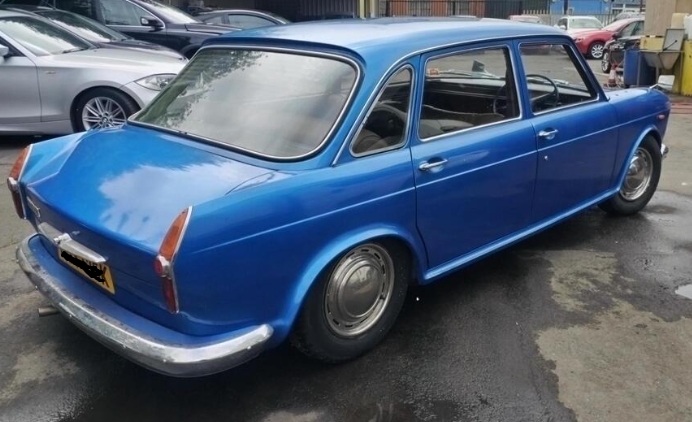
In the annals of British automotive history, few cars are as instantly recognizable—or as polarizing—as the Austin/Morris 1800. Affectionately (and sometimes derisively) known as the “Landcrab,” this large family hatchback was a bold attempt by the British Motor Corporation (BMC) to create a “world car” that offered the space of a large saloon with the practicality of a smaller vehicle.
Produced from 1964 to 1975, the 1800 was ahead of its time. It featured a transverse engine, front-wheel drive, and a spacious “stretched” hatchback body that predated the modern estate and MPV by decades. Yet, despite its engineering brilliance, it struggled to find a permanent foothold in a rapidly changing market.
This article traces the evolution of the Austin 1800, detailing its production years, model variations, technical specifications, and its enduring legacy in the automotive world.
Part I: Genesis and Design (1964–1968)
The Need for a New Size By the early 1960s, BMC had conquered the small car market with the Mini and the medium market with the 1100/1300. However, there was a gap in their lineup for a larger family car. The existing Farina saloons were aging, and the company needed a vehicle that could compete with the Ford Zephyr and Vauxhall Victor.
The result, launched in October 1964, was the Austin 1800. It was designed by the legendary Alec Issigonis, the man behind the Mini. While it shared the Mini’s transverse engine layout and front-wheel drive, the 1800 was significantly larger and more complex.
The “Landcrab” Moniker The car’s unique shape earned it the nickname “Landcrab.” The body was tall and narrow, maximizing interior space while keeping the footprint relatively compact. The design featured a large glass area, a steeply raked windscreen, and a distinctive “bunk” window arrangement in the C-pillar (small triangular windows that hinged open to improve ventilation).
Technical Specifications (MkI)
- Engine: 1798cc B-Series inline-4 (OHV).
- Power: 84 bhp (twin SU carburetors).
- Transmission: 4-speed manual (with optional overdrive) or 3-speed automatic (Borg-Warner 35).
- Suspension: Hydrolastic (fluid-filled cones providing a self-leveling ride).
- Brakes: Discs at the front, drums at the rear.
The MkI Range (1964–1968) The initial range was simple, consisting of two trim levels:
- Austin 1800: The base model, well-equipped by the standards of the day, featuring leatherette upholstery, a heater, and a wood-veneer dashboard.
- Austin 1800 De Luxe: Added real leather seats, a walnut dashboard, and chrome exterior trim.
In 1966, the range was expanded to include the Austin 1800 with Overdrive, a crucial option for motorway cruising. A notable variant was the Police Car Package, which featured a heavy-duty cooling system, reinforced suspension, and a siren mount. This was the first time a transverse FWD car was widely adopted by UK police forces, proving the chassis’s stability.
.
THIS might be a great place to get your new car from!
Or for those who are into the “car flipping” business, here’s an excellent resource for you!

.
Part II: The Morris and MG Variants (1966–1968)
BMC utilized badge engineering to sell the same car under different marques. While the Austin was the “standard” version, the Morris and MG variants offered different styling cues and market positioning.
The Morris 1800 (1966–1968) Launched in September 1966, the Morris 1800 was visually distinct. It featured a different grille (often described as a “mustache” design), round headlights (replacing the Austin’s rectangular units), and a slightly different interior trim. Mechanically, it was identical to the Austin. It was marketed as a slightly more youthful alternative to the conservative Austin.
The MG 1800 (1966–1968) Also launched in 1966, the MG 1800 was the “sporting” derivative. It featured:
- A twin-choke carburetor for slightly sharper performance.
- Bucket seats with bolsters.
- A wood-rimmed steering wheel.
- Distinctive “Powerdome” bonnet (a bulge housing the air cleaner).
- Rostyle wheels.
The MG 1800 was an attempt to bridge the gap between the family car and the sports saloon, though it lacked the raw performance of the MGB.
Part III: The MkII Update (1968–1972)
By 1968, the automotive landscape was changing. The Ford Cortina MkIII was proving popular, and the 1800 needed a refresh to stay competitive. In October 1968, the MkII range was introduced.
Styling Changes The most obvious change was the front end. The Austin and Morris versions were unified under a new corporate grille designed by Diran C. Minassian. The Austin received a large, vertical bar grille, while the Morris adopted a horizontal slatted design. The rear also received minor updates with larger taillights.
Interior and Mechanical Upgrades
- Dashboard: The dashboard was redesigned with a full-width walnut veneer (on top models) and a new instrument cluster.
- Engine: The B-Series engine received a higher compression ratio, raising power to 90 bhp.
- Transmission: The 4-speed manual gearbox was updated, and the Borg-Warner automatic transmission was improved.
- Suspension: Hydrolastic suspension remained, but the ride height was lowered slightly to reduce body roll.
The MkII Model Lineup The MkII range was more segmented, reflecting BMC’s attempt to rationalize its complex model structure.
- Austin/Morris 1800 (Base): Vinyl trim, basic chrome, standard wheels.
- Austin/Morris 1800 De Luxe: Improved upholstery (cloth or leather), wood dash, reversing lights, and full wheel covers.
- Austin/Morris 1800 HL (High Line): Introduced later in the run (around 1970/71). This top-tier trim included a vinyl roof, sports wheels, upgraded interior lighting, and often a tachometer.
- MG 1800 MkII: Continued the sporting theme with a unique grille, bucket seats, and a tachometer. However, by this time, the “MG” badge on a family saloon was becoming confusing to the market.
The End of the Morris 1800 In 1971, the Morris 1800 was discontinued, leaving the Austin 1800 and the MG 1800 to soldier on. This was part of a wider rationalization by the parent company (now British Leyland) to reduce model duplication.
Part IV: The Final Years and the 2200 (1972–1975)
As the 1970s progressed, the 1800 faced stiff competition from the Ford Cortina MkIV and Vauxhall Victor. The 1.8-litre engine was beginning to feel underpowered for such a heavy car. To address this, British Leyland introduced the Austin 2200 in 1972.
The Austin 2200 (1972–1975) The 2200 was essentially a rebadged Morris 2200 (which had been launched a year earlier). It utilized a larger 2227cc version of the B-Series engine, producing 101 bhp.
- Performance: The extra displacement transformed the car. The 2200 was significantly faster, capable of reaching 100 mph, making it a genuine motorway cruiser.
- Trim Levels: The 2200 was offered in De Luxe and HL trims. The HL featured velour seats, a vinyl roof, and distinctive “pepper pot” alloy wheels.
- Styling: The 2200 retained the 1800’s body shape but featured a new, more modern grille and larger rear lights.
The Austin 1800 Continuation Surprisingly, the 1800 was not immediately discontinued when the 2200 arrived. The 1800 remained in production alongside the 2200 until 1974, serving as the entry-level model. It was cheaper to tax and insure, appealing to budget-conscious families.
The End of Production By 1974, the Landcrab was showing its age. The design was 10 years old, and rust was becoming a major issue (a common problem for BMC/BL cars of this era). Furthermore, the company was preparing the new Austin Allegro and Princess models to take over the family car segment.
Production of the Austin 1800 and 2200 ceased in 1975. In total, approximately 328,000 units of the 1800 and 2200 were built.
Part V: Technical Analysis and Driving Experience
The Hydrolastic Suspension One of the defining features of the 1800 was the Hydrolastic suspension. This system used fluid-filled cones at each wheel, connected by a pipe. As a wheel hit a bump, the fluid was displaced to the opposite wheel, leveling the car. This provided a comfortable, “magic carpet” ride, though it could be prone to leaks in later life.
Space Efficiency The 1800 was a masterclass in interior packaging. The “stretched” hatchback design (technically a “two-box” design with a large tailgate) allowed for a massive 44 cubic feet of luggage space with the rear seats up, expanding to over 70 cubic feet with them folded. This made it more practical than contemporary saloons like the Ford Zephyr.
Handling Despite its height, the 1800 handled surprisingly well. The low center of gravity (due to the engine being mounted sideways and low) and the wide track minimized body roll. The front-wheel drive layout provided excellent grip in wet conditions, a significant advantage in the UK.
Part VI: Legacy and Future Outlook
The “World Car” Concept The Austin 1800 was intended to be a global vehicle. While it found moderate success in the UK, Australia, and South Africa, it struggled in the US market (where it was sold briefly as the Austin 1800 and Morris 1800). In Australia, the car was revered; the local assembly and robust build quality made it a staple of the Australian outback.
Influence on Future Design The 1800’s influence can be seen in modern vehicles. Its tall, spacious body and large tailgate were precursors to the modern MPV and crossover SUV. The concept of maximizing interior volume within a compact footprint is a design philosophy used today by cars like the BMW 2 Series Active Tourer and the Citroën C4 Picasso.
Current Status: The Collector’s Market Today, the Austin 1800 is a rare sight on the roads. Most succumbed to rust or were scrapped during the oil crises of the 1970s. However, a dedicated community of enthusiasts keeps the breed alive.
- Value: Project cars can be found for £1,000–£3,000, while concours-condition examples (particularly the MG 1800 or late 2200 HL) can fetch £10,000–£15,000.
- Parts Availability: Surprisingly good. Because the B-Series engine and gearbox were used in many other vehicles (including the MGB and Midget), mechanical parts are relatively easy to source. Body panels, however, are the main challenge, with NOS (New Old Stock) panels becoming increasingly valuable.
Future Outlook The Austin 1800 is slowly gaining recognition as a significant vehicle in automotive history. It represents the peak of Alec Issigonis’s design philosophy—space efficiency over aesthetic convention. As modern cars become larger and more homogenized, the quirky, honest nature of the Landcrab appeals to a new generation of classic car enthusiasts.
While it may never reach the investment heights of the E-Type Jaguar or the classic Mini, the Austin 1800 holds a special place as the “thinking man’s classic”—a car for those who value engineering innovation and practicality over badge prestige.
Summary of Models and Trim Levels
To summarize the production run, here is a chronological breakdown of the Austin 1800 and its siblings:
MkI (1964–1968)
- Austin 1800: Base model.
- Austin 1800 De Luxe: Upgraded trim.
- Austin 1800 (Overdrive): Manual with overdrive.
- Morris 1800: Badge-engineered variant (1966–1968).
- MG 1800: Sporting variant (1966–1968).
MkII (1968–1972)
- Austin 1800: Base model.
- Austin 1800 De Luxe: Mid-range.
- Austin 1800 HL: Top of the range (introduced ~1970).
- MG 1800 MkII: Sporting variant (discontinued 1971).
- Morris 1800: Discontinued 1971.
2200 Range (1972–1975)
- Austin 2200 De Luxe: Base 2.2L model.
- Austin 2200 HL: Top of the range 2.2L model.
- Austin 1800: Continued as budget option until 1974.
Conclusion
The Austin 1800 was a car born of ambition. It tried to offer the space of a large car with the economy of a small one, utilizing technology that was years ahead of its competitors. While it suffered from the badge confusion typical of the BMC era and was ultimately overshadowed by the Allegro and Princess, the “Landcrab” remains a fascinating chapter in British motoring history.
It stands as a testament to an era of daring engineering, where practicality and innovation were valued above all else. For those who dare to look past the unconventional styling, the Austin 1800 offers a driving experience and a level of interior space that still impresses today.