The Last Stand of the British Motor Corporation: History of the Austin Montego
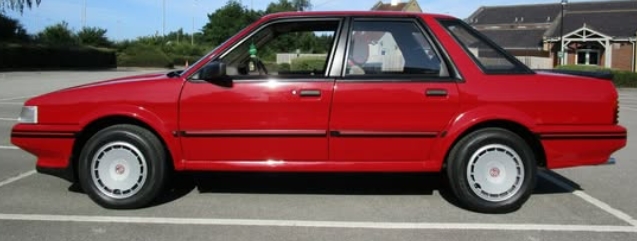
In the annals of British automotive history, few cars encapsulate the turbulent transition of the 1980s quite like the Austin Montego. Born from the remnants of the British Motor Corporation (BMC) and the nascent Austin Rover Group, the Montego was intended to be a modern, world-class family saloon that could compete with the Ford Sierra and Vauxhall Cavalier. It arrived in 1984 as a critical replacement for the aging Austin Ambassador and was the last entirely new saloon design to bear the Austin badge.
Despite its promising start and innovative features, the Montego’s story is one of missed opportunities, corporate restructuring, and fierce competition. This article explores the evolution of the Austin Montego, tracing its journey from its conception in the early 1980s to its eventual discontinuation in the late 1990s, examining every model, trim level, and the legacy it left behind.
The Genesis: Project Y
To understand the Montego, one must look at the corporate chaos of the late 1970s. In 1968, the British Motor Corporation (BMC) merged with Leyland Vehicles to form British Leyland (BL). By the late 1970s, BL was in dire financial straits, kept afloat by government loans. The company’s Austin-Morris division was in desperate need of a mid-sized family car to replace the Maestro/Marina platform and the Austin Ambassador (a badge-engineered version of the Morris Ital).
The development program, codenamed “Project Y,” began in the late 1970s. The goal was to create a car that utilized the existing K-Series engine architecture but featured a modern, aerodynamic body. The project faced numerous delays due to industrial unrest and financial constraints. When the car finally debuted, it was under the newly formed Austin Rover Group (1982), which aimed to streamline the brand and shed the baggage of the British Leyland era.
.

.
The Launch: 1984–1986
On May 1, 1984, the Austin Montego was launched to the public. It was available initially as a four-door saloon (with a five-door estate arriving later that year). The design was aerodynamic for its time, featuring a drag coefficient of 0.35, which was impressive for a family saloon.
The Montego was built on a modified version of the A-Series platform, though it was significantly updated. It featured MacPherson strut front suspension and a torsion beam rear, offering a ride quality that was generally well-regarded.
Engine Lineup At launch, the Montego was powered by the following engines:
- 1.3L A-Series: (848 cc) – The entry-level unit, carbureted, producing around 45 hp.
- 1.6L O-Series: (1598 cc) – A more robust engine available in single-point fuel injection (MPi) forms, producing between 70 and 80 hp.
- 2.0L O-Series: (1994 cc) – The top-tier engine, available in carbureted and MPi forms, producing up to 100 hp.
Trim Levels (1984–1986) The initial range was structured simply:
- City: The budget model. Stripped back with vinyl seats, basic rubber flooring, and no radio. It usually featured the 1.3L engine.
- Base: Slightly better equipped than the City, featuring cloth seats and a heater.
- HL: The volume seller. Included a radio, better trim, and often the 1.6L engine.
- HLX: The luxury trim. Featured velour seats, wood-effect trim, clock, and often the 2.0L engine.
- MG: The performance variant. Launched shortly after the standard cars, the MG Montego featured the 2.0L MPi engine, a sports suspension, spoilers, and alloy wheels.
The Facelift and Refinement: 1986–1988
By 1986, the Montego was selling reasonably well in the UK, but it faced criticism for reliability issues, particularly with the fuel injection systems and electrical components. In late 1986, Austin Rover introduced a significant update to address these issues and modernize the car.
The most visible change was the interior. The original “digital dashboard” (a futuristic LCD display prone to failure) was replaced with a conventional analogue instrument cluster, which was far more reliable and easier to read. The build quality was improved with better sound deadening and revised switchgear.
The Diesel Revolution (1986) In October 1986, a crucial addition arrived: the Montego Diesel. Powered by the 2.0L “L-Series” Isuzu-derived engine, this model offered significantly better fuel economy (up to 50 mpg) and torque. It became a favorite among taxi drivers and high-mileage fleet users. It was initially available in HL and HLX trims.
The Turbo Era (1987) 1987 saw the introduction of the Montego Turbo, a car that became a cult classic. Using a Garrett T3 turbocharger on the 2.0L O-Series engine, it produced 120 hp (later increased to 140 hp). With a 0-60 mph time of under 8 seconds, it was faster than the Ford Sierra XR4i and the Vauxhall Cavalier SRi. It featured a unique body kit, flared wheel arches, and a distinctive “Turbo” badge.
The Austin Rover Era: 1988–1989
In 1988, the Austin brand was phased out in favor of the parent company name, Rover. The cars became the Rover Montego. While the Austin badge had been a symbol of British heritage, the Rover badge was associated with premium quality (thanks to the Rover SD1 and the newly launched Honda-based Rover 200/400 series).
Trim Levels (1988–1989) The range was reorganized under the Rover banner:
- Rover Montego City: Remained the entry-level.
- Rover Montego Base: The fleet favorite.
- Rover Montego L: Replaced HL, featuring improved standard equipment.
- Rover Montego XL: Replaced HLX, adding air conditioning and sunroofs as options.
- Rover Montego SL: The new flagship, featuring leather seats, electric windows, and the 2.0L injection engine.
- Rover Montego Diesel: Continued in L and SL trims.
- Rover Montego Turbo: Continued with the updated 140 hp engine.
The Estate and Commercial Variants The Montego Estate, launched in 1984, shared the saloon’s mechanicals but offered a significantly larger boot (500 liters with seats up, 1600 liters with seats down). It was popular with families and small businesses. A van version, the Morris Montego Van, was also produced, stripping out the rear seats and bonding the rear windows for commercial use.
The MG Revival (1989) In 1989, the MG badge was resurrected on the Montego. The MG Montego 2.0i (injection) replaced the earlier carbureted MG models. It featured a 120 hp engine, a close-ratio gearbox, and a distinctive “MG” grille. It was a competent handling car, often praised for its front-wheel-drive grip, though it lacked the rear-wheel-drive purity of the classic MGB.
The Rover Montego: 1990–1992
As the 1990s began, the Montego was aging. The Rover 200 series (launched in 1984) and the Rover 400 series (launched in 1990) were newer, more efficient, and built with Honda technology. The Montego was now a “value” product, aimed at buyers who wanted more space for less money than the newer Rovers offered.
The VDP Era (1990) In 1990, a special edition called the Montego VDP (Vogue Design Package) was launched. It featured two-tone metallic paint, alloy wheels, and upgraded trim. It was an attempt to inject some premium appeal into the aging platform.
The Turbo Diesel (1990) The diesel engine was upgraded with a turbocharger, creating the Montego 2.0 TD. This was a robust, torquey unit that appealed to long-distance drivers. It was available in L and SL trims.
The Final Years: 1992–1995
By 1992, the Montego was a decade-old design in a rapidly evolving market. The Rover Group was now under the ownership of British Aerospace (BAe), and the focus was shifting toward the Honda-based platforms (the 200 and 400 series) and the new 600 series.
Production of the Montego for the home market ceased in 1994. However, the car continued in a limited capacity for export and specific markets.
The Montego in the US: The Eagle Premier (1988–1992) It is impossible to discuss the Montego’s evolution without mentioning its American cousin. In a bizarre twist of corporate alliance, American Motors Corporation (AMC) needed a modern midsize car. They partnered with Renault (who owned a stake in AMC) and the Austin Rover Group.
The result was the Eagle Premier (and its badge-engineered sibling, the Dodge Monaco). While the Premier shared the Montego’s chassis architecture and some suspension components, it was a completely different car. It featured a longer wheelbase, a distinct body designed by Pininfarina, and engines from AMC/Renault (a 2.5L V6 and a 2.0L four-cylinder). The Premier was praised for its handling and interior space but suffered from poor build quality and a confusing brand identity. It was discontinued in 1992 when Chrysler acquired AMC.
The Commercial Legacy: LDV After the passenger car production ended, the Montego’s platform found a new life. The tooling for the Montego van was sold to LDV (Leyland DAF Vans). The LDV Convoy was essentially a rebodied Montego van, utilizing the same suspension, engine, and chassis. The Convoy remained in production well into the late 1990s and early 2000s, serving as a testament to the durability of the Montego’s underlying engineering.
Technical Analysis and Innovations
The Montego is often remembered for its mixed bag of technology. It was one of the first mass-produced cars to feature a “Check Control” system (monitoring lights, fluid levels, and brake pads) in the higher trims. The ergonomics were generally excellent, with the dashboard designed around the driver.
However, the car was plagued by issues:
- Rust: Like many British cars of the era, the Montego suffered from severe corrosion issues, particularly in the wheel arches, sills, and floor pans.
- Electrics: Lucas electronics proved troublesome, leading to erratic behavior of lights, wipers, and the complex dashboard displays.
- Head Gaskets: The O-Series engine was notorious for blowing head gaskets, particularly if the cooling system was neglected.
The End of an Era: 1995 and Beyond
In 1995, the Rover Group was fully acquired by BMW. The Montego (and the Maestro) were finally discontinued to clear the way for the Rover 400 series (which evolved into the 45) and the Rover 200 series (which evolved into the 25). The Montego nameplate vanished from British roads, ending a 11-year production run.
Future Outlook and Classic Status
Today, the Austin/Rover Montego has largely faded from mainstream memory, overshadowed by the longevity of the Ford Cortina and the reliability of the Toyota Corolla of the same era. However, it is gaining a cult following among classic car enthusiasts.
Classic Status
- The MG and Turbo Models: These are the most sought-after. The Turbo, in particular, is recognized for its performance, which still holds up reasonably well today. The MG offers a fun, affordable entry into 1980s touring.
- The Diesel: The non-turbo diesel Montegos are becoming popular as “green” classics due to their ability to run on vegetable oil and their mechanical simplicity.
- Survivors: Finding an unrusty Montego is incredibly difficult. Most have succumbed to tinworm. However, a dedicated community of owners keeps the remaining cars on the road, with parts availability maintained by specialists and the shared components with the LDV vans.
Modifications The Montego has seen a resurgence in the motorsport world. The “Monte Saloon” rally cars, prepared by teams like Geoff Wood Motorsport, utilize the 2.0L O-Series engine and reinforced chassis to compete in historic rallies. The car’s front-wheel-drive layout and MacPherson strut suspension make it a surprisingly capable platform for modification.
Conclusion
The Austin Montego was a car born in difficult circumstances. It was the final act of the Austin marque, a last attempt to produce a purely British family car that could stand toe-to-toe with European and Japanese rivals. While it ultimately fell short of global dominance due to reliability issues and fierce competition, it was not without merit. The Montego offered space, comfort, and in its Turbo and MG guises, genuine performance.
Its legacy is complex: it was the bridge between the troubled British Leyland era and the modern, Honda-influenced Rover Group. While it never achieved the iconic status of the Mini or the Range Rover, the Montego remains a fascinating chapter in the history of the British motor industry—a testament to the engineers who tried to save a dying industry, and the enthusiasts who keep its memory alive today.