The People’s Car: A Comprehensive History of the Dacia 1300
The Romanian Automotive Revolution
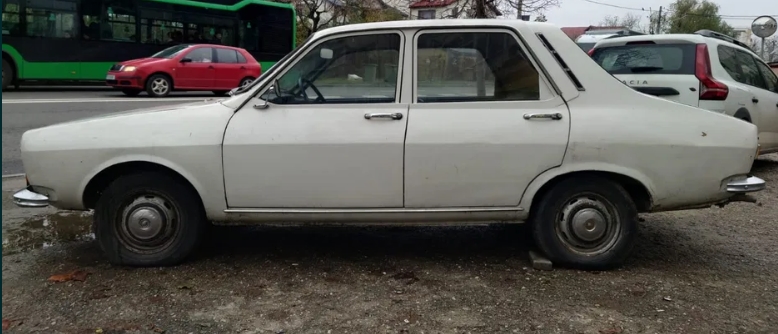
In the landscape of 20th-century European automotive history, few vehicles command the same level of cultural reverence as the Dacia 1300. Known affectionately in Romania as “The Dac,” this vehicle was not merely a mode of transportation; it was a national icon, a symbol of ingenuity, and for decades, the primary witness to the social history of a nation.
Produced from 1969 to 2004, the Dacia 1300 began its life as a modern, Western-styled sedan and eventually evolved into a rugged, utilitarian workhorse that outlived its planned obsolescence by nearly two decades. This article explores the technical evolution, trim variations, and enduring legacy of the Dacia 1300, a car that democratized mobility for millions.
Genesis: The Renault 12 Connection
To understand the Dacia 1300, one must look to France. In the mid-1960s, the Romanian state-owned manufacturer Automobile Dacia sought to modernize its fleet, which until then relied on aging designs. In 1966, the company signed a landmark licensing agreement with Renault to produce the Renault 12.
The Renault 12 was a revolutionary car for its time—a front-engine, front-wheel-drive sedan with a transverse engine and a hatchback (in later variants), aiming to bridge the gap between the compact Renault 4 and the larger Renault 16. Romania’s goal was ambitious: to establish a domestic automotive industry capable of producing a “people’s car” for the masses.
On August 23, 1969—the National Day of the Socialist Republic of Romania—the first Dacia 1300 rolled off the assembly line at the newly built factory in Mioveni (then Colibași), Argeș County. While visually identical to the French donor car, the Dacia was adapted for local conditions, featuring reinforced suspension and a simplified electrical system to handle Romania’s often rugged and unpaved rural roads.
.
THIS might be a great place to get your new car from!
Or for those who are into the “car flipping” business, here’s an excellent resource for you!

.
The First Era (1969–1979): The Golden Age
For the first decade, the Dacia 1300 remained largely faithful to the Renault 12 blueprint. It was a modern car by global standards, boasting a 1289cc engine (code-named Cléon-Fonte) producing 54 horsepower, a top speed of 140 km/h, and independent front suspension.
Trim Levels and Models (1969–1979): During this period, the trim levels were relatively straightforward, distinguishing between a base model and a slightly more comfortable version.
- Dacia 1300 (Base): This was the standard model. It featured a chrome grille, rubber bumpers (initially), and a spartan interior with vinyl seats. It lacked a tachometer and had limited chrome exterior trim. However, it was praised for its fuel efficiency (around 8L/100km) and its ability to carry four adults comfortably.
- Dacia 1300 / 1301 Lux (Top Spec): The “Lux” version was the status symbol of the era. It included a tachometer, a quartz clock on the dashboard, a heated rear window, and full carpeting. In the early 1970s, a “Leader” trim was briefly offered, which included a radio, an ashtray, and a rear window defroster.
- Special Utility Models:
- Dacia 1300 Berlina: The standard 4-door sedan.
- Dacia 1300 Break: The station wagon version, introduced in 1973. It shared mechanicals with the sedan but offered increased cargo capacity, becoming a favorite for small businesses and farmers.
- Dacia 1300 Jockey: A niche panel van variant based on the Break, with rear windows blanked out for cargo security.
By the mid-1970s, the Dacia 1300 had captured over 50% of the Romanian domestic market. It was reliable, parts were cheap, and it could withstand the harsh winters and rough roads better than many Western competitors.
The Transition (1979–1983): Updating the Classic
By the late 1970s, the Renault 12 was aging. While Dacia had the license to produce the car, they did not have the rights to all subsequent updates from Renault. Consequently, Romanian engineers began a process of “Romanianization,” creating distinct design changes to modernize the car and assert national identity.
In 1979, the Dacia 1300 received its first significant facelift, known internally as the “1300 (1979)” model.
Key Changes:
- Exterior: The chrome bumpers were replaced with black rubber/plastic bumpers (an influence of the safety regulations in the US market for the Renault 12, which Dacia emulated). The front grille was updated to a black plastic mesh, and the headlights were slightly modified.
- Interior: The dashboard was redesigned with a more rectangular, boxy aesthetic. While still simple, it moved away from the rounded curves of the original 1969 model.
- Trim Levels:
- 1300 Standard: Continued as the basic model.
- 1300 Lux: Retained the upgraded interior but adopted the new plastic bumpers and grilles.
- Dacia 1310 (1982): A new designation was introduced for the updated facelift models, though they mechanically remained 1300cc engines.
The Second Era (1983–1989): The Dacia 1310 and the Rise of Customization
The 1980s marked a turning point. Due to political isolation and economic sanctions, importing parts became difficult. Dacia was forced to rely entirely on domestic production. This led to the official launch of the Dacia 1310 in 1983.
While the 1310 name eventually encompassed various engine sizes (1.4L and 1.6L), for the majority of its life, it referred to the facelifted version of the 1300 platform.
Models and Trim Evolution (1983–1989): The 1980s saw an explosion of trim variations, often dictated by the whims of the Communist Party leadership or export markets.
- Dacia 1310 Break (Station Wagon): By now, the Break had become the most popular variant. It was rugged and versatile.
- Dacia 1310 “S” (Sport): In the early 1980s, a sportier version was developed. It featured a two-tone paint job (white with a blue or red stripe), sport seats, and slightly modified gearing for better acceleration. It was a visual trim rather than a mechanical powerhouse.
- Dacia 1310 “TV” / “TL”: The “TV” (Touring) and “TL” (Touring Lux) were introduced in the mid-80s. These were export-oriented trims intended for Western Europe (Italy, UK, France). They featured better paint quality, vinyl roof options, upgraded upholstery, and often included a tachometer and heated seats as standard.
- Dacia 1310 “Maxi” (1985): Perhaps the most radical iteration of the era. The Maxi was a cosmetic overhaul intended to make the car look like a hatchback (similar to the Renault 14). It featured a new front end with rectangular headlights, a unique rear tailgate design, and a modernized interior with a digital clock (rare for the time). The Maxi failed commercially due to high costs and confusing design, but it remains a collector’s curiosity today.
- Dacia 1300 Pick-up: While primarily a utility vehicle, the pickup gained popularity in the late 80s. With the rear seats removed, it became a staple for farmers. In 1989, a “Doble Cabină” (double cab) version was introduced, adding a second row of seats for passengers.
The Third Era (1990–2004): Post-Communist Survival
The 1989 revolution brought the fall of Communism and the opening of borders. Suddenly, Romanians were exposed to modern Western cars like the Volkswagen Golf, Opel Astra, and Ford Escort. The Dacia 1300/1310, now outdated by 30 years, faced an existential crisis.
However, due to the high cost of imported cars and the lack of domestic alternatives, Dacia had to modernize the old workhorse once more.
The 1990–1994 Facelift (Aro 10 Influence): In the early 90s, Dacia introduced a comprehensive facelift to the 1310 range, integrating styling cues from the Aro 10 (a Romanian SUV).
- Exterior: The headlights became rectangular (similar to the Volvo 240), the grille was updated to a vertical slot design, and the bumpers were thickened.
- Interior: The dashboard received a soft-touch plastic redesign (a first for Dacia) and a new steering wheel.
- Trim Levels:
- Dacia 1310 Standard: The base model.
- Dacia 1310 LX: The luxury trim, featuring velour seats, a premium radio, and body-colored bumpers.
- Dacia 1310 FX: A temporary trim that often included alloy wheels and central locking.
- Dacia 1310 Break: Continued production, now with improved heating systems.
The “Special” and “Contact” (1994–1998): As the 90s progressed, Dacia faced fierce competition from second-hand imports. To stay relevant, they launched the “Special” edition in 1994. This was essentially a stripped-down, ultra-cheap version of the 1310 designed to compete with the used car market. It lacked many luxury features but retained the robust engine.
By 1998, the model was rebranded as the Dacia 1310 “Contact”. This was the final iteration. It featured a modernized front fascia with a wider grille and clear-lens headlights, attempting to mimic 90s design trends. The engine remained the same 1.4L unit (now producing 54 hp), and the build quality, while improved slightly, was still utilitarian.
The Final Years (1999–2004): The End of an Era By the turn of the millennium, the Dacia 1300/1310 platform was nearly 35 years old. It was no longer compliant with emerging safety and emission standards. In 1999, Renault acquired a controlling stake in Dacia, initiating a massive restructuring.
The Dacia 1310 was kept in production purely as a budget option while the new Logan was being developed. Production of the sedan ceased in 2000 (with a small batch of 2001 models produced for the army), but the Break (station wagon) and Pick-up continued until 2004.
The last Dacia 1310 rolled off the line in 2004, marking the end of a 35-year production run—one of the longest for any single automotive platform in history.
Technical Specifications Overview
- Engine: 1289cc inline-4, water-cooled.
- Power: 54 hp (DIN) @ 5,250 rpm.
- Torque: 98 Nm @ 3,000 rpm.
- Transmission: 4-speed manual (5-speed introduced in later 1310 models).
- Suspension: Independent front with wishbones and torsion bars; rigid axle rear with leaf springs.
- Brakes: Discs front, drums rear.
Future Outlook and Legacy
Today, the Dacia 1300 is enjoying a renaissance in the classic car scene. In Romania and across Eastern Europe, restored “Classic Dacias” are becoming prized possessions. The “Maxi” and the early “Lux” models are particularly sought after.
The future of the Dacia 1300 lies in preservation. The “Dacia Club” in Romania organizes annual rallies, and restoration parts are being manufactured anew by specialist workshops. The car’s simplicity makes it easy to maintain; with a basic set of tools, an owner can dismantle the entire engine.
Conclusion
The Dacia 1300 was never the fastest, the safest, or the most luxurious car on the road. However, its evolution tells the story of a nation. From the optimistic industrialization of the late 1960s, through the austerity of the 1980s, to the chaotic capitalism of the 1990s, the Dacia remained constant.
It democratized car ownership in Romania, offering a metallic bubble of privacy and freedom to millions of families. While it has long been replaced in showrooms by the modern Dacia Logan and Duster, the spirit of the 1300—affordable, reliable, and unpretentious—remains the core philosophy of the Dacia brand today. It is not just a car; it is a testament to endurance.