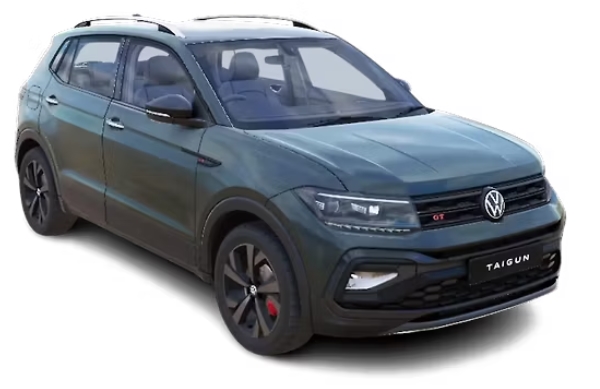
The People’s SUV: A Deep Dive into the Evolution of the Volkswagen Taigun
In the automotive landscape of the 21st century, the global shift in consumer preference from sedans to SUVs has been the defining narrative. For Volkswagen (VW), a legacy German manufacturer known for its engineering prowess and the iconic Beetle and Golf, penetrating the booming compact SUV markets—particularly in developing economies like India and Latin America—required a specific strategy. This strategy culminated in the Taigun, a vehicle that represents a significant pivot in VW’s approach to the Segment B (sub-compact) SUV market.
The story of the Volkswagen Taigun is one of reinvention. It bridges the gap between the ill-fated, air-cooled attempt of the 1970s (the Kubelwagen-derived SUV concept) and the modern, modular, water-cooled era of the Volkswagen Group. Produced from 2021 to the present day, the Taigun is a product of the India 2.0 project, built on the cost-effective yet sophisticated MQB-A0-IN platform. This article explores the evolution of the Taigun, detailing its production history, model variants, trim levels, and its impact on the Volkswagen brand globally.
Historical Context: From Concept to Reality
To understand the Taigun, one must first look at its predecessor, the Volkswagen CrossPolo. Produced from 2010 to 2017 in various global markets, the CrossPolo was a high-riding hatchback rather than a true SUV. While competent, it lacked the commanding stance and interior space that the modern consumer craved.
The Taigun nameplate itself actually made its debut earlier than the production car we know today. In 2012, at the São Paulo Motor Show, Volkswagen unveiled a concept car called the Taigun. This concept was powered by a compact, highly efficient three-cylinder engine and featured a rugged, minimalist design. However, due to shifts in global strategy and the prioritization of the VW T-Roc (a larger, more premium C-segment SUV), the Taigun concept was shelved.
Fast forward to 2019. Volkswagen Group announced its “India 2.0” project, investing heavily in localized production to compete with market leaders like Maruti Suzuki and Hyundai. The goal was to create an SUV specifically tailored for emerging markets—affordable, spacious, and robust. Utilizing the modular transverse matrix (MQB) platform, but scaled down for cost efficiency (designated MQB-A0-IN), Volkswagen revived the Taigun name. On paper, this new vehicle differed significantly from the 2012 concept; it was larger, featured a four-cylinder engine, and prioritized rear-seat legroom over minimalist weight-saving.
.
RepairSurge Online Repair Manuals Replace Bulky Books With Reliable Digital Information!
Faster And Cheaper Than Traditional Printed Manuals, Users Get Instant Access To The Repair Information They Need For Any Car, Truck, Van or SUV:
.
Launch and Production Era (2021 – Present)
The modern Volkswagen Taigun was officially unveiled in India in June 2021 and launched in September 2021. It was developed alongside the Skoda Kushaq, its mechanical twin, yet the Taigun was engineered with distinct Volkswagen DNA—sharper styling, a focus on driving dynamics, and a slightly more premium feature set.
Production takes place at Volkswagen’s Chakan plant in Pune, India. While initially focused on the Indian domestic market, VW began exporting the Taigun to other right-hand-drive (RHD) and left-hand-drive (LHD) markets in Latin America, the Middle East, and Africa, effectively replacing older variants of the Polo sedan and the CrossPolo in those regions.
Trim Levels and Model Evolution (2021–Present)
Since its launch in 2021, the Volkswagen Taigun has not undergone a full generational change, but it has seen annual updates in trim nomenclature and feature inclusion to stay competitive. Below is the detailed breakdown of the models and trim levels offered throughout its short but impactful history.
1. The Launch Lineup (September 2021)
Upon its debut, the Taigun was available with two engine options: a 1.0-liter TSI (Turbocharged Stratified Injection) petrol and a 1.5-liter TSI petrol. The trim hierarchy was structured into three main lines:
- Comfortline (Base Trim):
- Engine: 1.0L TSI only.
- Transmission: 6-speed Manual or 6-speed Automatic Torque Converter.
- Key Features: 16-inch steel wheels (alloys optional), 8.0-inch infotainment system (no Apple CarPlay/Android Auto at launch), manual AC, fabric upholstery, and dual front airbags.
- Target Audience: Fleet operators and budget-conscious buyers.
- Highline (Mid Trim):
- Engine: 1.0L TSI.
- Transmission: 6-speed Manual or 6-speed Automatic.
- Key Features: 16-inch alloy wheels, 10-inch Touchscreen infotainment with Apple CarPlay and Android Auto, push-button start, automatic climate control, and electrically adjustable ORVMs (Outside Rearview Mirrors). It also added side and curtain airbags.
- Topline (Top Trim):
- Engine: 1.0L TSI and 1.5L TSI.
- Transmission: 6-speed Manual (1.0L/1.5L), 6-speed Automatic (1.0L), and 7-speed DSG (1.5L).
- Key Features: 17-inch dual-tone alloy wheels, fully digital instrument cluster (“Volkswagen Virtual Cockpit”), ventilated front seats, sunroof, ambient lighting, leatherette upholstery, and the “IQ.Drive” safety suite (Lane Assist, Front Assist, Cruise Control).
2. The GT Line and GT Plus (Performance Focus)
To appeal to enthusiasts, Volkswagen introduced the “GT” branding, a nod to its sporty history.
- GT Line:
- Based on the Highline trim but equipped with the 1.5L TSI engine.
- Visual differentiators included blacked-out roofs, 17-inch “Zaria” graphite alloy wheels, and black interior elements with contrast stitching.
- Transmission: 6-speed Manual or 7-speed DSG.
- GT Plus:
- The ultimate performance-oriented variant.
- Included all Topline features plus specific GT badging, puddle lamps with the GT logo, and wireless charging.
- Powered exclusively by the 1.5L TSI EA211 engine with Active Cylinder Technology (ACT), which deactivates two cylinders under light loads for fuel efficiency.
3. The 2023 Facelift and “Shadow” Editions
In early 2023, Volkswagen revised the Taigun’s trim structure to simplify the lineup and introduce blacked-out aesthetic packages.
- New Trim Structure (2023):
- Dynamic Line: Replaced the Comfortline and Highline designations for the 1.0L engine.
- GT Line: Continued as the performance tier for the 1.5L engine.
- Shadow Edition:
- A limited-run model introduced to celebrate the festive season of 2023.
- Based on the GT Line trim.
- Exclusive Features: Matte black wrap (optional), blacked-out alloy wheels, Shadow badges, and an integrated dashcam (two cameras).
- This model was available only in specific colors (Lava Blue, Deep Black, and Carbon Steel Grey).
4. 2024 Update: The E20 Compliance and Feature Additions
As emission norms in India shifted toward E20 (20% ethanol blend), Volkswagen updated the Taigun’s powertrains in 2024.
- Engine Update: The 1.0L and 1.5L TSI engines were recalibrated for E20 fuel compatibility, ensuring future-proofing against regulatory changes.
- GT Plus Sport:
- A new addition to the GT lineup.
- Retained the 1.5L TSI engine.
- Distinctive Features: Dual-tip exhaust (visual), red brake calipers, and exclusive “Deep Black Pearl” paint. It essentially offered the visual aggression of the GT Line with the full features of the GT Plus.
Detailed Specifications by Powertrain
To navigate the confusing trim names, it is best to categorize the Taigun by its engine offerings, which have remained consistent since launch:
A. The 1.0L TSI Models (110 PS / 175 Nm)
- Engines Available: 1.0L TSI.
- Transmissions: 6-speed Manual or 6-speed Torque Converter Automatic.
- Trim Levels (Current):
- Essential (Base): 16-inch steel wheels, 8.25-inch touchscreen, manual HVAC, 2 airbags.
- Performance Line (Mid): 16-inch alloys, 10-inch touchscreen, sunroof, auto-dimming IRVM, 6 airbags.
- GT Line (1.0L specific): Visual black package, 17-inch dual-tone wheels, ambient lighting, ambient footwell lights.
B. The 1.5L TSI Models (150 PS / 250 Nm)
- Engures Available: 1.5L TSI with ACT.
- Transmissions: 6-speed Manual or 7-speed DSG (Dual-clutch automatic).
- Trim Levels (Current):
- GT Line: The entry point for the 1.5L engine. Includes black roof, 17-inch alloys, virtual cockpit, and leatherette seats.
- GT Plus: Adds ventilated seats, wireless charging, and the IQ.Drive safety suite.
- GT Plus Sport: Adds the visual sportiness of the GT Line (red calipers, dual exhaust) to the GT Plus feature set.
Design and Engineering Philosophy
The Taigun’s evolution is defined by its adherence to the “Volkswagen Design” language. Unlike the soft, rounded curves of many competitors, the Taigun features sharp creases, an LED light bar spanning the width of the rear (a signature introduced in 2022), and a distinct “T” motif in the interior air vents.
The MQB-A0-IN platform is a localized version of the global MQB platform. While cost-saving measures were evident (such as the use of torsion beam suspension in the rear for the 1.0L models), Volkswagen engineered specific changes for the Taigun, including increased ground clearance (188mm) and strengthened underbody protection to handle rough roads. Notably, the 1.5L TSI models retain the more sophisticated multi-link rear suspension, differentiating them dynamically from the 1.0L variants.
Safety and Market Position
The Taigun played a pivotal role in improving Volkswagen’s safety perception in emerging markets. In 2022, it received a 5-star safety rating from Global NCAP (for the adult occupant protection category), becoming one of the safest vehicles in its segment. This was a major selling point against competitors like the Hyundai Creta and Kia Seltos, which had varying safety ratings.
Future Outlook
Looking ahead, the Volkswagen Taigun is expected to undergo a mid-life facelift around 2025 or 2026. Industry analysts predict several key changes for the next phase of the Taigun’s evolution:
- Hybridization: With tightening global emission norms, a strong hybrid (petrol-electric) variant is rumored to join the lineup, likely utilizing a 1.5L engine paired with an electric motor to rival the Toyota Hyryder and Maruti Suzuki Grand Vitara.
- Electric Potential: While a fully electric Taigun is not currently in the roadmap (VW is focusing on the ID. series for the global market), a CNG (Compressed Natural Gas) variant for the Indian market is highly anticipated to compete with the Maruti Suzuki Brezza CNG.
- Global Expansion: As Volkswagen phases out the Polo in Latin America and Africa, the Taigun is expected to take over as the brand’s volume seller in the B-SUV segment, with potential production expansions in Brazil and South Africa.
Conclusion
The Volkswagen Taigun has successfully evolved from a concept sketch in 2012 to a cornerstone of Volkswagen’s emerging market strategy by 2021. By balancing the brand’s European engineering standards with the cost constraints of the MQB-A0-IN platform, VW created a vehicle that feels premium yet accessible.
From the basic Comfortline trim with its manual gearbox to the sophisticated GT Plus DSG with advanced driver aids, the Taigun offers a diverse range of models catering to different buyer personas. Its evolution demonstrates a clear understanding of market demands: safety, connectivity, and driving pleasure. As the automotive world pivots toward electrification, the Taigun stands as the definitive bridge between the internal combustion era and the sustainable future, ensuring the “People’s Car” legacy continues on four wheels, no matter the terrain.