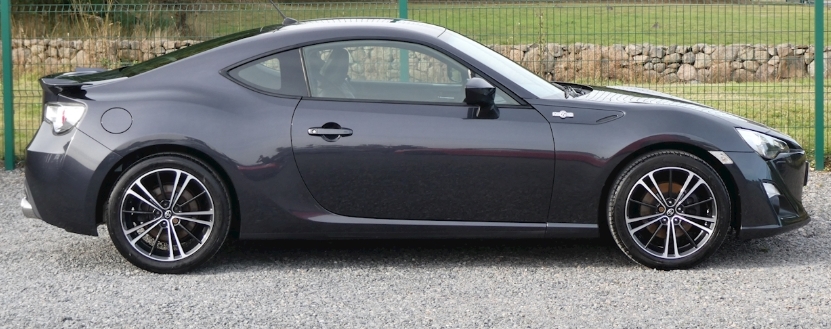
The Phoenix from Aichi: The Evolution of the Toyota GT86
In the early 2000s, Toyota, the world’s largest automaker, was a paragon of efficiency, reliability, and practicality. Cars like the Camry and Corolla were global sales titans, but for the driving enthusiast, the brand’s soul seemed to have gone dormant. The legendary names that once stirred the hearts of petrolheads—Supra, Celica, MR2—were relegated to the history books. A void had formed, a longing for a simple, affordable, rear-wheel-drive sports car that prioritized feeling and engagement over outright speed. In 2012, that void was filled. The Toyota GT86 arrived not just as a new car, but as a statement of intent, a phoenix rising from the ashes of Toyota’s performance past. This is the story of its evolution.
The Genesis: A Partnership and a Philosophy (Pre-2012)
The GT86 was born from an unconventional alliance. In 2008, Toyota, having increased its stake in Fuji Heavy Industries (Subaru’s parent company), embarked on a joint project. The mission was clear: create a modern spiritual successor to the legendary AE86 Corolla Levin/Sprinter Trueno of the 1980s. The principles were non-negotiable: a front-engine, rear-wheel-drive layout, a low center of gravity, lightweight construction, and an affordable price tag.
Subaru brought its expertise in boxer engines to the table, while Toyota contributed its D-4S direct and port fuel injection system and overall chassis development. The result was a unique powertrain: the Subaru FA20 engine, a 2.0-liter, naturally aspirated flat-four that sat incredibly low and far back in the engine bay. The name “86” was a deliberate and multi-layered homage to its ancestor, also referencing the engine’s 86mm square bore and stroke, and even the 86mm diameter of the exhaust tips.
After years of development and a series of tantalizing concept cars (like the FT-86), the production model was ready, launching a new era of accessible performance.
.

.
The First Wave: Pure and Simple (2012-2016)
The initial iteration of the GT86, produced from 2012 to 2016, was a masterclass in focused engineering. It was a car that a purist could dream up.
Core Specifications:
- Engine: 2.0L FA20 Boxer Engine
- Power: 197 bhp (200 PS) at 7,000 rpm
- Torque: 151 lb-ft (205 Nm) at 6,400-6,600 rpm
- Transmission: Aisin 6-speed manual or 6-speed automatic with paddle shifters
- Chassis: Torsen limited-slip differential as standard, MacPherson strut front suspension, and a double-wishbone rear.
The car was praised universally for its sublime handling balance. It was communicative, agile, and encouraged drivers to explore its limits. The deliberately low-grip Michelin Primacy tires it was often equipped with made it easy to provoke and control oversteer at sensible speeds, reinforcing its fun-first ethos. The much-discussed “torque dip” in the mid-range was a known characteristic, but it simply encouraged drivers to keep the high-revving boxer engine on the boil.
Global Models and Trim Levels:
The GT86 was a global car, sold under three different badges, with trim levels varying by market:
- Toyota GT86 (Europe/Asia/Australia): In the UK and Europe, the trim structure was generally straightforward. The entry-level model was simply the GT86 (sometimes called “Primo” in certain years), which came well-equipped with 17-inch alloy wheels, a limited-slip differential, and air conditioning. Optional upgrades often included leather and Alcantara seats with heaters, and a touchscreen navigation system.
- Scion FR-S (North America): In the US and Canada, the car was launched under Toyota’s youth-oriented Scion brand. The FR-S (Front-engine, Rear-wheel drive, Sport) was sold in a “monospec” trim. It was essentially a well-equipped base model, with the only major factory options being the choice of transmission and color. This philosophy aimed to simplify the buying process and encourage personalization through the aftermarket.
- Subaru BRZ: The sister car from Subaru featured slightly different suspension tuning (stiffer front springs, softer rear) for a more stable feel, along with a unique front bumper and interior trim.
Notable Special Editions (2012-2016):
This era saw numerous special editions, adding flair and exclusivity.
- Scion FR-S 10 Series (2014): Celebrating Scion’s 10th anniversary, this model came in a unique Silver Ignition paint, with illuminated exterior badges, a solar-powered illuminated shift knob, and push-button start.
- Scion FR-S Release Series 1.0 (2015): A head-turner in bright “Yuzu” yellow, this edition came with a full TRD (Toyota Racing Development) body kit, TRD lowering springs, and a TRD quad-tip exhaust system.
- Toyota GT86 Giallo (UK, 2015): Finished in Giallo Yellow with black GT86 stripes, it featured heated black leather seats with yellow stitching.
- Toyota 86 Style Cb (Japan): Perhaps the most distinctive special edition, the “Cool beauty” featured a completely redesigned front end with round headlights and a new grille, giving it a quirky, retro-Italian aesthetic.
The Refinement: A Sharper Edge (2017-2021)
For the 2017 model year, the GT86 received a significant mid-cycle refresh. Toyota listened to feedback from customers and critics, implementing changes that refined the car without diluting its core character.
Key Updates:
- Performance: For manual transmission models, subtle engine tweaks—including freer-flowing intake and exhaust manifolds—resulted in a modest power bump to 205 bhp and 156 lb-ft of torque. The final drive ratio was also shortened for better acceleration.
- Chassis and Handling: The chassis was stiffened with extra spot welds in the rear pillars. The suspension was retuned with revised spring rates and dampers, aiming to improve stability and ride comfort simultaneously. A new “Track” mode was added to the stability control system, allowing for more slip before intervention.
- Exterior: The front end was redesigned with a wider, more aggressive “catfish” grille for better cooling, flanked by new standard LED headlights. The rear featured new LED taillights and a restyled bumper.
- Interior: The cabin received a much-needed material upgrade. A new, smaller-diameter steering wheel with integrated audio controls was added, and the instrument cluster was updated to include a multi-information display showing G-force, power/torque curves, and a lap timer.
Revised Models and Trim Levels:
The biggest branding change occurred in North America. Following the dissolution of the Scion brand in 2016, the FR-S was rebadged as the Toyota 86 for the 2017 model year.
- Toyota 86 (North America): The lineup was split into two trims. The base 86 carried over the spirit of the FR-S, while the 86 GT added features like a rear spoiler, heated leather-bolstered seats, dual-zone climate control, and push-button start.
- Toyota GT86 (Europe): The structure was simplified into the GT86 and the higher-spec GT86 Pro, which added heated seats, Alcantara trim, and a rear spoiler.
- Subaru BRZ: Also received similar updates, but crucially, a “Performance Package” became available, offering superior Sachs dampers and powerful Brembo brakes, a package that would later inspire a Toyota equivalent.
Notable Special Editions (2017-2021):
The facelift era produced some of the most desirable and focused versions of the car.
- Toyota 860 Special Edition (2017): Available in either Supernova Orange or Halo White, this edition featured black body stripes, a black rear spoiler, heated black leather seats with orange stitching, and a unique 4.2-inch multi-information display.
- Toyota 86 TRD Special Edition (US, 2019): This was the enthusiast’s choice. Limited to 1,418 units, it came exclusively in “Raven” black paint with a retro tri-color TRD graphic. Crucially, it included the high-performance Sachs dampers, larger Brembo brakes, and sticky Michelin Pilot Sport 4 tires, transforming the car’s on-track capability.
- Toyota GT86 Hakone Edition (2020): A sophisticated and elegant send-off for the first generation. Named after the famous Hakone Turnpike in Japan, it was painted in a deep Hakone Green with 17-inch bronze wheels. The interior was the main event, featuring a beautiful tan and black Alcantara/leather combination that exuded class.
As production wound down in 2021, various “Final Edition” or “Black Limited” models were released in different markets, marking the end of a remarkable nine-year run for the first-generation platform.
The Legacy and the Next Chapter: The GR86
The Toyota GT86 was more than just a car; it was a cultural phenomenon. It single-handedly resurrected Toyota’s reputation among performance enthusiasts and proved that there was a hungry market for a pure, driver-focused sports car. It spawned a vibrant global aftermarket scene and became a common sight at track days, autocross events, and drift competitions.
Its success laid the groundwork for the revival of Toyota’s performance arm, now consolidated under the Gazoo Racing (GR) banner. The GT86 walked so that cars like the GR Supra and GR Yaris could run.
The story didn’t end in 2021. The car’s evolution continued with the launch of the second-generation Toyota GR86. While visually and technically an evolution, the GR86 addressed the one persistent criticism of its predecessor: a lack of torque. With a new, larger 2.4-liter boxer engine, a significantly stiffer chassis, and a more modern interior, it builds directly upon the foundation laid by the original GT86. It is a testament to the enduring purity of the original’s formula—a formula that proved that driving joy isn’t measured in horsepower, but in the connection between driver, car, and road.