The SEAT Arona: A Comprehensive Guide to SEAT’s Compact Crossover SUV
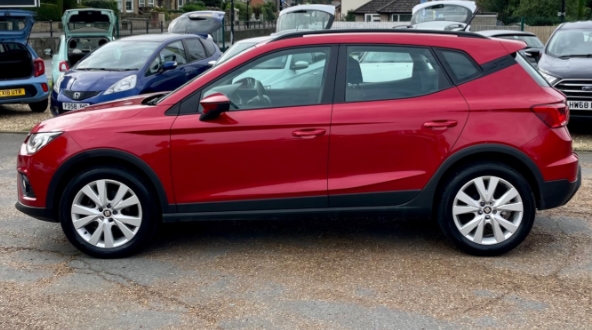
The SEAT Arona is a subcompact crossover SUV (B-segment) produced by the Spanish car manufacturer SEAT, a member of the Volkswagen Group. Since its unveiling in 2017, the Arona has established itself as a strong contender in the increasingly competitive crossover segment, offering a blend of style, practicality, and affordability. Positioned below the SEAT Ateca in the brand’s SUV range, the Arona has been praised for its youthful design, customization options, and efficiency.
In this article, we’ll explore the full history of the SEAT Arona, detail its production years, models, and trim levels, examine its place in the SUV market, and look ahead to its future prospects.
Brief History and Development
The SEAT Arona was officially unveiled on 26 June 2017 in Barcelona, Spain, and made its public debut a few months later at the 2017 Frankfurt Motor Show. Production began in 2017 for the 2018 model year, at SEAT’s plant in Martorell, near Barcelona.
The Arona is built on the Volkswagen Group’s MQB A0 platform, which it shares with the SEAT Ibiza, Volkswagen Polo, and Škoda Kamiq. This modular platform allows for efficient manufacturing and shared technology across several models in the VW Group, reducing costs while maintaining high build quality.
The Arona was SEAT’s second SUV, following the Ateca, and was part of the brand’s strategic push into the SUV market—a segment that was rapidly growing in popularity across Europe and beyond during the mid-2010s. The aim was to attract younger buyers and urban customers who wanted SUV styling and a higher driving position without the size and fuel economy penalties of larger sport-utility vehicles.
.
THIS could come in handy for your auto garage (and everywhere else!):

.
Production Years
- 2017–present: The Arona has been in continuous production since its launch, with an important mid-cycle facelift introduced in 2021 for the 2022 model year. This refresh brought updated styling, improved interior quality, and enhanced technology.
Design and Features
The Arona’s design reflects SEAT’s youthful and dynamic brand identity. It features sharp lines, an angular front end, and distinctive LED lighting signatures. One of its key selling points is the two-tone paint option, allowing customers to choose a contrasting roof colour, which has proven popular among younger buyers.
Inside, the Arona offers a functional and modern cabin. Pre-facelift models (2017–2021) featured a more traditional dashboard layout, while post-facelift versions adopted a larger floating-style infotainment display (up to 9.2 inches), higher-quality materials, and a digital cockpit option.
Practicality is another strength. Despite being compact, the Arona offers a 400-litre boot capacity, which is among the best in its class, with good passenger space for a small SUV.
Engines and Powertrains
Over its production run, the SEAT Arona has been offered with a range of petrol, diesel, and compressed natural gas (CNG) engines—though diesel offerings have been phased out in recent years in many markets.
Petrol Engines (TSI)
- 1.0 TSI 3-cylinder turbocharged petrol in various states of tune (95 PS, 110 PS, and earlier 115 PS versions).
- 1.5 TSI EVO 4-cylinder turbocharged petrol with 150 PS, offered on higher trims such as FR and FR Sport.
Diesel Engines (TDI) – Early years only
- 1.6 TDI 95 PS or 115 PS (phased out in many regions by 2020 due to declining diesel demand in the B-segment).
CNG Option
- 1.0 TGI 90 PS – runs on compressed natural gas, offered in some European markets as a more environmentally friendly alternative.
Transmission Options
- 5-speed manual (primarily for entry-level engines)
- 6-speed manual (mid-to-high power versions)
- 7-speed DSG dual-clutch automatic (available on select engines)
Trim Levels and Models
The SEAT Arona has been offered in several trim levels since launch. While availability may vary by market, the main trims include:
SE (Entry Level)
- Standard equipment includes basic infotainment, air conditioning, electrically adjustable mirrors, and safety features such as front assist.
SE Technology
- Adds upgraded infotainment with navigation, larger touchscreen, improved connectivity, and additional driver-assistance features.
FR (Formula Racing)
- Sportier appearance with unique bumpers, FR badging, larger alloy wheels, and sports suspension.
- Interior enhancements such as sport seats and red stitching.
- Often paired with more powerful engines.
FR Sport
- Builds on FR with larger alloy wheels, digital cockpit, and premium interior finishes.
Xcellence
- Focuses on comfort and equipment, with chrome exterior detailing, ambient interior lighting, and upgraded upholstery.
- More refined suspension setup compared to FR.
Xcellence Lux
- Adds advanced driver aids such as adaptive cruise control, blind-spot monitoring, and a rear-view camera.
- Premium trim and convenience features.
Special Editions
SEAT has periodically released special editions for the Arona, often based on existing trims but with unique styling or bundled equipment packages. Examples include “Black Edition” and market-specific variants.
Technology and Safety
From the outset, the SEAT Arona has been equipped with a strong suite of safety features. The model earned a five-star Euro NCAP safety rating when tested in 2017, thanks to its robust structural integrity and active safety systems.
Standard and available safety features include:
- Front Assist (autonomous emergency braking)
- Lane Assist
- Blind Spot Detection
- Rear Traffic Alert
- Adaptive Cruise Control
- Park Assist with parking sensors
- Multiple airbags and ISOFIX child seat anchors
In terms of infotainment and connectivity, the post-2021 facelift significantly improved the Arona’s offering:
- Touchscreens up to 9.2 inches
- SEAT Digital Cockpit (10.25-inch configurable display)
- Full Link (Apple CarPlay & Android Auto)
- Improved voice recognition
- Wireless smartphone charging
Market Position and Competitors
The SEAT Arona competes in the B-segment SUV class, a segment that includes models such as:
- Volkswagen T-Cross
- Škoda Kamiq
- Renault Captur
- Peugeot 2008
- Ford Puma
- Nissan Juke
What sets the Arona apart is its combination of sharp styling, competitive pricing, and VW Group engineering. It appeals particularly to younger buyers and small families seeking a stylish yet practical vehicle.
Sales Performance
Since its launch, the Arona has been a commercial success for SEAT. Within its first full year on sale, it became one of the brand’s best-selling models. By 2019, it was among the top-selling small SUVs in Europe.
Its popularity has been driven by:
- The SUV market boom
- Strong residual values
- Attractive finance and lease deals
- Positive reviews from automotive publications
2021 Facelift
In April 2021, SEAT unveiled the facelifted Arona. The update brought:
- A redesigned front end with new LED headlights and fog lights
- Updated grille and front bumper
- New 17- and 18-inch alloy wheel designs
- “Arona” script in handwritten-style lettering on the tailgate
- Refreshed interior with a soft-touch dashboard, larger infotainment screens, and higher-quality materials
- Expanded suite of driver-assistance systems
This mid-life refresh ensured the Arona stayed competitive against newer rivals and addressed some criticisms about interior quality in earlier models.
Environmental and Efficiency Considerations
As with many modern compact SUVs, the Arona focuses on efficiency. The TSI petrol engines are small-displacement turbocharged units, offering good fuel economy and low CO₂ emissions. The CNG-powered TGI model provides an even lower-emission alternative for markets with natural gas infrastructure.
SEAT has not yet announced a hybrid or fully electric version of the Arona, but given the Volkswagen Group’s electrification strategy, it’s possible that future iterations or replacements may include electrified powertrains.
Future Outlook
Looking ahead, the SEAT Arona is expected to remain in production until at least the middle of the 2020s. However, the automotive industry’s rapid shift toward electrification means the Arona’s future could involve:
- A next-generation model on an updated platform capable of supporting hybrid or electric powertrains
- Closer alignment with Volkswagen Group’s electric vehicle strategy, possibly sharing technology with upcoming small EVs under the Cupra and VW brands
- Continued focus on connectivity, safety, and personalisation
There is also the possibility that SEAT’s SUV offering in this segment could transition to the Cupra brand, which is being positioned as the more performance-oriented and electrified arm of SEAT.
Conclusion
The SEAT Arona has proven to be a major success story for the Spanish automaker since its launch in 2017. By blending stylish design, practical packaging, and efficient engines, it has carved out a strong position in the competitive B-segment SUV market. The variety of trim levels—from the value-focused SE to the sporty FR and luxurious Xcellence Lux—means there is an Arona to suit a wide range of buyers.
As the market moves towards electrification, the Arona’s next chapter will likely involve significant changes in powertrain technology, but its core appeal—youthful style, compact size, and versatility—will remain integral to its identity.
For now, the Arona stands as one of SEAT’s best-selling models and a benchmark in the small SUV category, demonstrating how a well-executed compact crossover can capture the hearts of drivers across Europe and beyond.