The Sprint of Youth: A Chronicle of the Alfa Romeo Junior
The name “Junior” evokes a sense of spirited youth, of nimble agility, and of an accessible entry into a world of automotive passion. For Alfa Romeo, a brand steeped in racing heritage and a reputation for crafting inherently beautiful and engaging machines, the introduction of the Junior line was a strategic masterstroke. It aimed not to dilute the brand’s prestige, but to broaden its appeal, to introduce a new generation of drivers to the joys of Italian motoring without the significant financial outlay of their larger, more potent siblings. This is the story of the Alfa Romeo Junior, a celebrated chapter in the brand’s storied history, encompassing its diverse models, evolving trims, and enduring legacy.
The genesis of the Junior line can be traced back to the late 1960s. Alfa Romeo, under the leadership of Orazio Satta Puliga, was seeking to create a smaller, more affordable sports car that would appeal to a younger demographic and compete effectively in a burgeoning segment of the market. The foundational blueprint came from the successful Giulia platform, a testament to Alfa’s engineering prowess. The goal was to retain the characteristic Alfa Romeo driving dynamics – sharp handling, responsive steering, and an engaging engine note – while scaling down the size and complexity.
The Birth of a Legend: The GT 1300 Junior (1966-1975)
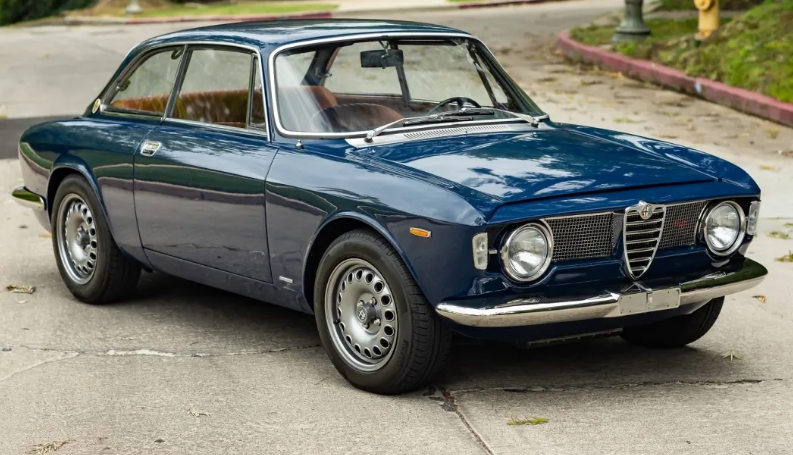
The firstborn of the Junior family arrived in 1966, christened the GT 1300 Junior. This model was essentially a scaled-down version of the acclaimed Giulia GT, sharing its sleek Bertone-designed body but powered by a smaller, more economical 1.3-liter twin-cam engine. This choice of displacement was deliberate, aimed at keeping the car’s price point accessible and its running costs manageable.
The GT 1300 Junior was an immediate success. Its compact dimensions, combined with the iconic Alfa Romeo styling, made it a desirable proposition. Under the hood, the 1290cc aluminum inline-four engine, an evolution of the venerable Alfa Romeo Twin Cam, produced a respectable 87 horsepower at 6000 rpm. This might sound modest by today’s standards, but in the context of its lightweight chassis and sporting tuning, it was more than enough to deliver the characteristic Alfa Romeo “feel.” The engine was mated to a slick-shifting five-speed manual gearbox, a hallmark of Alfa Romeo sports cars, further enhancing the driving experience.
The GT 1300 Junior was characterized by its subtle styling cues that distinguished it from its larger Giulia counterparts. Notably, it featured a distinctive front grille with a single, central Alfa Romeo badge, and typically simpler chrome trim. Initially, the cars were equipped with steel wheels, but later models often featured alloy wheels.
Over its nine-year production run, the GT 1300 Junior saw several minor updates and refinements. While Alfa Romeo didn’t officially designate many distinct “trim levels” in the modern sense, there were variations in features and specification that evolved over the years. Early cars had a more basic interior, while later iterations incorporated improvements in comfort and convenience. The adoption of dual headlights on some later models also marked a visual evolution. The car was produced in significant numbers, solidifying its place as a popular choice for enthusiasts.
.

.
Branching Out: The GTV 1750 Junior (1970-1971)
While the GT 1300 Junior was a resounding success, Alfa Romeo recognized the desire for a slightly more potent offering within the “Junior” umbrella. This led to the brief but significant introduction of the GTV 1750 Junior in 1970. This model was essentially a stripped-down, more affordable version of the GTV 1750. It retained the GTV’s more powerful 1.75-liter engine, producing around 118 horsepower, but featured less luxurious interior appointments and often simpler exterior trim to keep the price competitive.
The GTV 1750 Junior was a fascinating, albeit short-lived, experiment. It offered a taste of the GTV’s performance within a “Junior” context. However, its limited production run and the subsequent introduction of the more comprehensively equipped GTV 2000 meant that this particular Junior variant is a rarer and more sought-after model among collectors today. It served as a bridge, demonstrating the potential for a higher-performance Junior model.
The Rise of the Berlina: The Giulia GT Junior (1970-1972) and The Giulia Super Junior (1970-1972)
The Junior concept wasn’t confined to coupes. Alfa Romeo adeptly applied the “Junior” ethos to their four-door sedan, the Giulia. This resulted in the Giulia GT Junior and the Giulia Super Junior, both introduced in 1970. These models were designed to offer the practicality of the Giulia sedan with the sportier appeal and slightly more accessible pricing associated with the Junior nameplate.
The Giulia GT Junior predominantly featured the 1300cc engine, similar to its coupe sibling, but in the sedan body. This created a genuinely sporting four-door saloon that was a joy to drive. The “GT” designation here referred to its sporting intent rather than a coupe body style.
The Giulia Super Junior, on the other hand, was a more interesting proposition. It often incorporated styling cues and mechanical upgrades inspired by the more potent Giulia Super models, but with the intention of being a more affordable and perhaps slightly less powerful option. There might have been variations in engine size, with some potentially utilizing a 1.6-liter engine, or simply featuring a revised specification that made it distinct from the standard Giulia. These sedans offered a practical yet engaging driving experience, appealing to those who needed more space but didn’t want to compromise on Alfa Romeo’s sporting DNA.
Both the Giulia GT Junior and Giulia Super Junior were relatively short-lived, with production ceasing around 1972. They represented a distinct phase where Alfa Romeo explored the “Junior” concept within their sedan range, offering a blend of everyday usability and spirited performance.
The Evolution of the Coupe: The GT 1600 Junior (1972-1977)
As the automotive landscape evolved and engine technologies advanced, Alfa Romeo updated its Junior lineup. In 1972, the GT 1300 Junior made way for the GT 1600 Junior. This new iteration swapped the 1.3-liter engine for a larger, more powerful 1.6-liter unit. This 1570cc engine produced a healthy 109 horsepower at 6000 rpm, providing a significant boost in performance without dramatically increasing the car’s price or complexity.
The GT 1600 Junior retained the timeless Bertone coupe body but benefited from various updates that were applied to the wider Giulia coupe range. These included revised interior appointments, improved ergonomics, and subtle exterior styling refinements. The dual headlights, which had started appearing on later 1300 Juniors, became a more common feature on the 1600 Junior.
This model represented a maturation of the Junior concept. It offered a more accomplished and refined driving experience, bridging the gap between the entry-level 1300 and the more potent 2000 GTV. The GT 1600 Junior continued to be a popular choice, carrying the torch of accessible Alfa Romeo sportiness. Its production ran until 1977, marking the end of the Giulia-based Junior coupes.
The Final Chapter: The Alfetta GT/GTV Junior (1975-1983)
The introduction of the Alfetta in 1972 marked a significant shift for Alfa Romeo, with its innovative transaxle layout and de Dion rear suspension. It was only natural that the “Junior” philosophy would eventually be applied to this new platform. Thus, in 1975, the Alfetta GT/GTV Junior was born.
This was a departure from the Giulia-based Juniors. The Alfetta chassis brought a more modern design, characterized by a sharper, more angular aesthetic penned by Giugiaro. It also incorporated the advanced Alfetta drivetrain, with the gearbox and differential mounted at the rear for improved weight distribution.
The Alfetta GT/GTV Junior initially utilized the familiar 1.6-liter engine from the GT 1600 Junior, producing around 109 horsepower. This allowed Alfa Romeo to position it as an entry-level model within the Alfetta coupe range. However, as the Alfetta line evolved, so too did its Junior variants.
Over its production run, which extended well into the 1980s, the Alfetta GT/GTV Junior saw further evolution. There were periods where the 1.8-liter engine was also offered in “Junior” guise, providing a step up in performance. The term “Junior” in this context often signified a more basic trim level compared to the more luxuriously appointed GTV models, focusing on the core driving experience.
The Alfetta GT/GTV Junior was a more substantial and sophisticated car than its Giulia predecessors. It represented the Junior concept adapted to a new era of automotive engineering. While it might not have possessed the same pure, lightweight charm as the Giulia Juniors, it offered a compelling blend of modern technology, engaging performance, and distinctive Italian styling. Production of the Alfetta GT/GTV Junior finally ceased in 1983, marking the end of the entire Alfetta coupe line and, for a significant period, the explicit use of the “Junior” nomenclature for new Alfa Romeo models.
The Enduring Legacy of the Junior
The Alfa Romeo Junior was more than just a series of models; it was a philosophy. It represented Alfa Romeo’s commitment to making its unique driving experience accessible to a wider audience. From the lithe and agile GT 1300 Junior to the more sophisticated Alfetta GT/GTV Junior, each iteration carried the torch of sporting intent, engaging handling, and undeniable Italian style.
The Junior line democratized Alfa Romeo ownership, introducing countless drivers to the brand’s passion and engineering excellence. These cars, particularly the Giulia-based Juniors, are now highly prized by collectors and enthusiasts for their classic styling, their analog driving feel, and their inherent fun factor. They stand as a testament to a time when cars were designed with emotion and driver engagement at the forefront.
While the “Junior” badge may have faded from active production, its spirit lives on in every modern Alfa Romeo that strives to deliver a thrilling and captivating driving experience. The evolution of the Alfa Romeo Junior is a story of thoughtful engineering, enduring design, and a steadfast dedication to the pure joy of driving – a sprint of youth that continues to resonate today.