The Toyota Corolla in Holden Clothing: A Factual History of the Holden Nova
In the pantheon of Australian automotive history, few names evoke the same sense of national pride and rugged individualism as Holden. For generations, the lion badge represented a cornerstone of Australian life, a manufacturer that understood the unique demands of the continent’s harsh landscape and its families. It produced iconic nameplates like the Kingswood, the Commodore, and the Torana, vehicles that were not just assembled, but engineered and celebrated as authentically Australian. Yet, for a crucial period spanning the late 1980s and early 1990s, the Holden lineup featured a car that, beneath its Australian-assembled shell, was fundamentally Japanese. This was the Holden Nova, a rebadged Toyota Corolla that represents a fascinating, and at times controversial, chapter in the story of the local car industry. It was a pragmatic solution to a changing market, a car that offered reliability and efficiency but struggled to escape the shadow of its more famous sibling.
The Genesis: A Partnership Born of Necessity (1987-1989)
To understand the Nova, one must first understand the context of the Australian automotive industry in the mid-1980s. The Button Plan, a government-initiated scheme to rationalize the industry and achieve economies of scale, encouraged local manufacturers to form alliances and share platforms. Holden, a subsidiary of the US giant General Motors, found itself in a challenging position. Its existing small car, the Holden Astra (based on the European Opel Kadett), was aging and not meeting the sales expectations of the burgeoning small car market, which was increasingly dominated by the likes of the Mazda 323 and, most notably, the Toyota Corolla.
Holden needed a modern, fuel-efficient, and reliable front-wheel-drive small car to compete. Rather than developing a new model from scratch or importing a European Opel, which was already being sold by the rival Toyota dealer network, Holden made a pragmatic business decision. They would partner with their biggest local rival, Toyota, to produce a version of its globally successful Corolla. This was not a simple “captive import”; it was a deep-level collaboration. The car would be assembled in Australia, using a significant number of locally sourced components, including the engine and transmission.
In August 1987, the first-generation Holden Nova was launched. Based on the sixth-generation Toyota Corolla (AE82 series), the Nova was initially offered as a three-door hatchback and a four-door sedan. It was powered by a 1.6-litre electronic fuel-injected (EFI) engine, which produced a respectable 75 kW of power. This engine, known as the “4A-E,” was a staple of Toyota’s “A-series” family and was renowned for its durability.
The first generation was available in two trim levels:
- Nova: The base model, which came standard with a five-speed manual transmission, front disc brakes, power steering, and a rear window wiper on the hatchback. It was a no-frills, practical offering aimed at young drivers and families seeking affordable motoring.
- Nova SE: The “Special Edition” was the top-of-the-line variant. It added creature comforts like central locking, electric windows, a sunroof (on sedans), and a higher grade of interior trim, including a tachometer. The Nova SE was designed to appeal to buyers who wanted a more comfortable and feature-rich small car without venturing into the premium price bracket.
From the outset, the Nova was met with a mixture of acceptance and skepticism. The motoring press widely acknowledged it was a well-built, capable car—the Corolla platform was, after all, a global benchmark for reliability. However, the core issue was identity. Australian motoring journalists and the public were quick to label it a “rebadged Corolla.” This perception was hard to shake. The dashboard, the switchgear, the driving dynamics—it was all unmistakably Corolla. Holden’s task was to convince buyers that the lion badge on the grille offered something different, primarily through local tuning of the suspension and the promise of the extensive Holden dealer network.
.
THIS might be a great place to get your new car from!
Or for those who are into the “car flipping” business, here’s an excellent resource for you!

.
The Second Generation: Refinement and Expansion (1989-1992)
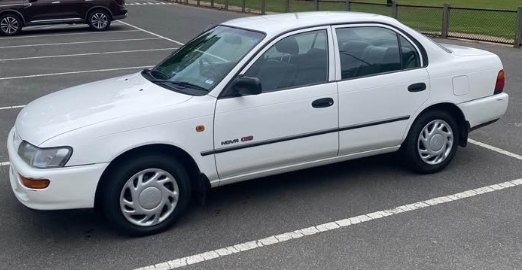
In October 1989, the second-generation Nova arrived. This model was based on the seventh-generation Toyota Corolla (AE92 series), a significant update that brought a sleeker, more aerodynamic design. The “wedge” shape of the first generation gave way to softer, more rounded lines that aligned with the design trends of the early 1990s.
This new model was a comprehensive evolution. The chassis was stiffer, the interior was more spacious, and the technology was updated. The engine remained the 1.6-litre EFI unit, but it was tweaked for smoother power delivery and slightly improved efficiency. Crucially, the range was expanded to meet a wider variety of customer needs, reflecting a maturing market for small cars.
The model and trim hierarchy for the second-generation Nova was more complex:
Body Styles: Five-door Hatchback, Four-door Sedan (new for this generation), and a Three-door Hatchback (introduced later).
Trim Levels (1989 Launch):
- Nova: The base model for both hatch and sedan, retaining the core features of its predecessor but with updated styling and comfort. It was powered by a 1.6-litre 4A-F engine producing 70 kW.
- Nova SE: The mid-range “Special Edition” for the sedan, offering a similar level of equipment to the previous generation SE. It was positioned as the comfortable family sedan.
- Nova SX: This was the new “Sport” variant, available in both sedan and the newly introduced three-door hatchback body styles. The SX featured sportier aesthetics, including body-colored bumpers, alloy wheels, and a tachometer as standard. The suspension was slightly firmer, aiming for a more engaging driving experience.
- Nova GV (Grand Velocity): Launched in 1990, the GV was the ultimate range-topper. It was an exercise in luxury for the small car class. Available as a sedan or five-door hatch, the GV came standard with a four-speed automatic transmission (a $1,990 option on other models), air conditioning, velour trim, and even a premium sound system with a graphic equalizer. It was Holden’s attempt to capture the “apex” buyer who wanted all the bells and whistles in a small, efficient package.
In 1991, a significant mechanical update was introduced. A new 1.8-litre engine, the 7A-F, became available in the top-spec Nova GT sedan and hatchback. This engine produced a healthier 81 kW and offered more torque, providing a noticeable performance boost over the 1.6-litre variants. The GT replaced the GV as the flagship, focusing on performance as well as luxury, and was distinguished by unique alloy wheels, a rear spoiler (on the hatch), and “GT” badging.
The Final Act: The ZZE122R Nova and the End of an Era (1992-1994)
The final iteration of the Holden Nova was launched in September 1992. This was an extensive facelift based on the eighth-generation Corolla (AE101/112 series). The design was significantly sharper, with a more aggressive grille, clearer headlamps, and a redesigned rear end. While still recognizably a Nova, it looked more contemporary and distinct from its Toyota counterpart.
The biggest news, however, was under the bonnet. For the first time, the Nova featured a Dual Overhead Camshaft (DOHC) engine. The 1.6-litre 4A-GE engine, a legendary unit among Toyota enthusiasts, was fitted to the new Nova GT-R model. This engine produced 118 kW, a massive leap in power that transformed the little car into a genuine pocket rocket.
The range for this final model line-up was as follows:
- Nova SL: The new base model, effectively replacing the standard Nova. It was available as a five-door hatch or four-door sedan with the 1.6-litre SOHC engine (85 kW).
- Nova CS: The “Comfort Sport” was a mid-level variant, often paired with a four-speed automatic transmission, offering a blend of features from the SL and the sportier models.
- Nova GT: The sporty model, available with the 1.8-litre 7A-F engine (83 kW) or the 1.6-litre DOHC 4A-GE engine (118 kW). It featured a body kit, alloys, and a more driver-focused interior.
- Nova GT-R: The halo car. This was the ultimate expression of the Nova. With its high-revving 1.6-litre DOHC engine, limited-slip differential, close-ratio five-speed manual gearbox, aggressive body kit with mesh grille and rear spoiler, and bolstered sports seats, the GT-R was a true performance car. It was a direct rival to the Honda Civic VTi and Mazda 323 SP20, and it earned immense respect from enthusiasts for its capability.
The Identity Crisis and the Holden Dealer Experience
Despite the extensive range and impressive engineering, particularly in the GT-R, the Nova’s fundamental identity crisis never went away. It was a Toyota Corolla, and everyone knew it. This created a complex situation for consumers. Buyers loyal to the Corolla, which had an impeccable reputation and strong resale value, often saw no reason to choose the Nova. They would simply go to a Toyota dealership.
Conversely, Holden loyalists were sometimes hesitant to embrace a car so clearly foreign to Holden’s DNA. The real value proposition of the Nova lay in the Holden dealer network. For customers who lived in areas where there was a Holden service centre but no Toyota dealer, or for those who had a long-standing relationship with their local Holden mechanic, the Nova offered a way into a Corolla with the backing of the lion badge. Holden’s own internal marketing focused on the extensive local content (up to 70%) and the “tuning” of the suspension for Australian conditions, though most of this was marketing speak.
Discontinuation and Future Outlook
By 1994, the Button Plan era was drawing to a close. The alliance between Holden and Toyota had served its purpose, but the market dynamics were changing again. The collaboration was effectively over, and both companies were preparing to launch their own, distinct next-generation models.
Holden ceased production of the Holden Nova in August 1994. It was replaced not by another Toyota-derived model, but by the Holden Astra (TS). This new Astra was a version of the European-designed, Opel Astra, bringing Holden’s small car offering back into the General Motors family fold.
What, then, is the legacy of the Holden Nova? Today, the Nova is a footnote in Holden’s history, often remembered more for what it wasn’t than for what it was. The vast majority have long since disappeared from the roads, consumed by age and rust. The few that remain, particularly the rare GT-R models, are now cherished by enthusiasts who appreciate them for the secret performance cars they were—a factory-hot-hatch in disguise.
The Nova is a testament to a time of unprecedented pragmatism in the Australian car industry. It was a product of a government plan that prioritized survival and volume over brand purity and national identity. It proved that an Australian-assembled Toyota was a reliable and competent machine. However, it also demonstrated that in the emotional world of car buying, a badge still carries immense weight. The Holden Nova was a Corolla that wore a lion on its chest, and for many, that was a paradox it could never fully overcome. It remains a curious and important reminder of the complex compromises that defined the final decades of Australia’s domestic car manufacturing.