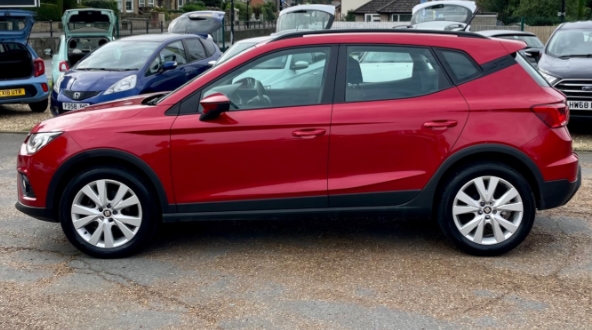
The Toyota Yaris Cross (AC200 Generation, 2020-Present): A Compact Explorer Navigating the Modern Urban Landscape
The urban jungle, with its ever-tightening parking spaces, congested streets, and a growing demand for efficient and versatile personal transport, has given rise to a specific breed of vehicle: the compact SUV. Among these, the Toyota Yaris Cross has emerged as a significant player, and the AC200 designation, while not a formal Toyota model code, often refers to a specific generation or iteration of this popular crossover, particularly within regions where Toyota utilizes internal coding for its model runs. For the purposes of this article, we will explore the Toyota Yaris Cross, focusing on the second generation, which broadly aligns with the AC200 era, examining its history, the models and trim levels offered, its present standing, and its future prospects.
A Brief History: The Evolution of the Yaris Crossover Concept
While the Yaris nameplate has been a staple in Toyota’s global lineup for decades, known for its dependable and economical supermini offerings, the idea of a Yaris-based crossover began to germinate in the early 21st century. The success of larger SUVs and the increasing consumer appetite for a higher driving position and a more rugged aesthetic, even in smaller segments, prompted manufacturers to explore the “mini-SUV” or “crossover” concept.
The first generation Yaris Cross (often internally designated something different from AC200, though sharing the Yaris lineage) made its debut primarily in markets like Japan, Australia, and parts of Europe. It was strategically positioned as a more practical and spacious alternative to the standard Yaris hatchback, leveraging the familiar Yaris platform and powertrain options. This initial foray proved successful, demonstrating a clear market demand for a compact, stylish, and efficient crossover with the practicality of a small SUV.
.

.
The AC200 Era: The Second Generation Yaris Cross
The second generation of the Toyota Yaris Cross, which we will associate with the AC200 designation, represents a significant evolution of the concept. Launched globally in the early 2020s (countries like Japan saw its release in 2020, with Europe following shortly after), this generation aimed to refine the formula, incorporating Toyota’s latest design language, advanced technology, and a stronger emphasis on hybrid powertrains.
Years Produced (AC200 Era): The second generation Toyota Yaris Cross, corresponding to the AC200 era, began production in 2020 and is currently ongoing. Toyota’s product cycles typically span several years, with facelifts and minor updates occurring periodically. Therefore, models manufactured from 2020 to the present fall under this generation.
Models and Trim Levels: The Yaris Cross is renowned for its diverse offering of trim levels, catering to a wide range of budgets and preferences. While specific trim names can vary significantly by region (e.g., Japan, Europe, Australia), the core philosophy of offering a tiered approach to features and styling remains consistent. We will outline the common themes and approximate trim levels found within the AC200 generation.
- Entry-Level/Standard Models:
- Base/Standard Trim (e.g., X, GX, Active): These models typically represent the most affordable entry point into the Yaris Cross ownership experience. They prioritize essential functionality and value. Features often include:
- Standard LED headlights and taillights.
- Basic infotainment system with a touchscreen, Bluetooth connectivity, and USB ports.
- Manual air conditioning.
- Cloth upholstery.
- 16-inch steel wheels with wheel covers or basic alloy wheels.
- Keyless entry and start (sometimes a feature even on base trims).
- Standard safety features like Toyota Safety Sense technologies (pre-collision system, lane departure alert, adaptive cruise control – though the extent of these can vary by market).
- Base/Standard Trim (e.g., X, GX, Active): These models typically represent the most affordable entry point into the Yaris Cross ownership experience. They prioritize essential functionality and value. Features often include:
- Mid-Range/Popular Models:
- Mid-Level Trim (e.g., G, S, Style, Comfort): These trims build upon the base offerings, adding more comfort, convenience, and aesthetic enhancements. They often represent the sweet spot for many buyers. Features commonly include:
- Larger alloy wheels (e.g., 17-inch).
- Upgraded infotainment system with Apple CarPlay and Android Auto integration.
- Automatic climate control.
- Enhanced interior materials, potentially including synthetic leather accents.
- Privacy glass.
- Front fog lights.
- Additional exterior styling cues like chrome accents or body-colored door handles.
- Potentially more advanced parking aids (e.g., rear parking sensors).
- Mid-Level Trim (e.g., G, S, Style, Comfort): These trims build upon the base offerings, adding more comfort, convenience, and aesthetic enhancements. They often represent the sweet spot for many buyers. Features commonly include:
- Higher-End/Premium Models:
- Top-Tier Trim (e.g., Z, GR Sport, Premiere Edition, Executive): These trims offer the most comprehensive suite of features, premium materials, and sportier or more sophisticated styling. They are designed for those who desire the ultimate Yaris Cross experience. Features often found here include:
- Larger alloy wheels (e.g., 18-inch), often with unique designs.
- Full LED headlights with advanced lighting functions (e.g., adaptive beam).
- Larger infotainment touchscreen with navigation.
- Premium audio system.
- Heated front seats.
- Leather upholstery or high-quality synthetic leather.
- Panoramic glass roof (optional or standard).
- Power-adjustable driver’s seat.
- Head-up display (HUD).
- Larger or more advanced safety and driver-assist features (e.g., blind-spot monitoring, rear cross-traffic alert, 360-degree camera).
- Specific GR Sport variants often feature sportier suspension tuning, unique exterior styling elements (grilles, bumpers, badging), and sport-focused interior accents.
- Top-Tier Trim (e.g., Z, GR Sport, Premiere Edition, Executive): These trims offer the most comprehensive suite of features, premium materials, and sportier or more sophisticated styling. They are designed for those who desire the ultimate Yaris Cross experience. Features often found here include:
Powertrain Options: The AC200 generation Yaris Cross is notable for its commitment to electrification, especially in its hybrid offerings.
- Hybrid Variants (e.g., 1.5L Hybrid): This is arguably the most significant powertrain option for the Yaris Cross in many markets. It typically pairs a 1.5-liter three-cylinder Atkinson-cycle gasoline engine with one or two electric motors. The system offers:
- Excellent fuel efficiency, particularly in urban driving.
- Smooth and quiet operation.
- The ability to drive on electric power alone at lower speeds.
- Available with both front-wheel drive (FWD) and an intelligent all-wheel drive (AWD-i) system, which uses a dedicated electric motor to power the rear wheels, enhancing traction and stability without a traditional driveshaft.
- Conventional Gasoline Variants (e.g., 1.5L or 1.3L Gasoline): In some markets, particularly those where hybrid adoption is slower or regulatory frameworks differ, a purely gasoline-powered Yaris Cross is also available. These engines offer a more traditional internal combustion experience, prioritizing affordability and simplicity.
- These are typically paired with a Continuously Variable Transmission (CVT) for optimal fuel economy.
Design and Interior:
The Yaris Cross AC200 sports a design that clearly distinguishes it from its hatchback sibling. It adopts a more robust and visually imposing stance, despite its compact dimensions. Key design elements include:
- Exterior: A more upright and commanding front fascia, prominent wheel arches with protective cladding, a sculpted tailgate, and a generally higher ground clearance. The overall aesthetic is designed to evoke a sense of adventure and ruggedness, even if its primary domain is urban commuting.
- Interior: The interior design borrows heavily from the current Yaris hatchback, offering a modern and functional cabin. Material quality is generally good for the segment, with a focus on durability. The higher seating position provides good visibility, and the overall layout is intuitive. Despite its compact footprint, clever packaging ensures reasonable space for passengers and cargo, with a versatile boot that often features a removable floor for configurable storage.
Technology and Safety:
Toyota has consistently equipped the Yaris Cross with a strong emphasis on safety and technology, reflecting its commitment to its “Safety First” philosophy.
- Toyota Safety Sense: This suite of active safety technologies is a hallmark of the AC200 generation and is often standard across most, if not all, trim levels. It typically includes:
- Pre-Collision System (PCS) with Pedestrian and Cyclist Detection.
- Lane Departure Alert (LDA) with Steering Assist.
- Adaptive Cruise Control (ACC).
- Road Sign Assist (RSA).
- Automatic High Beams (AHB).
- (Depending on market and trim) Lane Tracing Assist (LTA), Blind Spot Monitor (BSM), Rear Cross Traffic Alert (RCTA).
- Infotainment: Modern infotainment systems with touchscreens, smartphone integration (Apple CarPlay, Android Auto), and various connectivity options are standard or available. The size and functionality of the screen increase with higher trim levels.
The Yaris Cross AC200 in the Market:
The Toyota Yaris Cross has carved out a successful niche in the competitive compact crossover segment. Its appeal lies in a combination of factors:
- Toyota’s Reputation: The inherent reliability, build quality, and strong resale value associated with the Toyota brand are significant drawcards.
- Hybrid Efficiency: The availability of an efficient hybrid powertrain makes it an attractive option for environmentally conscious buyers and those looking to minimize running costs, especially in urban environments where regenerative braking can be highly effective.
- Compact Footprint, SUV Versatility: It offers the perceived benefits of an SUV – a higher driving position, more generous cargo space than a hatchback, and a sense of robustness – without the bulk and higher fuel consumption of larger SUVs.
- Modern Design and Technology: The AC200 generation presents a contemporary and appealing design, both inside and out, coupled with a comprehensive set of safety and infotainment features.
Challenges and Competitors:
While successful, the Yaris Cross operates in a fiercely competitive arena. Its primary competitors include:
- Renault Captur
- Peugeot 2008
- Volkswagen T-Cross
- Ford Puma
- Nissan Juke
- Hyundai Kona
- Kia Stonic
Each of these models offers its own unique blend of styling, features, and powertrain options, making it a challenging market to dominate. The Yaris Cross must continuously innovate and offer compelling value to maintain its market share.
Future Outlook:
The future for the Toyota Yaris Cross AC200 appears bright, especially given the sustained global demand for compact SUVs and Toyota’s continued focus on hybrid technology.
- Continued Hybrid Dominance: As emissions regulations tighten and consumer awareness of fuel efficiency grows, the hybrid variants are likely to become even more central to the Yaris Cross’s appeal. Toyota’s expertise in hybrid technology positions it well to capitalize on this trend.
- Electrification in Focus: While a full battery-electric Yaris Cross hasn’t been widely introduced yet, it’s a logical progression for future iterations, especially in markets with aggressive EV adoption targets. Toyota is investing heavily in electrification, and a small electric crossover would fit perfectly into its urban mobility strategy.
- Technology and Design Evolution: Expect ongoing updates to infotainment systems, driver-assist technologies, and potentially minor styling refreshes to keep the Yaris Cross competitive. Advancements in areas like connectivity, artificial intelligence in infotainment, and improved safety systems will be crucial.
- Market Expansion and Adaptation: While already a global model, Toyota may continue to adapt the Yaris Cross for specific regional demands, potentially introducing new powertrain options or feature sets tailored to distinct markets. The AC200 designation might eventually be superseded by a new internal code as the model evolves into its next generation.
Conclusion:
The Toyota Yaris Cross, particularly the AC200 generation, stands as a prime example of Toyota’s successful adaptation to evolving consumer needs in the automotive landscape. It masterfully blends the practicality and higher stance of an SUV with the compact dimensions and fuel efficiency that are essential for modern urban living. With its diverse range of trim levels, a strong emphasis on hybrid technology, and Toyota’s unwavering commitment to safety and reliability, the Yaris Cross AC200 has established itself as a formidable contender in the compact crossover segment. As the automotive world continues its rapid transformation towards electrification and advanced technology, the Yaris Cross is well-positioned to evolve and remain a relevant and desirable choice for discerning drivers navigating the complexities of the 21st-century urban environment.