The TVR Chimaera: A Journey of British Performance
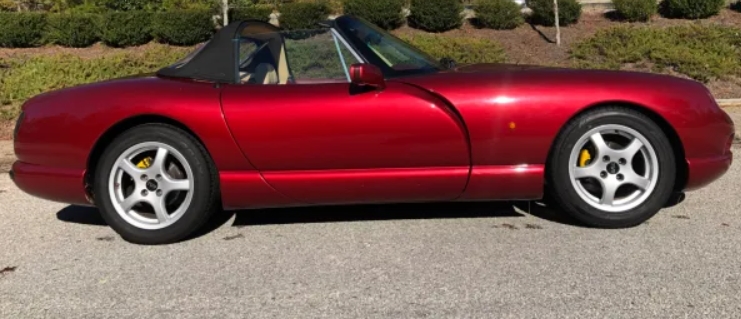
The TVR Chimaera, produced from 1992 to 2003, remains one of the most iconic models in TVR’s storied history. A quintessential British sports car, the Chimaera was designed to offer both raw performance and day-to-day usability, striking a fine balance between the extreme styling of TVR’s other models and a more accessible driving experience. As TVR’s best-selling car of the 1990s, the Chimaera became the gateway to the brand’s legendary performance cars for many enthusiasts, providing a more refined and comfortable alternative to its racier siblings.
In this article, we will explore the evolution of the TVR Chimaera, its different trims and models over the years, its place in the brand’s legacy, and its lasting impact on the sports car world.
The Birth of the TVR Chimaera (1992)
The TVR Chimaera was first unveiled at the 1992 Birmingham Motor Show, marking the beginning of a new chapter for TVR. Unlike many of its predecessors, which focused purely on extreme performance and lightweight racing-inspired designs, the Chimaera was intended to be a more refined and usable road car. TVR’s intention was clear: to build a sports car that could provide exhilarating driving experiences while still being practical enough for everyday use.
TVR was no stranger to creating striking, performance-driven vehicles, but the Chimaera took a slightly different approach from models like the TVR Griffith and TVR Cerbera. Whereas those models focused on raw power and dramatic styling, the Chimaera was designed to offer a more comfortable ride, better interior space, and a smooth road-going experience. This balance of performance and usability would make the Chimaera highly appealing to a wider audience.
Engine Choices and Powertrains: A Range of Options
Upon its debut, the Chimaera was equipped with a 4.0-liter V8 engine derived from the TVR Griffith 400. This engine produced approximately 240 horsepower and 280 lb-ft of torque, which was more than enough to propel the car to 0–60 mph in 5.0 seconds and give it a top speed of 155 mph. The car’s engine, coupled with a 5-speed manual gearbox, provided an exhilarating driving experience, with plenty of torque for spirited driving while still offering respectable refinement for long trips.
The early Chimaera also featured an independent front and rear suspension setup, offering excellent handling characteristics that made it capable on both winding country roads and long motorway drives. The rear-wheel-drive setup, coupled with the lightweight construction of the fiberglass body, allowed the car to remain agile and responsive while still feeling planted at high speeds.
.

.
The Chimaera’s Trim Levels and Variants (1992-2003)
Chimaera 400 (1992-1997)
The Chimaera 400 was the first model produced, launching in 1992 with the aforementioned 4.0-liter V8 engine. This car set the tone for the entire Chimaera lineup, offering sharp handling, impressive acceleration, and an engine that was capable of pushing the car to impressive speeds. The car featured a fiberglass body that was lightweight yet incredibly stiff, contributing to its exceptional handling.
Over the years, the Chimaera 400 underwent minor refinements in terms of design, including updated interior finishes and improved ergonomics. Despite being the base model, the 400 still provided a well-rounded performance package that was suitable for both track days and daily drives.
Chimaera 450 (1997-2000)
In 1997, TVR introduced the Chimaera 450, a more powerful version of the car that was equipped with a 4.5-liter V8 engine. This engine produced around 280 horsepower and 300 lb-ft of torque, which significantly improved the car’s performance. The 450 model was capable of achieving 0–60 mph in 4.4 seconds and had a top speed of 165 mph. These figures made the Chimaera 450 a more serious contender in the high-performance sports car market, competing against vehicles like the Porsche 911 and Jaguar XKR.
The Chimaera 450 also saw improvements in its chassis and suspension. The car became more stable at higher speeds, and its upgraded braking system made it easier to manage the car’s power on both the road and track. Interior refinements, including more comfortable seats and better dashboard ergonomics, were added, making the 450 more comfortable for long drives.
This model marked a shift toward more powerful variants of the Chimaera, reflecting TVR’s intent to broaden the car’s appeal while maintaining its driving-focused character.
Chimaera 500 (2000-2003)
In 2000, TVR took the Chimaera to the next level with the introduction of the Chimaera 500. The Chimaera 500 was powered by a 5.0-liter V8 engine, which delivered 340 horsepower and 400 lb-ft of torque. With the additional power, the 500 model was capable of reaching 0–60 mph in just 4.2 seconds and had a top speed of 170 mph. This made the Chimaera 500 not only quicker but also more powerful than any of its predecessors.
In addition to the performance boost, the Chimaera 500 also featured updated styling, including a new front bumper, wider rear fenders, and a revised exhaust system that gave the car a more aggressive look and sound. The interior was also updated with leather upholstery, new seats, and a modernized dashboard, all of which helped improve the car’s overall comfort and refinement.
The Chimaera 500 represented the culmination of TVR’s efforts to create a well-rounded sports car that combined high performance with daily usability, making it the final version of the Chimaera before production ended in 2003.
TVR Chimaera and Its Place in TVR’s Legacy
The TVR Chimaera holds an important place in the history of TVR as one of the most successful and enduring models in the brand’s lineup. As TVR’s best-selling car of the 1990s, it played a key role in elevating the company’s profile and establishing its reputation for building exciting, performance-focused vehicles.
Unlike some of TVR’s more extreme models, such as the Cerbera or the Sagaris, the Chimaera was designed to be a car that could be enjoyed by a wider audience. Its more refined approach to handling and comfort made it a more practical option for buyers who wanted a high-performance sports car that could also serve as a daily driver. For many, the Chimaera was the gateway to the world of TVR, introducing new enthusiasts to the brand’s distinctive combination of style, performance, and craftsmanship.
Although production of the Chimaera ended in 2003, the car’s legacy lives on in TVR’s history. The company’s later models, such as the TVR Griffith and TVR Tuscan, continued the brand’s tradition of building high-performance sports cars, but the Chimaera remains a beloved part of TVR’s past.
The End of Production and Future Outlook
The final Chimaera rolled off the production line in 2003, marking the end of an era for TVR. The company faced significant challenges in the years that followed, including financial difficulties and changes in ownership. TVR ceased production of all models in the mid-2000s, and for a time, it seemed uncertain whether the brand would ever return to producing cars. However, TVR made a resurgence with the launch of the TVR Griffith in 2017, signaling that the brand still has a passionate following and a commitment to producing high-performance sports cars.
For collectors and enthusiasts, the Chimaera remains a highly sought-after model. Given its status as one of the most successful TVR cars in terms of sales, along with its status as a more approachable alternative to the company’s more extreme offerings, well-maintained examples of the Chimaera continue to appreciate in value. Classic car enthusiasts who appreciate the rawness and charm of TVR’s performance cars consider the Chimaera a cornerstone of the brand’s legacy.
Conclusion
The TVR Chimaera is a landmark model in the history of British sports cars. From its introduction in 1992 to its final production run in 2003, the Chimaera offered enthusiasts a mix of performance, practicality, and accessibility that made it one of the most popular TVR models of all time. With a choice of engines ranging from the 4.0-liter V8 to the 5.0-liter V8, the Chimaera’s performance was always matched by its distinctive styling and raw driving dynamics.
The Chimaera’s importance lies in its ability to attract a broader audience to the world of TVR while maintaining the brand’s focus on performance. As a more refined option compared to other TVR models, the Chimaera continues to hold a special place in the hearts of fans and collectors alike. Its influence continues to resonate in the world of British sports cars, and it remains a lasting testament to the passionate and uncompromising nature of TVR.