The Unibody Workhorse: The Evolution and Enduring Legacy of the Datsun 720
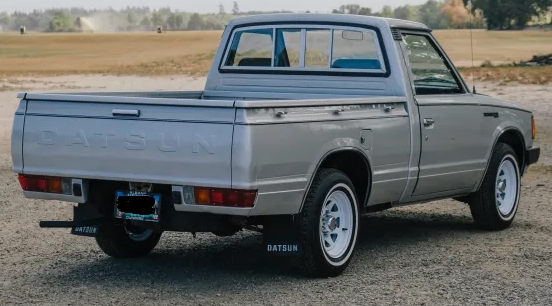
In the pantheon of automotive history, few vehicles bridge the gap between industrial pragmatism and cultural iconography as effectively as the Datsun 720. Produced between 1980 and 1986 in Japan (and subsequently manufactured globally well into the 1990s), the 720 represented a critical evolutionary leap for Nissan. It was the vehicle that transitioned the Datsun truck from a utilitarian afterthought into a segment-defining powerhouse. It paved the way for the wildly successful Hardbody truck, cemented Datsun’s reputation for bulletproof reliability, and became the backbone of the burgeoning import tuner culture.
To understand the 720 is to understand a transitional era in the automotive industry—an era where Japanese manufacturers began to challenge the dominance of American trucks not through brute force, but through engineering innovation and unibody refinement.
The Genesis: A Shift in Design
Prior to 1980, Datsun trucks (specifically the 620 series) utilized a “cab-over” design or a short hood configuration where the front of the cab extended over the engine bay. While functional, these designs compromised interior space and aerodynamics.
When the 720 was introduced in 1980 (1981 model year in export markets), it marked a radical departure. It featured a long-nose, front-engine layout with a distinct separation between the cabin and the engine compartment. This design not only improved weight distribution but also significantly enhanced crash safety and cabin comfort.
The 720 was built on a unibody construction, where the bed and the cab were integrated into a single monocoque structure. This provided a stiffer chassis and a lighter overall weight compared to the body-on-frame trucks of the time, allowing for a higher payload capacity relative to the truck’s size.
.
THIS might be a great place to get your new car from!
Or for those who are into the “car flipping” business, here’s an excellent resource for you!

.
Generational Breakdown and Production Years
The Datsun 720’s lifecycle is best divided into two distinct eras, marked by a significant facelift in late 1983 for the Japanese domestic market (JDM), which arrived slightly later for export markets.
1. The First Generation (1980 – Mid-1983)
The initial release of the 720 featured a distinct, slightly rounded aesthetic. The headlights were generally rectangular but housed in a softer body shell, and the grille featured a horizontal slat design. In Japan, these models were marketed as the “Datsun Truck” and eventually received the “V20” designation (referring to the 2.0L engine displacement) in 1982 for commercial tax purposes.
Engine Options:
- Z16 (1.6L): The entry-level carbureted engine, offering around 80 horsepower.
- Z18 (1.8L): A popular carbureted option for the JDM market, producing roughly 95 horsepower.
- Z20 (2.0L): The workhorse engine. In Japan, this was the “V20” engine (Z20). For export markets (Australia, North America), the Z20 produced 98-102 horsepower depending on the emission configuration.
- L20 (2.2L Diesel): For specific markets (Europe and Japan), a robust diesel engine was available, known for its slow revs but immense torque.
Body Configurations:
- Single Cab (Standard): Two-door, bench seat configuration.
- King Cab (Extended): Known as the “Dual” in some markets, this featured extra storage space behind the seats, accessible from inside the cabin. This was a major selling point for tradesmen.
2. The Second Generation (Late 1983 – 1986/1997)
In late 1983, Nissan introduced a major facelift for the JDM market. This update, often called the “High Roof” or “New Model,” featured a distinctively boxier front end with a prominent, vertical bar grille and larger, more aggressive rectangular headlights. The hood became flatter and longer.
In North America, this update was introduced for the 1984 model year, where the truck began to be badged as the “Nissan 720” (phase-out of the Datsun brand name began in 1984 in the US, though some markets retained the Datsun name longer).
Engine Updates:
- Z20 (2.0L): Continued as the base gas engine.
- Z22 (2.2L): Added to the lineup in export markets, offering slightly more displacement and power (around 105-106 hp).
- L20/L22 Diesel: The diesel options remained popular in Europe and Australia, prized for their fuel economy and longevity.
- Z24 (2.4L – Truck Only): In 1985, for the North American market, Nissan introduced the Z24 engine (available in manual transmission models only), bumping displacement to 2389cc. This engine offered increased torque and is considered the predecessor to the engines used in the subsequent Hardbody trucks.
Trim Levels and Configurations
The Datsun/Nissan 720 was marketed globally with varying trim names, but the hierarchy remained consistent: base utility, mid-range comfort, and top-tier luxury.
1. Base / Standard / Deluxe
- Features: Vinyl flooring, manual windows, manual steering (4-cylinder models), simple AM/FM radio or no radio, steel wheels with hubcaps.
- Purpose: Purely utilitarian. These were the fleet vehicles for construction companies and delivery services.
2. SE (Special Edition) / Sport / XE
- Features: This was the bridge between work and play. Often included cloth seats, a tachometer, body-side moldings, and upgraded 14-inch steel wheels or aluminum alloy wheels on later models. The “Sport” trim often featured striping packages and blacked-out trim.
- Exclusivity: In Australia, the “DX” was the mid-range, while the “Leisure” trim added carpet and better sound insulation.
3. GL / Turbo / Top-of-the-Line
- Features: Air conditioning (optional in lower trims, standard here), power steering (often paired with the diesel engines), rear sliding rear window, dome light, upgraded stereo, and occasionally a tachometer.
- The JDM “Turbo” (1982-1983): A rare and highly coveted trim in Japan was the Z20ET turbocharged model. It featured intercooled turbos that produced around 135-150 PS (metric horsepower). This made the 720 one of the fastest trucks in its class at the time, rivaling the performance of contemporary sports sedans.
- Cab Styles:
- Regular Cab: Standard two-door.
- King Cab: Extended cabin with jump seats or extra storage.
- Wheelbase: Standard 116.3 inches (2.9m) for regular bed; some markets offered a slightly longer chassis variant for flatbeds.
The Export Legacy: The 720 in North America and Australia
While the 720 was popular in Japan, its impact was profound in export markets.
North America (1981-1986): Nissan targeted the 720 directly at the Chevrolet S-10 and Ford Ranger. The 720 offered a better payload capacity than the Rabbit Pickup (VW) and superior fuel economy than the Detroit competitors. By 1986, the 720 was dominating “compact” truck reliability ratings. The 1985-1986 models are particularly notable for introducing the Z24 engine, which bridged the gap to the incoming 1987 Hardbody (D21) truck.
Australia (1980-1986): The 720 (often badged simply as the “Nissan Truck”) was a staple of the Australian outback. The diesel variants (L20/L22) were legendary for their ability to run on low-quality fuel and withstand harsh conditions. The “Cab-Chassis” models were sold to fleet operators who would outfit them with custom flatbeds or utes. The 720 held the title of Australia’s top-selling truck for many years during this period.
Technical Innovations and Engineering
The 720 was not just a reskin of older technology; it introduced several key innovations:
- Torsion Bar Front Suspension: Unlike the coil springs of the 620, the 720 utilized torsion bars for the front suspension. This provided a stiffer ride (better for payload handling) and maximized under-hood space for the longer Z-series engines.
- The Diesel Revolution: The L-series diesel engines in the 720 were some of the first small-truck diesels to gain mainstream acceptance outside of commercial fleets. They were relatively quiet compared to competitors (like the Isuzu pickups) and offered highway speeds without straining the engine.
- Safety: The 720 featured a reinforced front crush zone and a collapsible steering column, features that were becoming mandatory in the early 1980s and demonstrated Nissan’s compliance with evolving safety standards.
The End of an Era and the Successor
In late 1986, Nissan phased out the 720 in Japan, replacing it with the D21 Hardbody. The Hardbody featured a completely new box-frame chassis and the famous “anvil” styling. However, the transition wasn’t immediate everywhere.
In North America, the 1986 model year marked the end of the 720. For 1987, the Hardbody took over. In other parts of the world, such as the Philippines, the 720’s production life extended much longer. The Nissan “Stallion,” produced by Nissan Philippines, was essentially a locally assembled 720 that continued well into the early-to-mid-1990s. This longevity speaks to the simplicity and durability of the design.
The 720 in Pop Culture and Future Outlook
Today, the Datsun 720 has transitioned from a working vehicle to a cult classic.
The JDM “Yanky” Scene: In the early 2000s, a subculture emerged in Japan involving “Datsun Trucks.” The 720 became a canvas for “Yanky” style—a Japanese interpretation of American lowrider and hot rod culture. Owners would slam the suspensions, install massive American-style wheels, and swap in larger Z24 or even V8 engines. These trucks became fixtures at Japanese car shows, reintroducing the 720 to a younger generation.
The Classic 4×4: In Europe and Australia, the 720 4×4 (available as an option in later years) is now a sought-after overlanding platform. The mechanical simplicity of the diesel engine and the availability of parts make it an ideal candidate for remote expeditions.
Future Collectibility: While prices for the Datsun 240Z have skyrocketed, the 720 remains an affordable entry into the Datsun world. However, pristine King Cab models and the rare Japanese turbo variants are beginning to appreciate in value. The “piston engine” simplicity and the lack of complex electronics (fuel injection was basic, and turbos were mechanical) make them easy for enthusiasts to restore and maintain.
Conclusion
The Datsun 720 is often overshadowed by the fame of the Z-cars and the popularity of the later Hardbody trucks. Yet, without the 720, neither of those would have been possible. It was the vehicle that refined the compact truck formula—lengthening the hood, improving the suspension, and injecting the segment with a level of reliability previously unseen.
From the rice fields of Asia to the construction sites of America, and finally to the neon-lit showrooms of Japan’s tuning scene, the 720 proved that a truck could be more than just a tool. It could be a character, a canvas, and a lasting testament to the golden age of Japanese engineering. As the automotive world shifts toward electrification and autonomous driving, the mechanical honesty of the Datsun 720 serves as a nostalgic reminder of a time when driving was purely mechanical, and durability was measured in decades, not miles.