The Unlikely Giant: A Complete History of the Morris Mini-Minor
In the annals of automotive history, few vehicles can claim to have fundamentally altered the course of personal transportation. The Ford Model T democratized motoring; the Volkswagen Beetle became a symbol of post-war recovery; and the Citroën 2CV championed simplicity. Yet, it was a humble, unassuming British saloon that arguably made the greatest impact on urban design, social class, and driving dynamics: the Morris Mini-Minor.
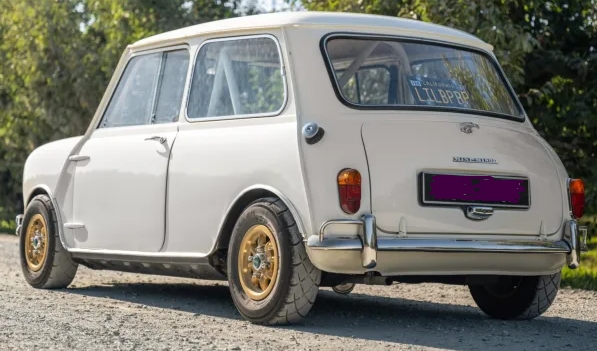
Launched in the summer of 1959, the Mini was not merely a car; it was a solution to a crisis. Born from the Suez Fuel Crisis, it utilized space with an efficiency that defied physics and wrapped it in a package that was cheap to buy and fun to drive. While the world often refers to the car simply as the “Mini,” the original badge read “Morris Mini-Minor,” a nomenclature that distinguished it from its stablemate, the Austin Seven.
This article traces the evolution of the Morris Mini-Minor from its inception in 1959 through its various iterations, facelifts, and trim levels, exploring how a utilitarian economy car became a global icon.
The Genesis: Crisis and Innovation (1956–1959)
The story of the Mini begins not in a boardroom, but amidst the geopolitical turmoil of the Middle East. In late 1956, the Suez Crisis choked oil supplies to Western Europe, causing fuel prices to skyrocket and rationing to be introduced in the UK. The British Motor Corporation (BMC), formed by the merger of Austin and Morris in 1952, realized that their existing lineup—from the Austin A30 to the large family saloons—was suddenly vulnerable.
Leonard Lord, the managing director of BMC, commissioned a new “transverse-engine, front-wheel-drive” economy car that could comfortably seat four adults while occupying no more road space than a traditional “bubble car” like the BMW Isetta. The project was initially codenamed the “ADO15” (Amalgamated Drawing Office project 15).
The engineering genius behind the car was Sir Alec Issigonis. He had previously designed the Morris Minor, but the Mini was a radical departure. Issigonis placed the engine transversely (sideways) to maximize interior space, a layout that is now standard in almost all modern passenger vehicles. To keep the dimensions tight, he specified 10-inch wheels, leading to the distinctive “miniskirt” wheel arches. The suspension was another innovation: rubber cones replaced traditional springs, saving space and weight.
.

.
The Launch: Austin and Morris (1959–1964)
On August 26, 1959, the new car was unveiled to the press. To the public, it arrived in two distinct flavors, sold side-by-side through different dealer networks: the Austin Seven and the Morris Mini-Minor.
While mechanically identical, the two cars had distinct personalities:
- The Austin Seven: Featured a flat, “slatted” grille, larger rear windows (on early models), and a slightly more utilitarian interior. It was marketed as the sensible, family choice.
- The Morris Mini-Minor: Boasted a more stylish, curved grille with a horizontal bar, a split rear window (initially), and a slightly more upscale interior finish. It carried the heritage of the Morris brand, known for slightly more flair than Austin.
The Engine: The initial models were powered by the A-series engine. The standard Morris Mini-Minor featured a 848cc engine producing 34 brake horsepower (bhp). While not fast by modern standards, the car weighed less than 1,400 lbs, giving it a peppy, responsive feel.
Trim Levels and Features:
- Base Model: The entry-level Morris Mini-Minor came with sliding perspex side windows (later replaced by winding glass), basic vinyl upholstery, and a rudimentary dashboard.
- The “De Luxe”: Introduced early in the production run, this trim added wind-up windows, a heater (optional at first, standard later), and two-tone paint options.
- The “Super”: Launched in 1961, the Super Mini-Minor featured a larger 998cc engine (48 bhp), a tachometer, and external door hinges (replacing the earlier “pistol grip” handles).
The Van and The Pickup: Utility Variants
The Mini’s utility was immediately recognized. In August 1960, the Morris Mini Van was introduced. Essentially a two-door estate car with rear windows replaced by metal panels, it was a commercial success. With a payload of 6 cwt (hundredweight), it became the workhorse of British tradesmen.
In 1961, the Morris Mini Pickup followed. Based on the Van’s chassis, it featured a small cargo bed. These utility models were mechanically similar to the saloon but were often detuned for durability. The Van and Pickup continued in production long after the saloon had evolved, remaining popular with farmers and delivery services due to their maneuverability and low running costs.
The Mark II and the Rise of the Cooper (1964–1969)
By 1964, the Mini was a global success, but the interior was showing its age. The Mark II Morris Mini-Minor was introduced in October 1964. While the exterior changes were subtle, they were significant. The front grille was redesigned with a larger opening for better cooling, and the rear window was enlarged to a single piece of curved glass (replacing the split screen on the Morris saloon).
The Mark II also introduced external door hinges (standard across the range now) and a revised interior with improved ventilation and more comfortable seats.
The Cooper Connection: While the Morris Mini-Minor was the standard bearer, the performance variants were developed in collaboration with John Cooper, the Formula One constructor. The Mini Cooper was launched in 1961 (Austin and Morris versions). However, the defining moment for the performance line came in 1964 with the introduction of the 1275GT.
The 1275GT was initially intended as a stop-gap between the standard Cooper and the race-bred Cooper S. It utilized a 1275cc engine producing 58 bhp. It featured a unique “saddle” interior and a distinct rev counter. By 1967, the 1275GT became the only Cooper model available for a brief period, as the original Cooper was discontinued, only to be revived later.
The Mark II Morris Mini-Minor Trim Levels:
- Standard: Continued with the 848cc engine.
- Super: Continued with the 998cc engine, featuring better trim and badging.
- 1000: Introduced in 1967, this model replaced the Super. It featured the 998cc engine but with a distinct “1000” badge and often unique color combinations (like “Tartan Red”).
- Moke: While technically a separate lineage, the civilian Mini Moke (based on the military version) saw popularity as a beach buggy during this era, though it was primarily sold in tropical markets.
The Mark III and the “1000” Transition (1969–1974)
In 1969, the Mark III Morris Mini-Minor was launched. This was a significant step in modernizing the car. The most noticeable change was the deletion of the external door hinges; doors were now “flush” with the bodywork, improving aerodynamics and safety.
The interior received a major overhaul. The dashboard was redesigned with a full-width plastic fascia, and the ignition key was moved to the steering column (a security feature). The rubber suspension cones were replaced by Hydrolastic springs (borrowed from the larger 1100/1300 models), providing a softer, more compliant ride.
The “1000” Takes Center Stage: By the early 1970s, the Morris Mini-Minor range had effectively consolidated. The 848cc engine was phased out of the main saloon line in favor of the 998cc unit. The model was now simply badged as the Morris Mini 1000 (or Mini 1000 in some markets).
The 1000 featured:
- 998cc A-series engine (40 bhp).
- Improved interior trim with “check” seat fabrics.
- Two-tone paint options (often “White with Blue” or “White with Red”).
- The “City” specification in some markets, which included a vinyl roof and additional chrome trim.
The 1275GT (Mark III): The 1275GT continued as the sporting option. It received the Mark III updates, including the flush doors and improved interior. It was marketed as the “poor man’s Cooper S” and remained popular until production ended in 1980.
The “Rover” Era and the End of an Icon (1980–2000)
In 1969, British Leyland (the successor to BMC) began phasing out the Morris brand in favor of Austin. By 1980, the Austin brand was itself being replaced by the “Rover” badge for the Mini.
The Mark IV (1976–1984): Technically, the Mark IV was an update to the Mark III, but it is a distinct era. The most controversial change was the switch from Hydrolastic back to rubber cone suspension (due to cost-cutting). However, the defining feature of the Mark IV was the introduction of the “Wet Liner” engine in 1980. The A-series engine was modified with a wet liner system, allowing for easier rebuilding and slightly improved efficiency.
The HLE (High Line Economy): In the early 1980s, the Mini HLE was introduced. This was a specific trim level designed to meet tax loopholes for company cars. It featured a lower ride height, specific 12-inch wheels (a return to smaller wheels for efficiency), and a 998cc engine. The HLE was visually distinct with its “City” green paint and blacked-out trim.
The MPI and the Final Years (1990–2000): By the late 1980s, the Mini was technically obsolete, yet sales continued due to its cult status. In 1990, the Mini MPI (Multi-Point Injection) was launched. This was the most technically advanced version of the original design. The 1275cc engine was fitted with fuel injection, replacing carburetors, and the electrical system was upgraded to 12 volts (previously 6 volts).
The final production years (1996–2000) saw limited edition models to celebrate the car’s longevity. These included:
- The 40th Anniversary Edition (1999): Featured a unique “Lime Green” paint and a numbered plaque.
- The “Sprite” Edition: A tribute to the MG Sprite, featuring a white roof and racing green bodywork.
Production of the original Mini finally ceased on October 4, 2000, at the Longbridge plant in Birmingham. The last car was a red Mini Cooper, driven off the line by the then-owner, BMW.
Technical Evolution and Engineering
Throughout its 41-year production run, the Morris Mini-Minor underwent several engineering changes that are often overlooked but vital to its evolution:
- Gearbox: Early models (1959–1967) used a 4-speed manual gearbox with a remote linkage. In 1967, the gearbox was integrated into the engine sump (unit construction), improving rigidity and shifting feel. An automatic transmission (the “Hydrostatic” drive) was offered briefly in the early 1960s but was largely unsuccessful.
- Brakes: Originally, the Mini used 7-inch drum brakes all around. Disc brakes were introduced as an option on the Cooper S in 1962 and became standard on the front of all Minis in 1965.
- Electrics: The switch from a dynamo to an alternator occurred in the late 1960s, providing better charging for the lights and heater.
- Safety: Over the years, the Mini evolved to meet safety standards. This included collapsible steering columns (early 70s), improved seat belts, and eventually, the deletion of the external door handles to prevent injury in side impacts.
The Morris Mini-Minor in Culture
The Morris Mini-Minor transcended its mechanical specifications. In the 1960s, it became a symbol of the “Swinging London” scene. It appeared in films like The Italian Job (1969), where three Minis (red, white, and blue) became the stars of a legendary heist sequence.
The car was also a motorsport legend. The Mini Cooper S won the Monte Carlo Rally in 1964, 1965, and 1967, beating much larger and more powerful cars. This victory cemented the Mini’s reputation as a giant-killer.
Future Outlook and Legacy
The original Morris Mini-Minor is no longer in production, but its legacy is stronger than ever. In the collector car market, values of well-maintained Mark I and Mark II Minis have skyrocketed. The “Bugeye” (Sprite) and early Morris saloons are highly sought after.
The Modern Successor: In 2001, BMW revived the Mini brand with the new Mini Hatch. While significantly larger, heavier, and more complex than the original, it retained the core design cues: a boxy shape, a central speedometer, and a go-kart-like driving feel. The modern Mini is a direct spiritual successor, though it lacks the analog simplicity of the Morris Mini-Minor.
The EV Future: As the automotive world pivots to electric vehicles (EVs), the Mini has embraced the change with the Mini Cooper SE. However, enthusiasts of the original Morris Mini-Minor often look to the aftermarket and restoration scene. Companies like Electric Classic Cars now offer conversion kits to swap the A-series engine for electric motors, preserving the classic body while modernizing the drivetrain. This suggests a future where the Morris Mini-Minor continues to evolve, not as a mass-produced vehicle, but as a cherished, adaptable classic.
Conclusion
The Morris Mini-Minor began life as a pragmatic response to a fuel crisis. It was designed to be cheap, economical, and practical. Yet, through a combination of brilliant engineering, cultural resonance, and adaptability, it became something much more.
From the humble 848cc Mark I saloon to the fuel-injected MPI of the year 2000, the Mini evolved without losing its soul. It proved that size does not dictate character and that innovation often comes from constraints. Today, the sight of a Morris Mini-Minor navigating a modern city street is a reminder of a time when cars were simpler, driving was more engaging, and a small British saloon could conquer the world.