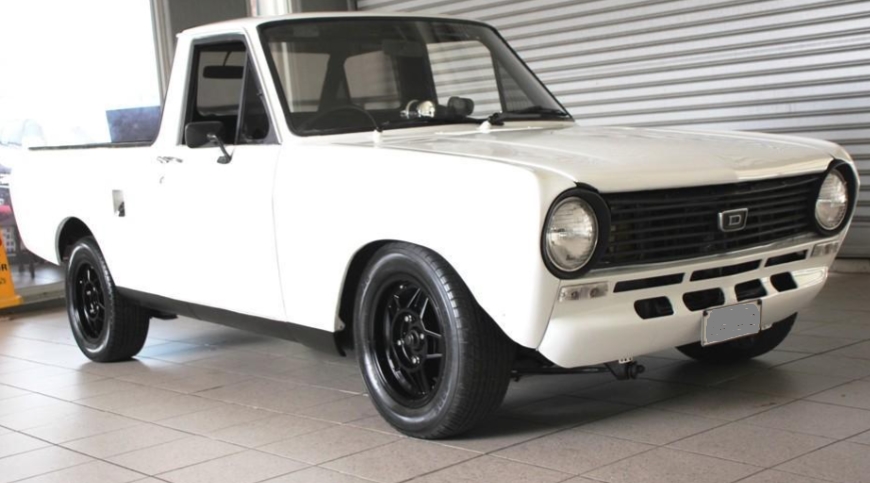
The Unlikely Pioneer: How the Datsun 1000 Ignited a Japanese Automotive Revolution
In the annals of automotive history, certain vehicles are remembered for their flamboyant styling, revolutionary engineering, or sheer speed. Others, however, are remembered for something far more subtle yet profoundly impactful: their ability to democratize mobility. The Datsun 1000 is one such vehicle. Produced during a pivotal era in Japan’s post-war reconstruction, the Datsun 1000 was not merely a car; it was a statement of intent. It represented the moment Nissan Motor Co., operating under the Datsun brand, transitioned from building replica Austin Sevens to creating truly independent, reliable, and affordable automobiles. This article explores the evolution of the Datsun 1000, detailing its production history, model variations, and its enduring legacy as the forefather of the modern Japanese compact car.
The Context: Post-War Japan and the Need for Mobility
To understand the Datsun 1000, one must understand the Japan of the late 1950s. The 1954 Jidosha-Hō (Automotive Industry Law) had just been enacted, a government initiative designed to stimulate the domestic auto industry and reduce reliance on foreign imports. While companies like Toyota and Nissan had begun producing their own passenger cars, they were largely expensive, hand-built sedans aimed at the wealthy or commercial fleet operators.
The average Japanese citizen still relied on bicycles, trains, and overcrowded buses. There was a desperate need for a small, fuel-efficient, and affordable vehicle—a “people’s car” akin to the Volkswagen Beetle in Germany or the Fiat 500 in Italy. Nissan, having licensed the Austin A40 Somerset for several years, realized that to capture the burgeoning mass market, they needed to engineer a vehicle specifically for Japanese roads and wallets. The result was the Datsun 1000.
.
THIS might be a great place to get your new car from!
Or for those who are into the “car flipping” business, here’s an excellent resource for you!

.
Phase I: The Birth of the 1000 (1957–1959)
The Datsun 1000 was officially introduced in August 1957. It arrived in two body styles: a four-door sedan and a three-door station wagon (officially designated as the Van).
Chassis and Exterior The 1000 utilized a platform that was evolutionarily distinct from the Austin license. While the front suspension (independent double wishbone) bore a family resemblance to the Austin, the rear utilized a semi-elliptic leaf spring setup—a robust and simple design suitable for Japan’s rough roads. The styling was conservative but distinct, featuring a split grille (resembling a smile) and rounded fenders that were typical of the era. Measuring under 3.5 meters in length, it was compact enough to navigate narrow Japanese alleyways yet spacious enough for four adults.
Engine and Performance Under the hood lay the heart of the 1000: the Datsun C engine. This was a 988cc overhead valve (OHV) inline-four, producing a modest 37 horsepower. While not a powerhouse, the engine was tuned for low-end torque, essential for carrying loads on hilly terrain. Top speed hovered around 80 mph (128 km/h), respectable for the time.
Trim Levels (1957–1959) The trim levels for the initial 1000 were simpler than modern standards, categorized largely by equipment packages rather than performance variants:
- Standard (B10): The base model. Featured basic instrumentation, cloth upholstery, and minimal chrome trim. It was purely utilitarian.
- DeLuxe (B10): Added veneer wood trim on the interior dash, upgraded fabric seats, a clock, and a heater (a luxury at the time).
- Van (B10V): The commercial variant. Lacked the rear side windows in favor of metal panels (or simple sliding glass), durable vinyl seating, and a higher payload capacity.
Phase II: The Facelift and Uprating (1959–1960)
In October 1959, Nissan introduced a minor facelift and, more importantly, a power boost. The Datsun 1000 was rebranded internally as the Datsun 1000 SSS (Super Sports Sedan), signaling a shift toward performance marketing.
The SSS Badge The engine received larger carburetors and a higher compression ratio, raising output to 48 horsepower. This was a significant jump. While the exterior styling remained largely unchanged, the SSS badge became a marketing cornerstone for Nissan, eventually evolving into the legendary performance trim for the Sunny and Z-car lines later in the decade.
Model Variations (1959–1960)
- 1000 Standard SSS: The performance-oriented sedan.
- 1000 DeLuxe SSS: The performance sedan with luxury amenities.
- 1000 Van SSS: The commercial wagon received the engine upgrade to aid in cargo hauling.
During this phase, the 1000 also began to see success in motorsport. A modified 1000 SSS competed in the 1958 Mobilgas Trial, a grueling endurance rally from Tokyo to Osaka. While it didn’t win outright, its reliability against established British and American competitors garnered Nissan immense public trust.
Phase III: The B20 Series and Expansion (1960–1963)
In February 1960, the Datsun 1000 underwent a major platform evolution, transitioning to the B20 series. This was not just a facelift; it was a significant engineering overhaul that modernized the car and expanded its utility.
Chassis and Exterior Changes The B20 series grew slightly in dimension. The most noticeable change was the front styling, which adopted a wider, single-slot grille that looked more modern and substantial. The rear also received updated tail lamps. The station wagon (Van) was particularly improved, with a lower loading sill and increased cargo volume, making it a favorite among small business owners.
Engine and Drivetrain The engine remained the 988cc OHV unit, still producing 48 horsepower in SSS trim. However, the B20 series saw the introduction of a more robust electrical system and improved cooling, addressing teething issues found in the earlier B10 models.
The Introduction of the Coupe (B20 Coupe) Perhaps the most significant addition to the lineup in 1961 was the B20 Coupe. This two-door hardtop featured a sleeker roofline and reduced weight. While mechanically similar to the sedan, the Coupe was marketed toward younger buyers and those seeking a sportier image. It was one of the first Japanese-designed coupes to offer a balance of economy and style, presaging the sports coupe boom of the late 60s.
Trim Levels (B20 Series, 1960–1963) The B20 lineup was more stratified:
- Standard B20: The entry-level sedan and van. Stripped of non-essentials, it remained the most affordable car in its class.
- DeLuxe B20: Added two-tone paint options (a first for Datsun), better upholstery, and an optional radio.
- SSS B20: The top-tier trim for sedans and wagons. Featured the 48hp engine, full instrumentation, and sporty exterior accents (chrome window surrounds, sport wheel covers).
- SSS Coupe B20: The halo model. It shared the 48hp engine but featured a unique interior with bucket seats and a center console (optional).
- Commercial Van B20: Continued as the workhorse variant, often sold without rear seats to maximize cargo space.
Motorsport Dominance The B20 series cemented the 1000’s reputation through motorsport. In the 1960 Macau Grand Prix, a Datsun 1000 driven by Shinji Ito shocked the automotive world by winning the touring car class against much larger displacement cars. This victory proved that Japanese engineering could compete on the world stage and significantly boosted the export potential of the Datsun brand.
Production and Export
The Datsun 1000 was produced from 1957 to 1963. During this six-year run, approximately 100,000 units were sold. While this number seems small by modern standards, it was a massive success for Nissan at the time, accounting for a significant portion of the Japanese domestic market’s passenger car volume.
In terms of export, the 1000 was Nissan’s first real attempt at global expansion. It was exported to Southeast Asia, Australia, and parts of the Middle East. In Australia, it gained a reputation for durability, surviving in harsh climates where contemporaries rusted or failed. However, it was eventually overshadowed by the larger Datsun 1200 (released in 1963), which offered more power and modern styling.
The End of the Line and Legacy
By 1963, automotive design had moved forward rapidly. The Datsun 1000, with its vintage 1950s silhouette and modest power, began to look dated. Nissan replaced it with the Datsun 1200 (B10) series in August 1963. The 1200 featured a modern “Green House” design with pillarless windows and a larger 1.2-liter engine, effectively ending the 1000’s run.
However, the 1000’s legacy was already secure. It established the engineering philosophy that would define Nissan’s future vehicles:
- Reliability: The C-series engine was famously robust, a trait Nissan would capitalize on in the 1970s Datsun 240Z and pickups.
- Economy: The 1000 proved that a small car didn’t have to be dangerous or poorly built.
- Performance Pedigree: The “SSS” trim level created by the 1000 became a benchmark for sportiness in Nissan’s lineup for decades.
Future Outlook: The 1000 Today
Today, the Datsun 1000 is a rare sight. Most were driven into the ground during the 1960s and 70s, and Japanese strict shaken (vehicle inspection) laws claimed many more. However, the 1000 has found a devoted following among classic car enthusiasts in Japan and abroad.
Collectibility and Value Early B10 sedans and B20 SSS Coupes are highly prized. Restored examples can fetch significant prices at Japanese classic auctions, such as those held by BH Auction or smaller regional events. The 1000 represents the “antique” era of Japanese cars—a time before the homogenization of global auto design.
The EV Conversion Trend An exciting modern development for the Datsun 1000 is its adoption by the electric vehicle (EV) conversion community. Because the chassis is lightweight and mechanically simple, it is an ideal candidate for electrification. Several Japanese workshops have stripped the C-engine from a B20 Van and replaced it with electric motors and modern lithium-ion batteries. This gives the 1000 a new lease on life—quiet, torquey, and zero-emission—ironically fulfilling its original purpose as an efficient urban transporter, but for a green future.
Preservation Nissan itself preserves a pristine Datsun 1000 at the Nissan Heritage Collection in Zama, Japan. It stands as a silent testament to the company’s origins, displayed alongside the Skyline GT-R and Fairlady Z. For restorers, parts availability is a challenge. Unlike the ubiquitous B110 Sunny, 1000-specific parts (like the unique tail lamps or the split-grille chrome) must be custom-fabricated or sourced from the dwindling supply of donor vehicles.
Conclusion
The Datsun 1000 was not the fastest, the prettiest, or the most technologically advanced car of its time. Yet, it was arguably one of the most important. It marked the moment Japan transitioned from assembling foreign designs to engineering its own. It provided affordable transportation to a nation on the rise and laid the financial and technical groundwork for Nissan’s future global dominance.
For the automotive historian or the casual enthusiast, the Datsun 1000 serves as a reminder that revolutions often start not with a roar, but with a humble, reliable hum. It was the car that put Japan on wheels, and its DNA can still be found in the compact cars that clog the streets of Tokyo today.