The Unsung Champion: Charting the Rise, Dominance, and Evolution of the Opel Ascona
In the grand tapestry of European automotive history, some names roar with the thunder of enduring fame—Ferrari, Porsche, Volkswagen Golf. Others, however, represent the quiet, reliable backbone of a generation. They were the cars that populated driveways, formed the bulk of traffic in city centers, and subtly defined an era’s mobility. The Opel Ascona is one such vehicle. It was not a supercar, nor was it a quirky novelty; it was, in essence, the perfect, unpretentious family car, evolved through three distinct generations to become a dominant force in the compact sedan market. From its humble, rear-wheel-drive origins to its controversial but commercially successful front-wheel-drive finale, the Ascona’s story is a mirror to the changing tastes, technologies, and ambitions of post-war Europe.
The Genesis: A Recipe for Success (1970-1975)
The story of the Ascona begins not with a single car, but with a strategy. By the late 1960s, General Motors’ German subsidiary, Opel, was a master of volume but yearned for a stronger foothold in the burgeoning “C-segment” or compact class. Their strategy was to offer two distinct cars to compete in the same market: a front-wheel-drive hatchback (the Kadett C) and a traditional rear-wheel-drive saloon. This saloon, launched in September 1970, was christened the Ascona.
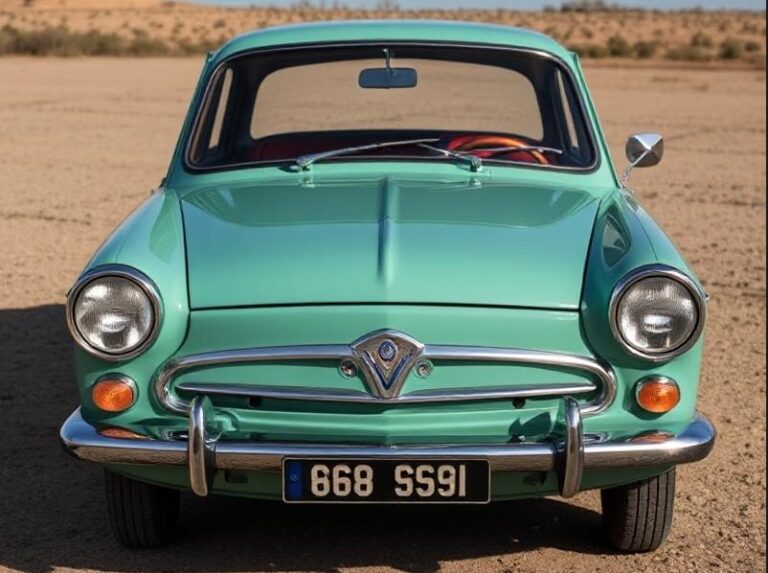
The name itself, borrowed from a picturesque Swiss town on Lake Maggiore, was intended to evoke a sense of clean, Alpine freshness. The car it described was a masterclass in conservative design. The first-generation Ascona (A-series) was handsome in a functional sort of way, featuring a neat, upright grille, a spacious three-box silhouette, and an interior built for durability rather than driver engagement.
.

.
Models and Trim Levels (First Generation, 1970-1975):
Opel’s trim hierarchy was straightforward, designed for clarity and ease of ordering.
- Ascona 1.2 S (TL): The entry-level model. It featured a 1.2-liter “CIH” (Camshaft In Head) engine producing around 60 horsepower. This was the bare-bones workhorse, often referred to as the “TL” (Touring Luxury) in some markets, which bundled essential comfort features like a rear window wash/wipe system and a heated rear window.
- Ascona 1.9 S: The heart of the range. This model used a 1.9-liter CIH engine, delivering a respectable 90 horsepower. It was the quintessential family car engine—adequate, reliable, and capable of comfortable cruising. The “S” denoted “Super,” a trim level that included a tachometer, a wood-veneer dashboard, more substantial door trim, and standard front disc brakes.
- Ascona 1.9 SR: The “Sport Rekord.” This was the performance-oriented variant. It borrowed its engine from the sportier Opel GT and Rekord, a 1.9-liter unit with a twin-carburetor setup producing 106 horsepower. Visually, the SR was distinguished by its front spoiler, sport wheels, and often a vinyl roof. It offered a spirited driving experience that made it a favorite for the burgeoning rally scene.
The first Ascona was a resounding success. It offered a practical alternative to the Kadett, with more space and a more comfortable ride, yet was cheaper to run and own than a larger family car like the Rekord. It perfectly filled a gap in the market, establishing the Ascona name as a byword for sensible, solid German engineering.
The Apex: The Ascona B and Rally Royalty (1975-1981)
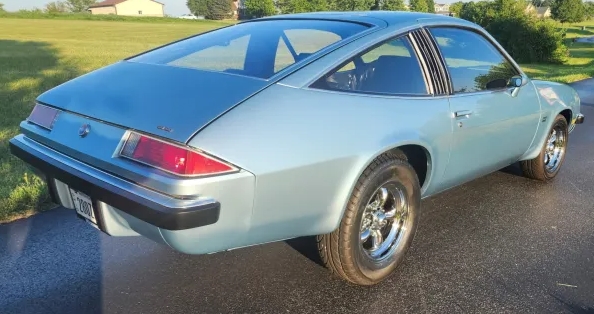
If the first generation established the formula, the second generation perfected it. Launched in late 1975, the Ascona B was a larger, more stylish, and vastly more refined car. It arrived in the midst of the 1970s oil crisis, and its efficiency and practicality were perfectly timed. The design was a classic GM “colonnade” style, with a prominent, upright grille flanked by rectangular headlights and a pronounced “C-pillar” that gave the car a coupe-like profile.
The Ascona B was offered in a wider variety of body styles than its predecessor. In addition to the standard four-door saloon, Opel introduced a three-door estate (the Caravan) and, most notably for some markets like the UK, a two-door “Sport” coupe version.
Models and Trim Levels (Second Generation, 1975-1981):
The trim levels were expanded to cater to a more discerning market.
- Ascona 1.2: The base model, powered by the smallest 1.2-liter CIH engine (60 hp). Stripped down for price, it was a rare sight as most buyers opted for more power.
- Ascona 1.3 / 1.3 S: The volume sellers. The 1.3-liter CIH engine became the standard, available in a single-barrel carburetor version (60 hp) and a more lively twin-carb “S” version (75 hp). The “S” trim level, as before, brought a host of cosmetic and comfort upgrades.
- Ascona 1.6 / 1.6 S: Offering more torque and better motorway manners, the 1.6-liter versions were popular in mainland Europe. The “S” version produced around 90 horsepower.
- Ascona 1.9 SR: The top-of-the-range performance model. It used a fuel-injected 1.9-liter CIH engine, now producing 115 horsepower. The SR was the ultimate expression of the Ascona B, featuring a distinctive black grille, sport seats, and a full complement of gauges. It was quick for its day and handled well, making it a formidable contender in Touring Car racing.
- Diesel Models (Caravan only): Opel also offered a 1.8-liter diesel engine (59 hp) specifically for the Caravan estate, targeting commercial users and high-mileage families.
However, the Ascona B’s greatest legacy was forged in the dirt and gravel of the World Rally Championship. The Opel Ascona 400, a Group 4 homologation special, was a fearsome rally car. With a 2.4-liter engine, flared arches, and a stripped-out interior, it was a world away from the humble saloon. Driven by legends like Ari Vatanen and Walter Röhrl, the Ascona 400 won the 1982 World Rally Championship, cementing the Ascona name in motorsport folklore and proving that the humble family car had the bones of a champion.
The Revolution: The Front-Wheel-Drive Ascona C (1981-1988)
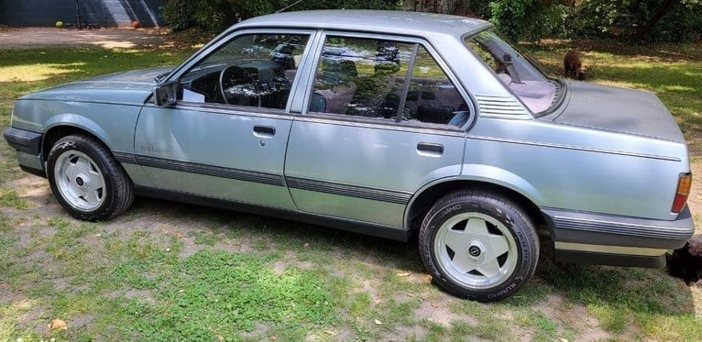
By the early 1980s, the automotive world was changing. Fuel efficiency, interior space, and the viral success of the Volkswagen Golf hatchback were reshaping the market. The traditional rear-wheel-drive saloon was under threat. Opel’s response, launched in September 1981, was the Ascona C. It was a complete and utter departure.
Gone was the rear-wheel-drive platform and the venerable CIH engine. In their place was a modern, transverse engine, front-wheel-drive chassis, and a range of new “Family II” overhead-cam engines. The Ascona C was a “three-box” saloon that was stylistically and technically a world away from its predecessors. Its design was aerodynamic for its time, with more rounded edges and a lower stance. It was also significantly more space-efficient.
Models and Trim Levels (Third Generation, 1981-1988):
The model range was once again updated to reflect new priorities.
- Ascona 1.2 S: The entry-level model, using a 1.2-liter Family II engine with 60 hp. It was pitched as an economical city car.
- Ascona 1.3 / 1.3 S: The core of the range. The 1.3-liter engine was available with a single-carb (60 hp) or twin-carb (75 hp) setup. The “S” trim was again the most popular, offering a tachometer, rev-holding door locks, and better interior materials. In some markets, a 1.3i (fuel-injected) version was available with 82 hp.
- Ascona 1.6 / 1.6 i: The 1.6-liter models were the top-tier petrol versions. The carbureted 1.6 produced 90 hp, while the fuel-injected 1.6i, introduced later in the lifecycle, delivered a smooth 115 hp.
- Ascona 1.8 D / 1.8 TD (Caravan): As with the B-series, the estate version was available with diesel engines. The 1.8 D (60 hp) was a reliable workhorse, and the later 1.8 TD (88 hp) turbocharged diesel was a surprisingly potent and frugal option for long-distance haulers.
- Special Trims (Manta B and Berlinetta): In some European countries, the Ascona saloon was offered with special “Manta” styling packs, borrowing the name from Opel’s famous coupe. These included body-colored bumpers, sport wheels, and decals. A “Berlinetta” trim was also available in some markets, offering a more luxurious interior with velour seats and additional chrome trim.
The Ascona C was a sales success, but it also sparked a debate among purists. The RWD charm of the older models was gone, replaced by a more clinical but efficient package. The driving experience was less “connected,” but the car was roomier, lighter on fuel, and easier to drive. It was a necessary evolution to keep the Ascona competitive.
The End of an Era and Legacy
The Ascona C continued production until 1988. By this time, market segmentation had become more specific. The demand for a compact three-box saloon was waning in favor of hatchbacks like the Opel Astra (which replaced the Kadett) and, ironically, a new class of compact, affordable saloons.
Opel’s strategy shifted. The Ascona name was retired, and its role was split. For the budget-conscious, there was the Astra. For those wanting a traditional saloon body on a compact footprint, Opel launched the Vectra in 1988. The Vectra was, in essence, the direct successor to the Ascona C, a car that continued the front-wheel-drive, transverse-engine philosophy.
Today, the Opel Ascona is a fond memory. It never achieved the global icon status of a Volkswagen Passat or Ford Sierra, but its influence is undeniable. It was a car that grew with its audience. The first generation was the aspirational car for a young family. The second was the comfortable and capable all-rounder that could win rallies. The third was the smart, efficient, and modern choice for the 1980s professional.
For enthusiasts, the Ascona 400 remains a hero car. For classic car lovers, the clean lines of the Ascona B are increasingly sought after. And for millions of Europeans, the Ascona is simply the car their parents owned—the one that was always there, always started, and always got the job done. It was the quintessential Opel, a champion of the everyman, and its evolution charts the course of a remarkable era in motoring history.