The Unsung Hero: A Comprehensive History of the Mazda Capella
In the annals of automotive history, certain cars achieve legendary status through sheer charisma, like the Ford Mustang, or technological marvels, like the Toyota Prius. Others, however, earn their place through quiet, unwavering competence. They are the dependable workhorses, the well-engineered, sensible choices that form the backbone of a brand’s reputation. For Mazda, that car for nearly three decades was the Capella. Known in North America as the 626, the Capella was a cornerstone of Mazda’s lineup, a model that not only defined the company’s mid-size sedan offerings but also laid the very groundwork for its celebrated “Zoom-Zoom” driving philosophy. This is the story of the Mazda Capella: its evolution, its triumphs, and its enduring legacy.
The Genesis of a “People Mover” (1970-1978)
The story begins in the late 1960s, a period when Japanese manufacturers were aggressively expanding their global footprint. Mazda, having established its unique identity with the rotary-powered Cosmo and RX series, sought to capture a larger share of the burgeoning family car market. The company had two primary platforms for this segment: the 929 (later the Luce) was its upscale, luxury-oriented flagship, while the Capella was designed to be the sensible, practical, and more affordable alternative.
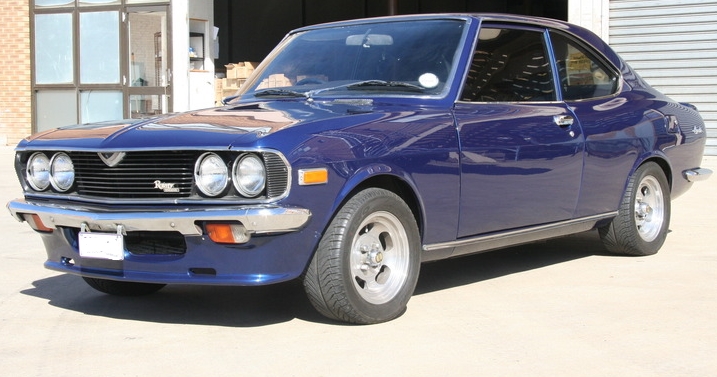
Launched in January 1970, the first-generation Capella (code-named PB) was marketed as a “People Mover.” It was available as a two-door coupe, a four-door sedan, and even a five-door station wagon. The design was typical of the era, with clean but unremarkable lines. What set it apart was its engineering. The Capella featured a torsion beam rear suspension and front disc brakes, giving it a reputation for surprisingly sharp handling for its class. The heart of the car was Mazda’s new overhead cam (SOHC) “Capella” engine, available in 1.3L and 1.5L displacements. This was a crucial departure from the smaller pushrod engines common in its competitors and signaled Mazda’s commitment to more advanced powertrain technology.
For the North American market, this first generation was introduced in 1971 as the Mazda 626. It was one of the first Japanese sedans to meet the stringent US safety standards without major modifications, a testament to its solid engineering. In 1972, a sporty “1600 GT” coupe was introduced, featuring dual carburetors and a more powerful engine, giving an early hint of the performance potential that would later become a Mazda hallmark.
The second generation, codenamed PC, arrived in 1978. It was a much larger and more rounded car, growing in every dimension to better compete with the Toyota Corona and Nissan Bluebird. The design was more aerodynamic, with a distinctive “Coke bottle” shape to the rear fenders. This generation was notable for introducing the 2.0L engine, which would become a staple in later models. In North America, the 626 received a facelift in 1979 that gave it large rubber bumper guards and new lighting, a styling cue to navigate the era of strict safety regulations. A luxury version was also launched in some markets, known as the Mazda Grand Avenue.
.
THIS is GOOD stuff if your car is in need:

.
The Birth of an Icon: The Third Generation (1978-1982)
The third-generation Capella, code-named PD, arrived in late 1978 as a 1979 model. This was a pivotal moment. While the previous models were competent, the PD Capella was the one that truly put the name on the map. Its “Laser Rocket” styling was sharp, angular, and distinctly European-influenced, particularly in its fastback-like profile. The aggressive front end with its concealed headlights and a distinctive black plastic grille gave it a premium, sporty look that was a world away from the bland competitors.
The suspension was fully independent at the rear, a significant upgrade that improved both ride and handling. Engine options were expanded, including the 1.6L, 2.0L, and a fuel-injected 2.0L engine in the top-tier models. This generation introduced the hierarchy of trim levels that would define the Capella for years to come:
- GL (Grand Luxury): The well-appointed mainstream model with features like power windows, a sunroof, and upgraded upholstery.
- GTX: The top-of-the-line luxury variant, often featuring the most powerful engine available, velour seats, air conditioning, and a comprehensive list of comfort and convenience features.
- GT: The true performance model. This was the one that captured hearts and minds. The Capella GT (and its 626 equivalent) was powered by the 2.0L SOHC engine pushing a then-respectable 115 horsepower.
In North America, the 626 of this era was a huge success. It was praised by magazines like Car and Driver for its excellent road manners, responsive steering, and overall refinement. It was a car that felt more expensive than it was, a “poor man’s BMW” in the eyes of many. For the first time, the Capella/626 wasn’t just a sensible choice; it was the desirable choice.
Turbocharging and All-Wheel Drive: The Fourth Generation (1982-1987)
By the early 1980s, the automotive world was changing rapidly. Fuel efficiency was paramount, but so was performance. Mazda’s response, launched in 1982, was the fourth-generation Capella (PE). This car was a quantum leap forward in every way. The design was sleeker and more aerodynamic, shedding the boxy look for a smoother, more modern profile. It also introduced a key feature that would become a Mazda signature: the “5-MAC” five-link independent rear suspension.
This generation was offered in a wider range of body styles than ever before: four-door sedan, two-door coupe, five-door hatchback, and a versatile four-door hardtop (a sedan with pillarless side windows for a more open feel). Engines were updated with new computer-controlled fuel injection systems.
But the real excitement came in late 1983 with the introduction of two groundbreaking variants:
- The Capella GT Turbo: Mazda took the 2.0L engine and added a turbocharger, creating a powerhouse that produced 145 horsepower. This was a legitimate performance sedan, capable of challenging the best from Europe and Japan. It came with “Turbo” graphics, sport seats, and a tachometer that glowed green and then red as the turbo spooled up—a classic 80s touch. This model cemented Mazda’s reputation for building fun-to-drive cars.
- The Capella 4WD: In a forward-thinking move, Mazda introduced an all-wheel-drive version of the wagon and sedan in 1984. Powered by the 2.0L engine, this was one of the first mass-market sedans to offer such a system, predating the Subaru Legacy’s rise to fame. It was designed for all-weather capability and was a unique offering in its class. In North America, the 626 GT Turbo was a cult hero, a fast, sharp-handling family car that could surprise many a sports car off the line.
The ZX Era and the Prelude to the 626 Name (1987-1992)
The fifth generation, code-named PF, launched in 1987, brought another redesign with an even more aerodynamic “aero” look, complete with flush headlights and a lower drag coefficient. This is when the naming conventions began to get complex.
In most global markets, including Japan and Europe, this car was called the Eunos 300. The “Eunos” brand was created by Mazda to sell its more premium and performance-oriented vehicles. The Capella name, however, was retained on the base models in some markets, while a new name, Capella/Cruiser, was used for the wagon. The 626 name was still used in North America.
Trim levels under the Eunos umbrella included:
- Eunos 300: The base model with a 2.0L engine.
- Eunos 300 4WD: Continuing the all-wheel-drive legacy with a 2.0L engine and a 4-speed automatic.
- Eunos 300 Q (for Qualitè): A luxury-oriented trim with features like automatic climate control, leather seats, and a premium sound system.
- Eunos 300 X: A sporty trim that served as the direct successor to the GT/GTX line.
The performance model was now called the Eunos 300 X (later M X), which featured a 2.0L DOHC 16-valve engine producing 160 horsepower. It also boasted the “Traction Control System” (TCS), an advanced feature for the time. This generation was robust, refined, and technologically advanced, but the North American market was about to get a completely different car.
The Merger of Names and the Final Act (1992-1999)
For the 1992 model year, Ford, which had purchased a 25% stake in Mazda, decided to streamline its global platforms. The Mazda Capella/626 and the Ford Telstar were essentially the same car, a classic “badge-engineering” partnership. To reduce complexity in the lucrative North American market, Ford and Mazda made a pivotal decision: the Ford Probe coupe/sedan was discontinued, and the Mazda 626 name would be used for the entire mid-size range.
Thus, the sixth-generation Capella (code-named GG) was born in 1992, but in most of the world, it was now universally known as the Mazda 626. The Capella name was officially retired in most export markets, though it lingered in Japan for a few more years on certain trims before being fully phased out in favor of the 626 designation.
This generation was a highly polished, globally-synchronized product. It featured a more rounded, “jelly-bean” design and was available with 2.0L and 2.5L V6 engines. The V6, in particular, gave the 626 a new level of smoothness and highway performance. Trim levels in North America were straightforward:
- LX: The base model.
- DX: A mid-level trim with more features.
- ES: The top-of-the-line luxury/sport model, often with the V6, alloy wheels, fog lights, and a leather-wrapped interior.
The seventh and final generation (code-named GF/GW) arrived in 1997, again badged globally as the 626. It was a highly refined car with a sophisticated multi-link suspension and improved safety features. A new “Sport” trim offered a firmer suspension and sportier styling. However, its run was short-lived. By 2002, the Capella/626 lineage was officially ended, replaced in the Japanese market by the Atenza (known as the Mazda6 in North America), a car that was explicitly designed to be the spiritual successor to the sporty Capellas of the past.
Legacy and Outlook
The Mazda Capella may not be a household name today, but its impact on Mazda and the automotive industry is undeniable. It was the car that proved Mazda could build a reliable, practical, and desirable family sedan. It was the platform that allowed Mazda to experiment with turbocharging and all-wheel drive in the mainstream market, technologies it would later perfect in the RX-7 and more recent crossovers.
More importantly, the Capella cultivated Mazda’s core identity. The precise steering, the well-tuned independent suspensions, the rev-happy engines—it was in the Capella that Mazda honed the “driver’s car” philosophy that would define its brand. The spirit of the Capella GT Turbo and the 4WD sedan lives on in every Mazda6 and CX-5 that prioritizes handling over sheer comfort.
Today, the Capella is a beloved classic among Japanese car enthusiasts. Well-preserved GT and 4WD models are rare and command high prices at auction. They are remembered not for being the fastest or the most luxurious, but for being exceptionally well-rounded, a testament to the engineering principle that a car could be both sensible and, most importantly, fun to drive. The Capella was Mazda’s quiet hero, the unsung foundation upon which the brand’s celebrated future was built.