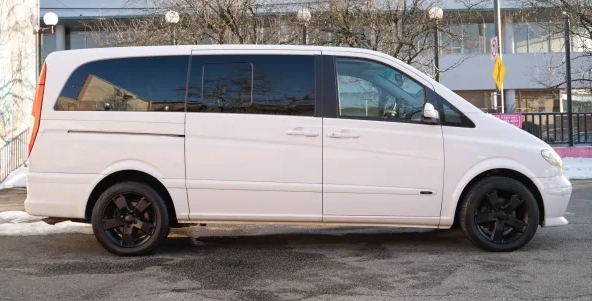
The Unsung Hero of the Family Hauler: A Deep Dive into the Toyota Noah
In the vast and varied landscape of the global automotive market, some vehicles become international icons, their names recognized in every corner of the world. Others, however, carve out a legendary status within specific regions, becoming deeply woven into the fabric of daily life. The Toyota Noah is a prime example of the latter—an unassuming yet profoundly capable multi-purpose vehicle (MPV) that stands as a pillar of family transportation, primarily in its home market of Japan and select other Asian countries.
While it may not possess the global name recognition of a Camry or a Land Cruiser, the Noah represents a masterclass in packaging, efficiency, and human-centric design. It is more than just a box on wheels; it is a mobile living space, an accessible transport for the elderly, and a trusted companion for countless families. This is the story of the Toyota Noah, from its humble origins to its technologically advanced present.
A Brief History: The Predecessor
Before the Noah officially graced showrooms, its lineage can be traced back to the Toyota LiteAce Noah and TownAce Noah, which were produced from 1996 to 2001. These were passenger-oriented versions of Toyota’s popular commercial vans, offering more comfort and amenities. They established the fundamental template for what would become the dedicated Noah MPV: a “one-box” design with a tall roof, sliding rear doors for easy access in tight urban spaces, and a highly flexible interior. This transitional model paved the way for a new, more refined vehicle designed from the ground up for families.
First Generation (R60G): 2001-2007
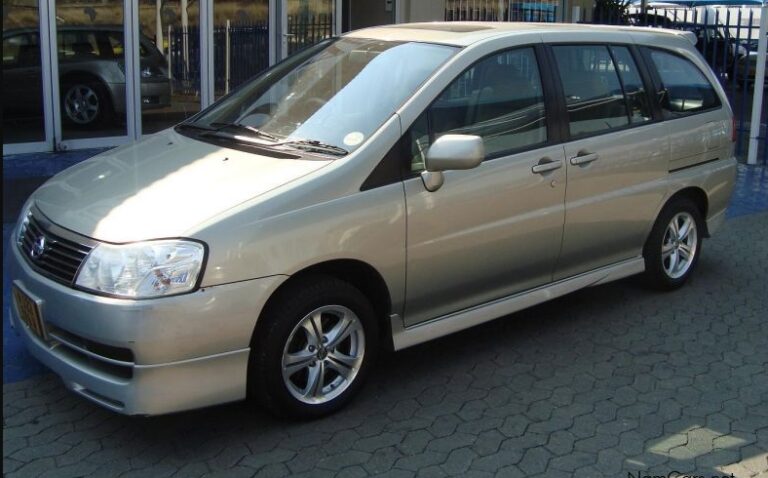
In November 2001, Toyota launched the first-generation Noah, designated the R60G. This marked a significant step forward, as the Noah and its sportier twin, the Voxy, were now standalone models built on a new front-wheel-drive platform, a departure from the mid-engine, rear-drive layout of the TownAce.
This new platform allowed for a much lower and flatter floor, dramatically improving interior space, accessibility, and passenger comfort. The design was clean and functional, with a friendly face characterized by large, gentle headlights.
- Powertrain: The sole engine option was Toyota’s 2.0-liter 1AZ-FSE four-cylinder petrol engine featuring D-4 direct injection. It produced a respectable 152 horsepower, channeled through a Super CVT (Continuously Variable Transmission) for front-wheel-drive models or a 4-speed automatic for all-wheel-drive variants.
- Trim Levels: The trim hierarchy was straightforward and aimed at different consumer needs:
- X: The base model, offering essential features and value. Often available with G or S packages for additional equipment.
- L: A slightly more equipped version than the base X.
- S: A sportier trim featuring aerodynamic body kits, larger alloy wheels, and a firmer suspension tune.
- G Selection / V Selection: These were often package upgrades available on X or S trims, adding features like power sliding doors, upgraded upholstery, and advanced climate control.
A key innovation of this era was the highly versatile seating. The second-row seats could rotate to face the third row, creating a lounge-like atmosphere, and the third-row seats could be folded up against the sides of the vehicle to create a massive cargo area. This generation laid the foundation for the Noah’s reputation as the ultimate practical family vehicle.
.
NO MORE dead batteries with this:

.
Second Generation (R70G): 2007-2014
The second-generation Noah, launched in June 2007, was an evolution of a successful formula. While retaining the same platform and overall dimensions, Toyota refined every aspect of the vehicle. The exterior styling became sharper and more modern, and the interior quality saw a significant upgrade with better materials and a more ergonomic dashboard design.
The biggest news, however, was under the hood.
- Powertrain: The R70G introduced the new 2.0-liter 3ZR-FE engine. More significantly, higher-trim models received the 3ZR-FAE engine, which featured Toyota’s advanced Valvematic technology. Valvematic continuously adjusted valve lift and timing, resulting in improved fuel efficiency, lower emissions, and a boost in power to 158 horsepower, all while being paired with a sophisticated 7-speed Super CVT-i. The all-wheel-drive option remained available.
- Trim Levels: The model lineup was refined to better distinguish between comfort and sportiness:
- X: Remained the well-equipped base model.
- G: Positioned as the comfort-oriented luxury model, often featuring plusher seating and more convenience features.
- S & Si: These sporty grades became more distinct. The “Si” (Sports-Injection) trim, in particular, boasted an aggressive body kit, 16-inch wheels, and paddle shifters for a more engaging driving experience.
- Welcab Models: Toyota also expanded its range of “Welcab” factory-modified vehicles. These versions of the Noah came equipped with features like side-lift-up seats or wheelchair ramps, making them an indispensable mobility solution for families with elderly or disabled members.
This generation cemented the Noah’s market dominance, perfectly balancing practicality with newfound refinement and efficiency.
Third Generation (R80G): 2014-2021
January 2014 saw the debut of the third-generation R80G Noah, a model that represented the most significant leap in the vehicle’s history. The design became bolder and more assertive, highlighted by a massive, commanding front grille that would become a signature of the model.
The real revolution was the introduction of a full hybrid powertrain.
- Powertrain:
- Petrol: An updated 2.0-liter 3ZR-FAE engine with an improved CVT and a new start-stop system for enhanced fuel economy.
- Hybrid: For the first time, the Noah was offered with Toyota’s proven Hybrid Synergy Drive. It paired a 1.8-liter 2ZR-FXE Atkinson cycle engine with an electric motor, the same system found in the Prius. This combination delivered outstanding fuel efficiency, often exceeding 23 km/L (approximately 54 mpg) in Japanese testing cycles, making it incredibly economical for a vehicle of its size.
- The Three Brothers: This generation also formalized the “three brothers” marketing strategy.
- Noah: The standard, family-friendly model with a classic, wide-bar grille.
- Voxy: The sporty and youthful alternative with a distinctive split-headlight design and aggressive styling.
- Esquire: A new, third sibling introduced in late 2014. The Esquire was positioned as the most luxurious and formal of the trio, featuring a striking vertical-bar grille reminiscent of the Toyota Crown, along with a more premium interior with synthetic leather and wood-grain accents.
- Trim Levels: The structure was adjusted to accommodate the new hybrid and luxury models:
- X, G, Si (Noah/Voxy): These continued, available in both petrol and hybrid versions.
- Gi, Xi (Esquire): The Esquire offered its own luxury-focused trims.
- Safety & Interior: The R80G was the first Noah to offer the “Toyota Safety Sense C” suite of active safety features, including a pre-collision system, lane departure alert, and automatic high beams. The interior saw further innovation with ultra-slim front seatbacks to increase legroom and a new, lower floor for even easier entry and exit.
Fourth Generation (R90W): 2022-Present
The current and fourth-generation Noah, launched in January 2022, is the most sophisticated and capable version yet. Built on the modern Toyota New Global Architecture (TNGA-C) platform, it benefits from a lower center of gravity, increased body rigidity, and a vastly improved suspension system, leading to superior ride comfort and handling dynamics.
The exterior design is an evolution of the previous generation, with a cleaner, more integrated look that emphasizes its sheer volume and presence. The Voxy twin returns with an even more aggressive and futuristic design, while the luxurious Esquire was discontinued, consolidating the lineup.
- Powertrain: The powertrains are all-new.
- Petrol: A 2.0-liter M20A-FKS “Dynamic Force” engine paired with a Direct Shift-CVT, which uses a physical launch gear for quicker take-offs before switching to the efficient CVT belt.
- Hybrid: A new-generation hybrid system based on a 1.8-liter 2ZR-FXE engine with redesigned electric motors and a more compact, powerful battery, delivering improved performance and even better fuel economy. Both front-wheel and all-wheel-drive (E-Four) options are available for the hybrid for the first time.
- Trim Levels: The trim structure has been updated and simplified:
- X: The well-equipped entry point.
- G: A mid-range comfort trim.
- S-G: A sporty appearance package on the G trim.
- Z: The new high-end comfort and luxury trim.
- S-Z: The flagship sporty trim with the most aggressive styling and features.
- Technology and Safety: The R90W comes standard with the latest Toyota Safety Sense, a highly advanced suite that includes features like Proactive Driving Assist and Advanced Park, which can handle nearly all aspects of parking automatically. The cabin is dominated by a large central touchscreen infotainment system and features thoughtful amenities like hands-free power sliding doors (activated by kicking under the door) and universal steps that deploy for easier access.
Future Outlook and Global Relevance
The Toyota Noah remains a product primarily tailored for Japan and select Asian markets like Hong Kong and Indonesia, where its combination of space-efficiency, reliability, and fuel economy is highly valued. It is unlikely to be officially exported to North American or European markets, which favor larger minivans like the Sienna or traditional SUVs.
The future of the Noah is firmly tied to Toyota’s broader strategy. The current R90W generation, with its state-of-the-art TNGA platform and advanced hybrid system, is a testament to the company’s commitment to the MPV segment. Looking ahead, it is plausible that a future iteration could incorporate a plug-in hybrid (PHEV) or even a fully battery-electric (BEV) powertrain as Toyota continues its push towards carbon neutrality.
In conclusion, the Toyota Noah is far more than its humble appearance might suggest. It is a product of meticulous engineering and a deep understanding of its customers’ needs. Through four generations, it has consistently evolved, embracing new technologies and setting the benchmark for what a compact family MPV can be. While it may fly under the radar globally, in its home territory, the Noah is not just a vehicle—it’s an indispensable part of the family.