The Unsung Titan of Industry: A Factual Chronicle of the Ford Transit’s Evolution
The Ford Transit is not merely a van; it is a rolling icon of commerce, a trusted steed for countless trades, and a ubiquitous fixture on the world’s roadways. Since its inception in 1965, this British-born, globally-deployed light commercial vehicle (LCV) has defined the segment, adapting with relentless pragmatism to the shifting demands of logistics, construction, and passenger transport. To chart the evolution of the Transit is to chart the very history of modern utility transport.
This 1500-word examination delves into the factual lineage of the Ford Transit, detailing its key generations, the critical models introduced, and the trim levels that have defined its character from the utilitarian workhorse of the swinging sixties to the connected, efficient machine of today.
The First Generation: The Dawn of a Legend (1965–1978) – Transit Mark I (or Taunus Transit in Germany)
The genesis of the Transit was a crucial strategic move by Ford Europe to replace the aging Thames 400E. Launched in August 1965, the new Transit—developed jointly in the UK and Germany—represented a breakthrough in driver comfort and load capacity for its time. It moved the engine forward (a semi-bonneted design) for better crash protection and accessibility to the drivetrain.
Key Features & Innovations:
- Engines: Initially powered by Ford’s reliable Kent OHV four-cylinder petrol units, diesel options (Perkins) followed.
- Chassis: Available in short-wheelbase (SWB) and long-wheelbase (LWB) configurations.
- Body Styles: Panel Van, Chassis Cab, Minibus (often known as the ’12-seater’).
Model/Trim Evolution within Mark I: The concept of formalized trim levels was less rigid initially, focusing more on chassis size and specialization. However, as the model matured, Ford introduced:
- Standard/Base Model: Focused purely on low-cost utility.
- Custom: Increasingly popular variants offering slightly better interior fittings and sometimes enhanced engine options.
The Mark I proved immensely successful, selling over a million units by 1975.
.
RepairSurge Online Repair Manuals Replace Bulky Books With Reliable Digital Information!
Faster And Cheaper Than Traditional Printed Manuals, Users Get Instant Access To The Repair Information They Need For Any Car, Truck, Van or SUV:
.
The Second Generation: Aerodynamics and Diesel Power (1978–1986) – Transit Mark II
Released in 1978, the Mark II was significantly restyled, featuring a more integrated, aerodynamic front end, revised interiors, and improved structural rigidity. This generation cemented the Transit’s dominance across Europe.
Key Innovations:
- Engine Focus: The introduction of the highly regarded Ford ‘4-cylinder’ overhead camshaft (OHC) diesel engine, which significantly improved fuel economy and longevity, vital for high-mileage commercial users.
- Safety: Improved braking systems and revised cab structures.
Model/Trim Evolution within Mark II: Trim levels began to solidify during this era, differentiating between basic utility and those used for personnel transport:
- Standard Van: The quintessential work truck.
- Custom: Often specified with better seating, optional radio, and improved dash instrumentation.
- Minibus/Bus: Fully glazed versions for passenger transit.
The Third Generation: The ‘Jumbo’ Era (1986–2000) – Transit Mark III
Arriving in 1986, the Mark III was a radical departure, adopting the squared-off, almost monolithic look characteristic of mid-80s design. Crucially, this generation introduced the modern concept of the ‘High Roof’ option, dramatically increasing usable internal volume without increasing the footprint.
Key Innovations:
- High Roof: A game-changer in van design, allowing workers to stand upright.
- Front-Wheel Drive (FWD): The introduction of FWD models (initially for lighter payloads) allowed for a lower load floor, improving ergonomics immensely. Rear-Wheel Drive (RWD) continued for heavier applications.
- Engines: Continued use of the reliable Kent/Lima derivatives and the CVH/Zetec petrol engines.
Model/Trim Evolution within Mark III: Ford formalised its trim hierarchy to appeal to a wider market:
- Base/Standard: Bare-bones vinyl flooring, steel wheels.
- GL (Grand Luxe): Offered items like better upholstery, carpeting, and occasionally central locking.
- Chassis Cabs: Essential for specialist coachbuilders (ambulances, flatbeds).
- Tourneo: The passenger variant, often highly specified with comfortable seating, carpets, and sound deadening, appealing to private hire and large families.
The Fourth Generation: Aerodynamics Revisited (2000–2006) – Transit Mark IV
The year 2000 heralded the arrival of the fourth generation, often nicknamed the ‘Jumbo’ due to its scale, or simply the ‘New Transit.’ It was designed with European safety and emissions standards firmly in mind, boasting a much more rounded, modern profile than its predecessor.
Key Innovations:
- Safety: Significant focus on crash safety, including airbags as standard in many markets.
- Diesel Technology: Implementation of common-rail diesel engines (TDCi), boosting power and efficiency while reducing noise.
- Payload Diversity: Increased gross vehicle weight (GVW) ratings, allowing for heavier duties.
Model/Trim Evolution within Mark IV: The trim structure became more sophisticated, reflecting the growing importance of the Transit in business fleets:
- Base: The workhorse model.
- LX: Represented a mid-level offering, often including electric windows and better trim.
- Sport/Enthusiast: Though rare, performance-oriented models, often featuring body kits and more powerful engines, began to appear.
- Transit Connect (2002): A vital offshoot launched specifically to compete in the smaller, compact van segment, sharing design language but on a dedicated platform.
The Fifth Generation: Global Platform Integration (2006–2014) – Transit Mark V
The 2006 model represented a major standardization effort, designed to create a single global platform for Ford trucks worldwide. This generation was celebrated for its robust construction and exceptional modularity.
Key Innovations:
- Modularity: The platform supported a vast array of body sizes, roof heights, and wheelbases.
- Powertrain: Introduction of the highly successful 2.2L Duratorq TDCi engine, known for its durability.
- Driver Aids: Early integration of sophisticated electronic stability control (ESP) systems.
Model/Trim Evolution within Mark V: Ford standardized the trim names across Europe, making ordering easier for fleet managers:
- Base/Standard: Utilitarian.
- Trend: Mid-range, adding body-coloured bumpers, improved seating, and perhaps air conditioning as an option. The most common fleet choice.
- Limited (or Sport in some markets): Top-tier specification, featuring alloy wheels, fog lights, and higher-spec cabin materials.
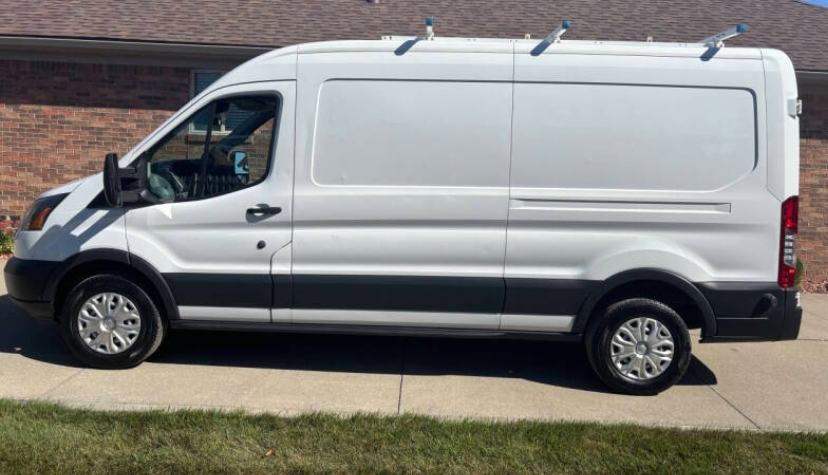
The Sixth Generation: The American Leap and Diesel Refinement (2014–Present) – Global Transit
The most profound shift occurred in 2014 when Ford retired the European-exclusive Mark V and introduced a single global platform—the Transit we know today—which replaced the outgoing E-Series in North America. This marked the unification of Ford’s light commercial efforts across the globe.
Key Innovations:
- Platform Unification: One global design replacing distinct regional models.
- Power Trains: Introduction of Ford’s EcoBlue diesel engines, focusing intensely on fuel economy and meeting stringent Euro 6/7 emissions standards.
- Technology: Heavy integration of connectivity, driver assistance systems (ADAS), and semi-autonomous features.
Model/Trim Evolution within the Global Transit: The division shifted from size/chassis to specification and function:
- Transit (Standard): The core offering, covering most LWB/H3 requirements.
- Transit Custom (Launched later, based on a slightly smaller platform): Became the dominant choice for medium-sized operations, replacing the smaller end of the previous Transit range.
- Custom Trims: Zetec, Trend, Titanium (the highest passenger-focused spec).
- Transit Connect: Remained the smallest offering, catering to urban logistics.
- Transit Chassis Cab/Welfare Van: Specialized variants designed for easy conversion.
- Sport/MS-RT (Performance/Style): High-specification versions, often with styling packages sourced from performance partners (like MS-RT), offering powerful engines and distinctive aesthetics.
- E-Transit (2022 onwards): The fully electric version, representing the next frontier in the Transit’s evolution, offering similar body styles but powered entirely by battery.
Legacy and Impact
From its humble beginnings in Britain to its current status as a globally recognized platform, the Ford Transit has always prioritized one thing: utility. It has successfully navigated oil crises, technological revolutions, and seismic shifts in trade requirements by consistently offering a robust, adaptable foundation.
The introduction of the Transit Connect (2002) acknowledged the need for smaller, city-friendly vans, while the full Transit Custom (2012) filled the crucial segment between the Connect and the full-size RWD Transit.
Today, the Transit family—encompassing the full-size Transit, the mid-size Custom, and the compact Connect—offers payloads from under a ton up to nearly 2.5 tons, powered by everything from efficient diesel to silent electricity. This evolution, spanning over five decades and five distinct chassis generations (plus numerous facelifts), confirms the Transit’s status not just as a workhorse, but as the benchmark against which all other light commercial vehicles are measured. It remains, quite simply, the backbone of modern mobile industry.