Toyota Mark II: A Legacy of Japanese Luxury and Engineering Evolution
When it comes to Japanese automotive culture, the Toyota Mark II stands as a unique icon. Introduced in 1971, this large luxury sedan carved a niche in Toyota’s lineup as a more opulent and spacious alternative to the popular Crown series. Spanning over four decades of production (1971–2014), the Mark II evolved through seven distinct generations, each marked by advancements in engineering, performance, and luxury. While the rise of Lexus in 1989 shifted Toyota’s luxury focus, the Mark II remained a homegrown favorite in Japan, blending refined comfort with the brand’s trademark reliability. This article explores its history, models, and enduring legacy, as well as its eventual place in automotive nostalgia.
A Brief History: From 1970s Executive to 2010s Technosleek
The Toyota Mark II debuted in 1971 as a full-size, rear-wheel-drive sedan designed to compete with Japanese rivals like the Nissan President and Honda’s S600. Unlike Toyota’s economy-oriented Camry or the more upscale Crown, the Mark II targeted professionals and business leaders seeking spacious interiors and premium amenities. Its name, inspired by the British royal titles (though unrelated), emphasized its aspirational status.
The Mark II’s early years were defined by traditional Japanese engineering. The first generation (1971–1977, model years 1972–1978) featured a 2.0L inline-six engine, basic trims, and a focus on practicality. However, the 1970s oil crisis led Toyota to scale back engine sizes and emphasize fuel efficiency, a trend that would shape the model’s evolution.
The 1980s brought refinement. The second generation (1978–1983, model years 1979–1984) introduced the 2000 GT variant, a sportier model with optional 6-speed manual transmission and a 2.0L engine. Trim levels like VX and VX-G added leather upholstery, power accessories, and a more polished aesthetic. The third generation (1984–1989, model years 1985–1990) marked a turning point: a 3.0L V6 engine debuted, offering smoother performance and modernizing the sedan’s appeal.
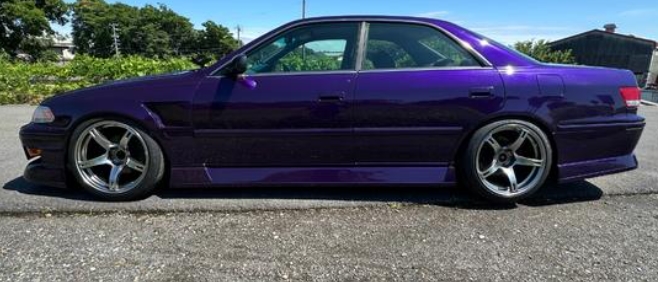
The 1990s saw the Mark II ascend as a luxury leader. The fourth generation (1989–1996, model years 1990–1997) offered a comprehensive overhaul, with a sturdier frame, advanced safety features, and a focus on driver comfort. The 1990s also introduced the “130” model (1997–2003, model years 1998–2004), which became the first to feature a 4.0L V8 engine in the G-Meister trim—a powerhouse for a Toyota of the time.
By the 2000s, Toyota had embraced globalization, and the fifth generation (2003–2008, model years 2004–2009) leaned into modernity with cleaner lines, hybrid technology (in the 2500G variant), and advanced tech like navigation systems. The final 150 series (2009–2014, model years 2010–2015) offered the 3.5L V6 and a luxury-focused approach, though it struggled against shifting market trends toward SUVs and crossovers. The Mark II was quietly retired in 2014, ending a 43-year chapter in Toyota’s history.
.
NO MORE dead batteries with this:

.
Models and Trim Levels: A Symphony of Options
Each generation of the Mark II expanded its lineup to cater to diverse preferences. Here’s a breakdown of its most notable trims:
- First Generation (1971–1977)
- Base Mark II: A practical sedan with a 2.0L inline-six and manual transmission.
- 2000 GT: Sportier variant with a 2.0L engine, 6-speed manual, and upgraded suspension.
- VX/Touring: Luxury-focused trims featuring leather seats, power windows, and a more refined interior.
- Second Generation (1978–1983)
- VX-VX-G: Added rear-wheel steering for better maneuverability.
- VZ-R: Performance-oriented model with a stiffer suspension and alloy wheels.
- Third Generation (1984–1989)
- VX/VX-G: Equipped with the 3.0L V6, power-assisted brakes, and heated seats.
- VZ-W: A wider variant with enhanced aerodynamics and all-wheel steering.
- Fourth Generation (1989–1996)
- 2000/3000 G: 2.0L and 3.0L V6 options, with a focus on comfort and tech.
- 130 Series (1997–2003)
- 2400/3000/4000 G-Meister: A 4.0L V8 in the G-Meister trim produced 270 horsepower, making it one of Toyota’s most powerful sedans.
- 5000 G-Meister: A top-tier, hand-built model with a 4.0L engine and premium amenities.
- 140 Series (2004–2008)
- 2000/2500/3000/5000 G-Meister: Offered a 2.5L, 3.0L V6, and 4.0L V8 engines.
- 2500G Hybrid: A pioneering hybrid model, combining a 2.5L engine with an electric motor for improved fuel efficiency.
- 150 Series (2009–2014)
- 2500G/3500G: Equipped with 2.5L and 3.5L V6 engines, emphasizing comfort and tech.
- Mark X: A high-performance subseries with a 3.0L V6 turbo (280 hp) and a 4.0L supercharged V6 (330 hp) in the Mark X Zio.
The Mark X variants, introduced in the late 1990s and refined in the 2000s, became cult favorites for enthusiasts, blending luxury with spirited driving dynamics.
Performance and Cultural Impact
The Mark II was never just a bland executive sedan. Toyota’s engineers pushed boundaries:
- The Mark X Zio (2006–2014) featured a 4.0L supercharged V6 and a 6-speed automatic, making it a rare Japanese performance luxury sedan.
- Racing heritage: Modified Mark IIs competed in Japan’s drift scene, with the 4.0L V8 engine powering drift builds on the Touge (mountain roads).
Despite its focus on comfort, the Mark II earned a reputation for reliability, a hallmark of Toyota’s engineering. Its spacious interiors also made it a favorite for families and business travelers, while the G-Meister trim offered a taste of automotive grandeur.
Future Outlook and Legacy
By the early 2010s, Japanese consumers increasingly favored SUVs and compact crossovers, leading to the Mark II’s discontinuation. Toyota shifted its luxury focus to Lexus, but the Mark II’s legacy persists in Japan. Many 130 and 140 series models remain on roads, cherished for their durability and unique blend of power and comfort. The Mark X and hybrid variants, though rare, are now collectibles for enthusiasts.
Today, the Mark II serves as a reminder of Toyota’s adaptability and innovation. While it may no longer be in production, its evolution—from classic 1970s sedans to futuristic 2010s tech—reflects Toyota’s journey as a global automotive leader. For collectors and fans, the Mark II remains a symbol of Japanese automotive pride, a machine that bridged tradition and modernity without ever losing its essence.
In Retrospect
The Toyota Mark II’s 43-year saga is a testament to Toyota’s ability to balance luxury, performance, and reliability. As the automotive world embraces electric vehicles and autonomous tech, the Mark II stands as a timeless artifact of a bygone era when sedans ruled the road—and Toyota dared to dream big.