The Unsung Hero of the Outback: The Evolution of the Subaru Baja
In the automotive landscape, few vehicles possess the sheer, unadulterated audacity of the Subaru Baja. It emerged not from a calculated market analysis, but from a spark of unconventional thinking, a desire to blend the rugged practicality of a pickup truck with the agile handling and all-wheel-drive prowess that defined Subaru. For a brief but memorable period, the Baja carved a unique niche, a testament to the brand’s willingness to experiment and cater to a segment of drivers who yearned for something a little different. This is the story of the Subaru Baja, a vehicle that, while not a runaway sales success, has cemented its place in automotive history as a cult classic and a fascinating evolutionary footnote.
The Genesis of a Geopolitical Crossover (2003-2006)
The Subaru Baja was born from a desire to offer American consumers a taste of Subaru’s versatility, with a nod to the adventurous spirit often associated with its Outback models. While Subaru had enjoyed significant success with its Outback line, particularly the Outback Sport and the more rugged Outback wagon, the company recognized a gap in its lineup. They saw an opportunity to create a vehicle that could handle weekend adventures, haul gear, and still offer the comfortable, car-like ride that Subaru enthusiasts cherished. The concept was simple, yet daring: take the chassis and drivetrain of the Subaru Outback and graft a short, open-bed pickup truck bed onto the rear.
The decision to produce the Baja was influenced by a few key factors. Firstly, Subaru had developed a strong reputation for its Symmetrical All-Wheel Drive (SAWD) system, which provided confidence and capability in various weather conditions. Secondly, the growing popularity of SUVs and Crossovers suggested a market hungry for vehicles that could do it all. The Baja was positioned as a “sport utility vehicle with an open bed,” a bold claim that differentiated it from traditional, body-on-frame pickup trucks.
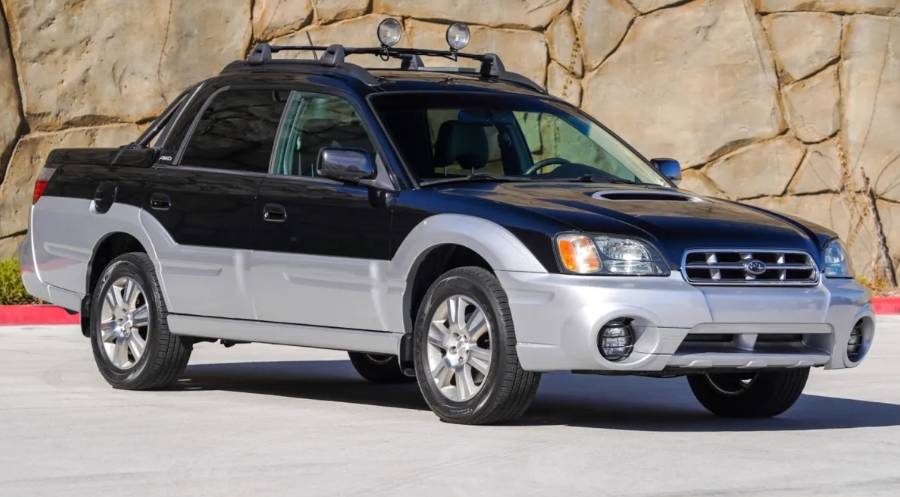
The Baja was officially launched for the 2003 model year, though its development and concept phase stretched back further. It shared its underpinnings with the second-generation Subaru Outback, meaning it inherited its independent suspension, comfortable ride, and renowned AWD system. The exterior design was undeniably polarizing. The front half was unmistakably Subaru, with the familiar grille, headlights, and hood. However, the transition to the rear was where the Baja truly made its statement. The distinctive “Sport-Utility Vehicle bed,” as Subaru termed it, was a defining feature, offering a more compact and integrated approach than a traditional truck bed.
Model Year Breakdown and Trim Levels:
The Subaru Baja’s production run was relatively short, spanning only from the 2003 to the 2006 model years. During this time, Subaru offered a focused range of models and trim levels, ensuring that buyers had clear choices without overwhelming the lineup.
.

.
2003 Model Year:
The inaugural year saw the Baja introduced in two primary configurations, differentiated by their powertrains:
Subaru Baja (Naturally Aspirated 2.5L): This was the base model, powered by Subaru’s familiar 2.5-liter, horizontally opposed (boxer) four-cylinder engine. This engine produced approximately 165 horsepower and 175 lb-ft of torque. While adequate for everyday driving, it offered modest performance for the vehicle’s size and purpose. This model came standard with Subaru’s Symmetrical All-Wheel Drive system and a four-speed automatic transmission. It was designed to appeal to a broader audience seeking the convenience of a small truck with Subaru’s renowned AWD.
Subaru Baja Turbo: As the name suggests, this model received a significant performance upgrade with the addition of a turbocharger to the 2.5-liter boxer engine. This boosted horsepower to around 210 and torque to approximately 235 lb-ft. The Turbo model was aimed at drivers seeking more spirited performance, especially for carrying heavier loads or for spirited driving on less forgiving terrain. It also came standard with SAWD and a four-speed automatic transmission.
Both the base and Turbo models for 2003 featured a practical interior, comfortable seating for four, and the signature Subaru AWD system. The exterior was characterized by its unique bed design, fender flares, and often, prominent roof rails, emphasizing its outdoor utility.
2004 Model Year:
The 2004 model year saw minor refinements and the introduction of a new trim designation that would become a staple for the Baja:
Subaru Baja (Naturally Aspirated 2.5L): This model continued with the same 2.5-liter engine and four-speed automatic transmission.
Subaru Baja Turbo: The Turbo model also carried over its powertrain.
The key evolution in 2004 was the introduction of the Subaru Baja Turbo S Edition. This wasn’t a completely different mechanical configuration but rather an enhanced version of the Turbo model, often featuring sportier styling cues, upgraded interior appointments, and sometimes, specific badging or unique color options. The S Edition was designed to further emphasize the performance capabilities and adventurous spirit of the Baja.
2005 Model Year:
The 2005 model year brought a significant update to the Baja’s powertrain, addressing some of the criticisms regarding the naturally aspirated engine’s performance.
Subaru Baja (2.5L with Automatic Transmission): The base model continued with the 2.5-liter engine, but Subaru made minor tweaks to its output and fuel efficiency.
Subaru Baja Turbo (5-Speed Manual Transmission Option): This was a pivotal year for enthusiasts. For the first time, the Turbo model became available with a five-speed manual transmission. This was a highly anticipated addition, allowing drivers to fully exploit the turbocharged engine’s power and torque, and adding a more engaging driving experience. The turbocharged engine output remained similar, around 210 horsepower.
Subaru Baja Turbo (Automatic Transmission): The four-speed automatic transmission remained an option for the Turbo model.
The 2005 model year also saw some minor cosmetic updates, and the Baja continued to leverage its unique bed design, which included a durable, bed-liner material and clever features like a fold-down tailgate.
2006 Model Year:
The final model year for the Subaru Baja saw the lineup streamlined for its swan song. The focus remained on the Turbo model, acknowledging its greater appeal.
Subaru Baja Turbo (5-Speed Manual Transmission): This remained the enthusiast’s choice, offering the full performance package.
Subaru Baja Turbo (4-Speed Automatic Transmission): The automatic transmission was still available for those who preferred convenience.
Subaru also introduced a special “Sand Edition” for the 2006 model year, further emphasizing the Baja’s outdoor, adventure-oriented capabilities. The Sand Edition often came with unique styling elements, such as dedicated badging, specialized tires, and often an exclusive color palette. While mechanically similar to other Turbo models, it was a final send-off designed to capture the imagination of adventurous buyers.
Key Features and Innovations:
Beyond its unique body style, the Subaru Baja incorporated several innovative features that supported its adventurous ethos:
Subaru’s Symmetrical All-Wheel Drive (SAWD): This was the cornerstone of the Baja’s capability. Unlike the part-time 4WD systems found in many trucks, Subaru’s SAWD was full-time, constantly distributing power to all four wheels, providing superior traction and stability in various conditions, from slippery roads to off-road trails.
The “Drop-Down Tailgate” and “Sport-Utility Bed”: The Baja’s bed, while not as capacious as a traditional pickup, was designed for practicality. The tailgate could be dropped down for easier loading, and it could also be secured in a halfway position to act as an extension of the bed floor, creating a flat surface for longer items. The bed was made from a durable, molded plastic material that was resistant to scratches and dents.
The “Sun Roof” (or “Moonroof”): Many Baja models came equipped with a unique, multi-panel “sun roof” that extended over the passenger cabin and the bed. This was a distinctive feature that further enhanced the open-air feel of the vehicle.
Integrated Bed Storage: The bed often featured integrated storage compartments, providing a secure place for smaller items.
Adjustable Ride Height (on some models): Some Baja models featured a slightly elevated ride height compared to the standard Outback, giving them a more commanding presence and improved ground clearance for off-road excursions.
“Gear Cage”: A clever accessory that could be mounted in the bed, allowing for vertical storage of items like surfboards, kayaks, or bicycles.
The Baja’s Unique Place in the Market:
The Subaru Baja occupied a peculiar space in the automotive market. It wasn’t a true compact pickup truck like a Ford Ranger or Toyota Tacoma, nor was it a full-size SUV. It was a crossover utility vehicle with a bed, a concept that, in hindsight, was perhaps too ahead of its time or simply too niche. Its target audience was likely the active, outdoorsy individual who needed the versatility of a truck bed but preferred the driving dynamics and fuel efficiency of a car-based platform.
Critics often pointed to the Baja’s limited payload and towing capacity compared to traditional trucks. The bed, while innovative, was smaller than what many truck buyers expected. Furthermore, the styling, while distinctive, was not universally loved.
Despite these challenges, the Baja cultivated a loyal following. Owners appreciated its unique blend of features, its distinctive personality, and its ability to handle a variety of tasks without compromising on Subaru’s core strengths. It was the perfect vehicle for weekend warriors, surfers, campers, and anyone who wanted a vehicle that could do more than just commute, but without the bulk and compromises of a full-blowntruck.
The End of an Era (2006):
By 2006, sales figures for the Subaru Baja had not reached the volume Subaru had hoped for. While it had built a dedicated fanbase, it failed to capture a significant portion of the broader automotive market. The crossover segment was evolving rapidly, and while the Baja was a pioneer, it ultimately proved to be a niche product. Production ceased after the 2006 model year, marking the end of a unique chapter in Subaru’s history.
The Legacy of the Baja:
Though short-lived, the Subaru Baja left an indelible mark. It stands as a testament to Subaru’s innovative spirit and its willingness to challenge conventional automotive design. Today, the Baja is a sought-after model among enthusiasts and collectors. Its distinctive looks, practical features, and the rarity of its existence make it a head-turner and a symbol of automotive individuality.
The evolution of the Subaru Baja was a journey from a bold concept to a limited production run, showcasing Subaru’s commitment to offering versatile and capable vehicles. While it may not have been a commercial blockbuster, the Baja carved out its own legend, proving that sometimes, the most memorable vehicles are the ones that dare to be different. It remains an unsung hero of the automotive outback, a unique fusion of car and truck that continues to evoke admiration for its unconventional genius.