The Mighty Mite: Charting the Evolution of the Subaru Mini Jumbo
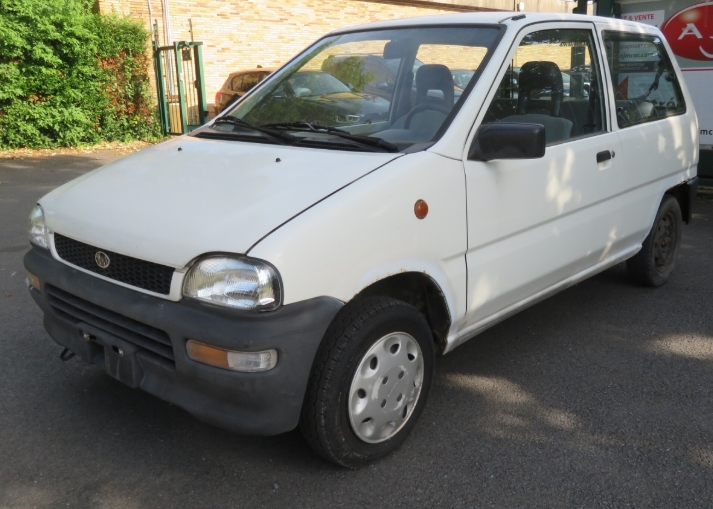
In the vast tapestry of automotive history, some threads are woven with thunderous V8s and sweeping bodywork, while others are spun from the humble, pragmatic need for simple, efficient transportation. The Subaru Mini Jumbo belongs firmly in the latter category. A diminutive warrior in the urban jungle, it was a car that offered reliability, economy, and a surprising dose of character in one of the smallest packages available on the international market. While its name might evoke a playful contradiction, its story is a fascinating chapter in the global expansion of Japan’s unique Kei car philosophy.
The Mini Jumbo was not a standalone creation but the export designation for specific generations of the Subaru Rex, a long-running nameplate in the Japanese domestic market (JDM). Born from post-war Japanese regulations designed to mobilize the population with affordable, tax-friendly vehicles, Kei cars were—and still are—governed by strict limits on physical size, engine displacement, and power. The tale of the Mini Jumbo is the story of how this hyper-specific Japanese formula was adapted, marketed, and sold to the world.
The First Generation Mini Jumbo (1981–1986): The Two-Cylinder Pioneer
The vehicle that would introduce the Mini Jumbo name to Europe and other export markets was the second-generation Subaru Rex (internal chassis code K24). Launched in Japan in 1981, it represented a significant modernization of its predecessor. Crucially, it marked Subaru’s shift from rear-engine, rear-wheel-drive layouts (a legacy of the Subaru 360) to a more conventional and space-efficient front-engine, front-wheel-drive configuration. This architectural change allowed for a remarkably spacious interior relative to its minuscule exterior footprint.
When exports began, primarily around 1982, the car was christened the Subaru Mini Jumbo in most of Europe, and the Subaru 600 or M60 in other regions. Its mission was clear: to compete with established city car titans like the Fiat Panda, Austin Mini Metro, and Citroën AX.
Technical Specifications and Engineering
At the heart of the first-generation Mini Jumbo was the Subaru EK23 engine. This was a 544cc, two-cylinder, four-stroke, water-cooled unit. While a two-cylinder engine might sound rudimentary, Subaru’s engineering gave it a unique character. With a 180-degree crankshaft, both pistons moved up and down together, resulting in a distinctive, slightly off-beat thrum that some owners affectionately compared to a scaled-down boxer engine.
Performance was, by modern standards, modest. The engine typically produced around 30-31 PS (horsepower), which was channelled through a four-speed manual transmission. While its 0-60 mph time was leisurely at best (often approaching 30 seconds), this missed the point of the car. In the city, its feather-light weight of around 550 kg (1,212 lbs) made it feel zippy and agile. It could dart through traffic, dive into impossibly small parking spaces, and deliver outstanding fuel economy, often exceeding 50 miles per gallon.
The suspension was fully independent on all four corners—a sophisticated feature for such a budget-oriented car—which contributed to a surprisingly composed ride quality over urban imperfections.
.

.
Models and Trim Levels (1981-1986)
Trim levels for the Mini Jumbo varied slightly by country, but they generally followed a simple hierarchy that emphasized value over luxury.
Mini Jumbo (Base/Standard): This was the entry-level, no-frills model. It was the purest expression of the car’s purpose. Features were sparse: vinyl seats, basic door cards, manual windows, and often no radio or even a passenger-side wing mirror as standard. It was transportation distilled to its essence.
Mini Jumbo DL (De Luxe): The most common trim level, the DL offered a more humane driving experience. It typically added cloth-upholstered seats, a rear window wiper/washer, a simple AM/FM radio, and sometimes intermittent wipers. These small additions made the car significantly more comfortable for daily use.
Mini Jumbo SDX (Super De Luxe): The top-tier model, the SDX, provided a touch of relative opulence. It built upon the DL spec with features that could include a tachometer, a digital clock, slightly plusher interior fabrics, and occasionally cosmetic enhancements like side trim strips or more decorative wheel covers.
A key offering that appeared during this generation was the optional panoramic sunroof. This large, sliding glass panel transformed the feel of the small cabin, making it feel airy and open. For a car of this class, it was a standout feature and a major selling point.
The Second Generation Mini Jumbo (1986–1992): The Three-Cylinder Revolution
In 1986, Subaru launched the third-generation Rex in Japan, and with it came a new and vastly improved Mini Jumbo for the world. This model (chassis codes KH1 and KH2) was a complete redesign. The sharp, boxy lines of its predecessor were replaced with a softer, more rounded, and contemporary aesthetic. But the most significant changes were mechanical.
This generation marked a pivotal moment in Subaru’s small-car engineering. The company was moving away from two-cylinder engines and embracing the smoother, more refined power delivery of three-cylinder units.
Technical Specifications: A Leap Forward
The defining upgrade for the second-generation Mini Jumbo was the new EN series engine. Initially displacing 547cc (EN05) and later expanded to 658cc (EN07) to comply with updated Kei regulations in Japan, this three-cylinder engine was a revelation. It was inherently better balanced than the old twin, dramatically reducing noise and vibration. Power for the naturally aspirated export models climbed to a more usable 36-42 PS.
However, the bigger story was the introduction of two signature Subaru technologies to its smallest offering:
Selectable 4WD: True to its brand identity, Subaru offered a part-time four-wheel-drive system on higher-trim Mini Jumbos. Activated by a simple button on the gearstick, it engaged the rear wheels, providing exceptional traction in snow, mud, or on slippery surfaces. A tiny, go-anywhere hatchback was a novel concept and gave the Mini Jumbo a unique advantage over its FWD-only rivals.
ECVT (Electronically Controlled Continuously Variable Transmission): This was a game-changer. While CVTs are common today, Subaru was a pioneer in their commercial application. The ECVT replaced traditional gears with a system of pulleys and a steel belt, providing seamless, step-less acceleration. In the city, it was incredibly smooth and easy to drive. On the open road, it kept the tiny engine in its most efficient power band. This advanced transmission set the Mini Jumbo apart from nearly every competitor in its class, which were still reliant on manual gearboxes or clunky, inefficient conventional automatics.
Models and Trim Levels (1986-1992)
The model range was expanded to reflect the new technological offerings, creating a more distinct hierarchy.
Mini Jumbo L/Standard: The base model continued, now equipped with the three-cylinder engine and a five-speed manual gearbox (a welcome upgrade from the previous four-speed). It remained a spartan affair, aimed at the most budget-conscious buyers.
Mini Jumbo DL: As before, this was the volume seller. It included better interior appointments and made the ECVT transmission available as an option, which proved highly popular.
Mini Jumbo GL/SDX: The top-specification models showcased the car’s full potential. These trims often came with the ECVT as standard and were the primary recipients of the 4WD system. They also featured more comfortable seating, full carpeting, color-coded bumpers, and sometimes alloy wheels and a sunroof, making them surprisingly well-equipped micro-cars.
It is important to note that the high-performance, supercharged variants of the JDM Rex were not officially offered under the Mini Jumbo nameplate. These powerful versions, producing over 60 PS, were reserved for Japan, as Subaru positioned the Mini Jumbo purely as an economy car in export markets.
The End of the Line and Lasting Legacy
By the early 1990s, the automotive landscape was changing. Stricter safety and emissions regulations in Europe were making it increasingly difficult and expensive for cars based on older, smaller platforms like the Mini Jumbo to remain compliant. The cost of engineering features like side-impact protection and airbags into such a tiny chassis was prohibitive.
In 1992, Subaru ceased production of this generation of the Rex/Mini Jumbo and replaced it with an entirely new model: the Subaru Vivio. The Vivio was designed from the ground up to be a more global Kei car, with improved safety, refinement, and a four-cylinder engine. With its arrival, the Mini Jumbo name was officially retired.
Today, the Subaru Mini Jumbo is a rare sight on the roads. Its low-cost, disposable nature meant that few survived the ravages of time, rust, and daily use. Yet, its legacy endures. It stands as a testament to the brilliance of Kei car design—maximum utility from a minimum footprint. It introduced a generation of drivers outside Japan to Subaru’s innovative spirit through technologies like 4WD and ECVT in an accessible package.
For those who remember it, the Mini Jumbo was more than just a small car. It was a plucky, honest, and endlessly practical machine that punched well above its weight. It was a mighty mite that proved, with clever engineering and a clear sense of purpose, that even the smallest of packages can contain a very big heart.