More Than a Badge: The Story of the Subaru Trezia
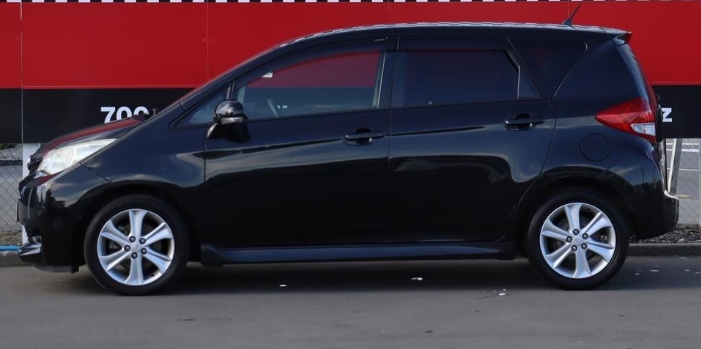
In the extensive and storied history of Subaru, a brand synonymous with boxer engines, Symmetrical All-Wheel Drive, and rally-bred performance, the Trezia stands out as a curious and pragmatic outlier. Produced for a relatively short period, it represents a pivotal moment of strategic collaboration, filling a crucial gap in the manufacturer’s lineup. Though it lacked the brand’s signature powertrain, the Subaru Trezia was a well-executed compact multi-purpose vehicle (MPV) that served its purpose admirably, leaving behind a legacy of practicality and partnership.
The Genesis: A Partnership’s Progeny
The story of the Trezia begins not within Subaru’s own design studios, but through its strengthening alliance with Toyota Motor Corporation. After Toyota acquired a significant stake in Fuji Heavy Industries (Subaru’s parent company) in the late 2000s, opportunities for collaboration blossomed. Subaru had a clear need for a compact, fuel-efficient vehicle, particularly for the urban-centric Japanese and European markets, where space and economy were paramount. Developing a new platform from scratch would be a costly and time-consuming endeavor.
The solution was found in Toyota’s highly regarded product portfolio. The second-generation Toyota Ractis (NCP120 series), a cleverly designed compact MPV known for its cavernous interior and user-friendly features, provided the perfect foundation. Through a process known as badge engineering, Subaru adopted the Ractis, giving it a unique identity and the name “Trezia,” a portmanteau derived from the English word “treasure.”
The Subaru Trezia was officially launched in Japan on November 29, 2010, for the 2011 model year, with its European debut following at the Geneva Motor Show in 2011. Its core mission was to offer existing Subaru customers a smaller, more economical option and to attract new buyers who prioritized practicality over performance.
.

.
The Initial Offering (2010 – 2014)
From its inception, the Trezia was engineered for versatility. Its “one-motion” folding rear seats allowed the cargo area to be transformed into a vast, flat space with a single lever pull. A standout feature, particularly on higher-end models, was the enormous panoramic glass roof that created an airy, open-cabin feel, belying the car’s compact exterior dimensions.
Subaru differentiated the Trezia from its Toyota twin primarily through revised front-end styling, including a unique grille and bumper design that echoed the brand’s then-current design language. Throughout its first phase, the model offerings were tailored specifically to its target markets: Japan and Europe.
Japanese Domestic Market (JDM) Models:
In Japan, the Trezia was offered with two petrol engine choices and the crucial option of All-Wheel Drive, a feature that helped it align more closely with Subaru’s brand identity.
Engine & Drivetrain:
1.3-liter 1NR-FE inline-four: Producing approximately 95 horsepower, this engine was paired exclusively with Front-Wheel Drive (FWD) and a Super CVT-i (Continuously Variable Transmission). Model code: NSP120X.
1.5-liter 1NZ-FE inline-four: This more powerful option delivered around 109 horsepower and was available in both FWD and AWD configurations, always mated to the Super CVT-i. Model codes: NCP120X (FWD) and NCP125X (AWD).
It is important to note that the AWD system in the Trezia was a Toyota-derived on-demand system, not Subaru’s signature full-time Symmetrical All-Wheel Drive.
Trim Levels (Japan):
i: The entry-level model, equipped with basic features like manual air conditioning and 15-inch steel wheels.
iL: A mid-range trim that added enhancements such as automatic climate control, upgraded interior fabric, and often alloy wheels.
iS: The “sport” trim, available only on 1.5-liter models. It featured 16-inch alloy wheels, paddle shifters for the CVT, a leather-wrapped steering wheel, and sportier interior accents.
Type Euro: This was the most distinctive and enthusiast-oriented trim. Available exclusively with the 1.5-liter engine, the Type Euro was tuned for a more dynamic driving experience, featuring a stiffer suspension setup, unique front and rear bumpers, and exclusive 16-inch wheels.
European Market Models:
For Europe, the powertrain lineup was adjusted to meet local emissions regulations and consumer preferences, notably with the inclusion of a diesel engine. The AWD option was not offered.
Engine & Drivetrain:
1.33-liter 1NR-FE petrol inline-four: Functionally similar to the Japanese 1.3L engine.
1.4-liter 1ND-TV D-4D turbodiesel inline-four: A key offering for the European market, this engine provided excellent torque and fuel economy, making it a popular choice.
Trim Levels (Europe):
Trim designations varied by country but generally followed a familiar pattern. Base models were sparsely equipped, while mid and high-tier trims added features like alloy wheels, fog lights, the panoramic glass roof, automatic climate control, and a touchscreen infotainment system.
The Mid-Life Facelift (2014 – 2016)
In May 2014, the Subaru Trezia received a mid-cycle refresh to keep it competitive and align its aesthetics more closely with Subaru’s evolving corporate face. The most significant change was a redesigned front grille. It adopted a more prominent hexagonal shape, bisected by a chrome “wing,” which was a signature element of Subaru models like the WRX and Legacy of the era. This update gave the Trezia a distinctly more Subaru-like appearance.
Beyond cosmetics, the facelift introduced technical improvements. In Japan, the 1.3-liter engine was updated to the more efficient 1NR-FKE version, which incorporated advanced fuel-saving technologies. Interior materials and trim options were also refreshed, and new safety features, including Vehicle Dynamics Control (VDC), became standard across more of the range. The trim structure largely remained the same, continuing to offer a practical base model, a well-equipped mid-range, and the sporty Type Euro.
End of Production and Legacy
The Subaru Trezia’s production run concluded in 2016. Its discontinuation was not due to a lack of success but was a direct result of Toyota ceasing production of the Ractis, which was replaced by the Toyota Roomy and Tank models in Japan. Subaru chose not to receive a rebadged version of these successors.
By this time, Subaru’s own product strategy had evolved. The launch of the Subaru Global Platform was imminent, a modular architecture that would underpin nearly all of its future models, from the Impreza to the Ascent. This platform gave Subaru the flexibility and cost-efficiency to develop its own competitive small vehicles, making badge-engineering partnerships like the Trezia less necessary.
Today, the Subaru Trezia is remembered as a well-built, incredibly practical, and reliable vehicle that fulfilled its strategic purpose perfectly. It provided Subaru with a vital presence in the compact MPV segment for six years, offering a gateway to the brand for customers who needed space and efficiency above all else. While it may not have had a boxer engine under its hood, the Trezia was a treasure in its own right—a testament to intelligent collaboration and a fascinating chapter in the evolution of Subaru.