The Global Sedan: A Comprehensive History of the Renault Fluence
In the landscape of modern automotive history, some vehicles become icons, while others serve as pragmatic, reliable workhorses that fulfill a specific market need before quietly bowing out. The Renault Fluence firmly belongs to the latter category. While it may not command the same name recognition as the Clio or Mégane hatchback, the Fluence was a crucial component of Renault’s global strategy in the early 21st century—a comfortable, spacious, and value-oriented C-segment sedan designed to conquer markets where the traditional three-box shape reigned supreme. Its evolution traces a story of platform sharing, regional adaptation, and a pioneering, if ultimately ill-fated, foray into electric mobility.
Genesis: From a Coupe Concept to a Korean Collaboration
The name “Fluence” first appeared in the Renault lexicon in 2004, attached to a stunning, futuristic 2+2 coupé concept car. With its flowing lines, expansive glass roof, and luxurious interior, it was a flight of design fancy that had virtually nothing in common with the production car that would later bear its name.
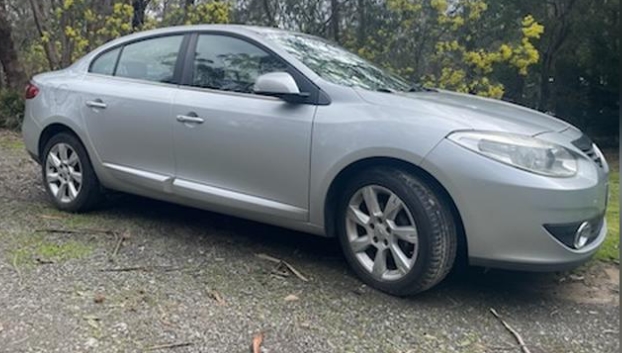
The true origin of the production Renault Fluence lies not in France, but in South Korea. It was a direct product of the Renault-Nissan Alliance’s strategic use of platform sharing. The vehicle was developed primarily as the third-generation Samsung SM3, built by Renault Samsung Motors. Renault then adapted this design for international markets, changing the grille, badges, and certain interior and exterior trim pieces to align it with its own brand identity.
Based on the robust Renault/Nissan C platform, which also underpinned the successful Renault Mégane III, the Fluence was engineered to be a more traditional and comfort-focused alternative to its hatchback sibling. While the Mégane III was aimed squarely at the competitive European market with its dynamic styling and handling, the Fluence was strategized for Eastern Europe, Latin America, the Middle East, and parts of Asia, where customer preference skewed heavily towards sedans offering generous rear passenger space and a large boot.
.

.
The Initial Launch: Phase I (2009–2012)
The Renault Fluence was officially unveiled to the public at the 2009 Frankfurt Motor Show, with production commencing shortly after at the Oyak-Renault plant in Bursa, Turkey—a key manufacturing hub for the model throughout its life.
Design and Positioning: The initial design was conservative and elegant. It avoided dramatic lines in favor of a clean, understated aesthetic aimed at broad appeal. Its key selling points were its impressive interior dimensions, particularly the class-leading rear legroom, and a cavernous 530-litre boot. Renault positioned it as a family car that delivered comfort and practicality above all else.
Engine and Drivetrain Options: The initial engine lineup was diverse to cater to different market demands and emissions regulations:
- Petrol: The range was typically anchored by a 1.6-litre 16-valve four-cylinder engine (K4M), producing around 110 horsepower, mated to either a 5-speed manual or a 4-speed automatic transmission. For markets demanding more power, a 2.0-litre 16-valve engine (M4R) was offered, producing approximately 140 horsepower. This engine was notably paired with a continuously variable transmission (CVT), branded “X-Tronic” by the Alliance, which prioritized smooth acceleration and fuel efficiency.
- Diesel: The cornerstone of the diesel offerings was Renault’s widely acclaimed 1.5-litre dCi (K9K) turbodiesel. This engine was available in several states of tune, ranging from 85 hp to a potent 110 hp. The more powerful versions were offered with a 6-speed manual gearbox and were lauded for their exceptional fuel economy and strong torque delivery, making them popular choices in Europe and India.
Trim Levels: Renault employed its familiar trim hierarchy, though the specific equipment in each level varied significantly by country. The typical structure was:
- Authentique: The entry-level model, often featuring basic amenities like manual air conditioning, a simple radio/CD player, 15-inch steel wheels, and essential safety features like ABS and front airbags.
- Expression: The mid-range volume seller. This trim typically added features like front fog lights, body-colored mirrors and door handles, an upgraded audio system with Bluetooth connectivity, and often automatic climate control as an option.
- Dynamique: A higher-spec, more stylish trim. Standard features often included 16-inch alloy wheels, automatic headlights and wipers, rear parking sensors, cruise control, and a leather-wrapped steering wheel.
- Privilège: The top-of-the-line luxury trim. This model came equipped with features like full leather upholstery, keyless entry and start (Renault Card), a premium Arkamys sound system, 17-inch alloy wheels, and sometimes a sunroof.
The Electric Pioneer: The Fluence Z.E. (2011–2014)
Perhaps the most significant chapter in the Fluence’s history was the launch of the Fluence Z.E. (Zero Emission) in 2011. It was one of the world’s first mass-produced, C-segment electric sedans and a central pillar of Renault’s early, ambitious Z.E. strategy.
To accommodate the 22 kWh lithium-ion battery pack behind the rear seats, the Fluence Z.E.’s chassis was stretched by 13 cm compared to its internal combustion engine counterpart. This resulted in an even longer vehicle but slightly compromised boot space. It was powered by a 70 kW (95 hp) synchronous electric motor, offering a modest NEDC-rated range of around 185 kilometres (115 miles).
The Fluence Z.E.’s most defining feature was its association with the now-defunct company “Better Place.” The car was designed to be compatible with Better Place’s innovative battery-swapping stations. The concept was to allow drivers to pull into a station and have an automated system replace their depleted battery with a fully charged one in under five minutes, eliminating range anxiety. While conceptually brilliant, the business model was capital-intensive and geographically limited. When Better Place declared bankruptcy in 2013, the Fluence Z.E.’s primary unique selling proposition vanished. Without the swapping infrastructure, it was just another early EV with limited range, and production ceased in 2014.
The Mid-Life Update: Phase II (2013–2016)
At the 2012 Istanbul Motor Show, Renault revealed the facelifted Fluence (often referred to as Phase II), which went on sale in early 2013. This update was primarily aesthetic, bringing the car in line with Renault’s new corporate design identity, spearheaded by chief designer Laurens van den Acker.
Key Changes:
- Exterior: The most prominent change was the new front fascia. The slim, horizontal grille was replaced by a bolder design featuring a large, vertically-oriented Renault diamond logo set against a gloss black background, flanked by chrome strips. The front bumper was restyled to incorporate LED daytime running lights, giving the car a more modern and assertive presence.
- Interior: The cabin received technological upgrades. Higher trim levels were now available with a digital instrument cluster and the Renault R-Link multimedia system, which featured a touchscreen interface, navigation, and app connectivity.
- Powertrain: The update introduced new engine options in certain markets. A new 1.6-litre petrol engine (H4M) producing 115 hp was introduced, paired with the X-Tronic CVT for improved efficiency. On the diesel side, the highly efficient 1.6-litre dCi 130 engine became available, offering a superb blend of performance and economy. The 1.5 dCi 110 was also made available with Renault’s 6-speed EDC (Efficient Dual Clutch) automatic transmission, providing faster and smoother shifts than the old 4-speed automatic.
The trim level structure remained largely the same, but the standard equipment on each was enhanced to keep the car competitive.
Regional Variations and Special Editions
A key part of the Fluence’s story is its global adaptation.
- South America (Argentina and Brazil): This region was a major market for the Fluence. Here, the 2.0-litre petrol engine was a popular choice. More significantly, Renault Sport developed a market-specific performance version: the Fluence GT. Launched in 2012, it was equipped with a 2.0-litre turbocharged engine (F4RT) producing 180 hp. Following the facelift, it was upgraded to the Fluence GT2, with power boosted to 190 hp, along with sport-tuned suspension, unique body styling, and a sport-themed interior. These models were highly regarded by local enthusiasts.
- South Korea: The car continued to be sold as the Samsung SM3. Interestingly, the SM3 often received technological updates before its Renault-badged twin and was also offered as an electric version, the SM3 Z.E., which outlived the Fluence Z.E. and received a significant battery upgrade later in its life.
- India: The Fluence was assembled locally and positioned as a premium D-segment contender. It was praised for its ride comfort, but strong competition and brand perception challenges limited its sales success.
Discontinuation and Legacy
By 2016, the C-segment sedan market in Europe had shrunk considerably, and the Fluence was showing its age. Renault decided to phase out the model in most of its key markets, including the main production site in Turkey. Its spiritual successor was the Renault Mégane Sedan (IV), a much more stylish and technologically advanced vehicle derived directly from the Mégane IV hatchback, unifying the branding and moving the offering upmarket.
Production of the Samsung SM3 continued in South Korea until 2020, marking the true end of the platform’s life.
The legacy of the Renault Fluence is that of a quiet achiever. It was a car born of pragmatism—a cost-effective solution to serve crucial global markets. It delivered on its promise of space, comfort, and value for hundreds of thousands of families. While it was never a leader in style or driving dynamics (the GT versions aside), it was a competent and reliable sedan. Its most enduring, though bittersweet, legacy is the Fluence Z.E. It stands as a testament to Renault’s early and bold commitment to electrification, a pioneering effort whose fate was inextricably linked to the rise and fall of a third-party technology partner. The Fluence, in all its forms, was the right car, for the right markets, at the right time.