The Evolution of The Talbot 1510: A Forgotten Chapter in European Motoring History
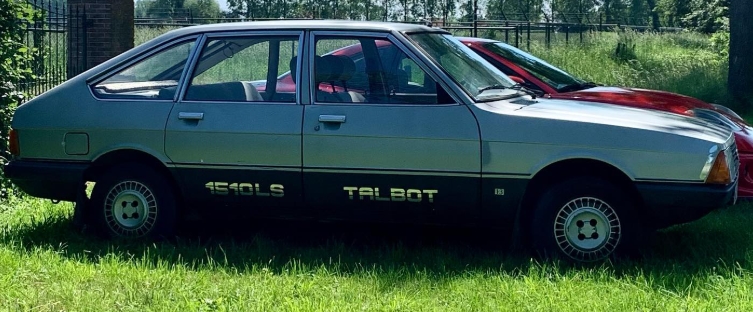
The Talbot 1510 is one of those vehicles that, while not necessarily a household name today, played an important role in the European automotive landscape during the early 1980s. Produced by PSA Peugeot Citroën under the Talbot brand, the 1510 was a mid-size family car intended to replace the aging Chrysler Alpine and continue Talbot’s presence in the competitive D-segment market. It combined French engineering with design roots from Chrysler Europe, serving as a transitional model during a turbulent period in the company’s history.
This article explores the Talbot 1510’s background, years of production, technical specifications, trim levels, and place in automotive history—while also examining its eventual fate and legacy.
Historical Background
To understand the Talbot 1510, one must first look at the circumstances of its birth. The Talbot brand itself has a long and complicated history, dating back to the early 20th century. Originally a British marque, Talbot became part of the Rootes Group, which was later acquired by Chrysler Corporation. In the 1970s, Chrysler Europe was struggling financially, and in 1978 PSA Peugeot Citroën purchased Chrysler’s European operations, gaining the Simca and Talbot names.
The Chrysler Alpine, launched in 1975, had been one of Chrysler Europe’s key models—marketed as the Simca 1307/1308 in France and some other markets. It was a five-door hatchback aimed at the family car market, with features such as front-wheel drive and modern styling for its time. When PSA took over, they decided to rebrand Chrysler Europe’s models under the Talbot name. The Alpine was updated and renamed the Talbot 1510 in 1979.
.

.
Years Produced
The Talbot 1510 was produced from 1979 to 1983. It was essentially a facelifted and rebadged version of the Chrysler Alpine, with minor styling changes and updated trim levels, but underneath it retained much of the mechanical layout and body structure of its predecessor.
Production took place primarily in Poissy, France, alongside other Talbot models. The 1510 was sold in several European markets, with the highest concentration of sales in France, the UK, and certain export territories.
Design and Styling
Externally, the Talbot 1510 was very similar to the Alpine, but PSA implemented subtle changes to give it a fresher look and align it with Talbot’s brand image. The most notable visual differences included updated grille designs, revised badging, and minor trim alterations. The body style remained a five-door hatchback—a relatively forward-thinking format for the time, offering practicality and versatility for family buyers.
Inside, the 1510 featured upgraded interior materials compared to the late Alpine models, and PSA sought to improve perceived quality. Depending on the trim level, buyers could get velour upholstery, improved dashboard layouts, and better sound insulation.
Mechanical Specifications
Mechanically, the Talbot 1510 carried over the tried-and-tested front-wheel drive layout and transverse engine configuration from the Alpine. Engine choices varied slightly depending on market, but generally included:
- 1.3-litre petrol inline-four (Simca-derived)
- 1.4-litre petrol inline-four
- 1.6-litre petrol inline-four
- 1.6-litre with twin carburettors in higher-spec trims
- In some markets, a diesel option was introduced toward the end of production.
Transmissions were typically 4-speed manual gearboxes, with a 5-speed manual offered later in certain trims. An automatic transmission was available in limited markets.
Suspension was independent on all four wheels, with MacPherson struts at the front and a torsion bar setup at the rear—a layout that provided a comfortable ride and was considered advanced compared to some competitors at the time.
Models and Trim Levels
The Talbot 1510 was offered in several trim levels, which varied slightly by market but generally included:
- LS – The base model, with relatively modest equipment. Cloth seats, basic instrumentation, and minimal chrome trim characterized this variant. Engine options generally started with the 1.3-litre.
- GL – Mid-range specification, offering improved interior materials, additional exterior trim, and more standard convenience features such as a rear wiper and better sound system.
- S – A sportier trim, typically equipped with the 1.6-litre twin-carburettor engine, upgraded suspension tuning, and sport-oriented interior features such as bucket seats and additional instrumentation.
- SX – The top-of-the-range model, with luxury-oriented features. Standard equipment could include velour upholstery, metallic paint, alloy wheels, electric front windows, and more elaborate instrumentation. The SX often came with the 1.6-litre engine and could be paired with a 5-speed manual gearbox.
In some markets, PSA offered special editions or slightly different naming conventions to suit local tastes, but these four trims formed the backbone of the 1510 lineup.
Market Position and Competitors
The early 1980s European mid-size family car segment was fiercely competitive. Rivals included:
- Ford Cortina (and later Sierra)
- Opel Ascona
- Volkswagen Passat
- Renault 18
- Peugeot 305/505 (ironically from PSA’s own stable)
The Talbot 1510’s hatchback layout was a strong selling point, offering more practicality than the traditional saloon designs still popular at the time. However, PSA’s decision to maintain two separate brands (Peugeot and Talbot) in the same segment led to internal competition, and the 1510 often found itself overshadowed by the Peugeot 505’s more modern image and stronger dealer network.
Sales Performance
Initial sales of the Talbot 1510 were reasonably healthy, particularly in France where the Talbot brand still carried recognition from the Simca era. However, by the early 1980s, sales began to decline. Several factors contributed to this:
- Brand perception: Talbot was struggling to establish a clear identity under PSA ownership, and many buyers gravitated toward Peugeot or Citroën models.
- Aging design: While the Alpine’s hatchback layout had been innovative in 1975, by 1982 it was less distinctive, and competitors were offering fresher styling and more advanced technology.
- Economic conditions: The early 1980s recession in Europe hit car sales generally, and Talbot lacked the marketing resources of larger rivals.
End of Production and Successor
By 1983, PSA decided to phase out the Talbot 1510 in favor of newer designs. The Talbot Solara, introduced in 1980 as a saloon version of the Alpine/1510, continued in production for a short time afterward. Ultimately, PSA shifted focus away from Talbot passenger cars, and by the mid-1980s the brand was used mainly for commercial vehicles in most markets.
The Peugeot 405 and similar models effectively replaced Talbot’s position in the mid-size family car segment.
Legacy
The Talbot 1510 today is a rare sight on European roads. Its short production run and the gradual disappearance of the Talbot brand mean that enthusiasts and collectors are the primary custodians of surviving examples. In classic car circles, the 1510 is often appreciated for its comfortable ride, spacious hatchback layout, and its role as a bridge between Chrysler Europe and PSA’s French dominance.
From a historical perspective, the 1510 is notable as one of the last vehicles to carry the Talbot name in a mass-market passenger car context. It represents an era of consolidation in the European car industry, when long-established brands were absorbed into larger groups.
Technical Data Summary (Representative for the 1.6 SX)
- Engine: 1.6-litre, inline-four, twin carburetor
- Power output: Approximately 90 horsepower
- Transmission: 5-speed manual
- Drive: Front-wheel drive
- Suspension: Independent front and rear
- Body style: 5-door hatchback
- Dimensions: Length ~4.29 m, Width ~1.73 m, Height ~1.43 m
- Kerb weight: ~1050 kg
- Top speed: Around 170 km/h (depending on engine)
- Fuel consumption: Approximately 30–35 mpg (imperial) depending on driving conditions
Future Outlook and Collectibility
Given the Talbot 1510’s scarcity today, surviving examples are increasingly interesting to collectors of obscure European cars. Restoration can be challenging due to limited parts availability, but mechanical components from the Simca/Chrysler Alpine family are often interchangeable, and some parts can be sourced from Peugeot-Citroën suppliers.
The Talbot brand itself is unlikely to be revived by PSA (now part of Stellantis). Industry consolidation has moved toward reducing brand portfolios, and Talbot’s identity is not as strong as Peugeot, Citroën, or DS Automobiles. However, for classic enthusiasts, the 1510 represents a slice of automotive history that captures the transitional moment from Chrysler Europe to PSA dominance.
The Talbot 1510 was never a blockbuster sales success, but it occupies a unique niche in European automotive history. Produced from 1979 to 1983, offered in LS, GL, S, and SX trims, and powered by a range of Simca-derived inline-four engines, it carried forward the Alpine’s innovative hatchback design into the PSA era. Its story is one of corporate change, market challenges, and the gradual fading of a once-proud marque.
Today, the 1510 stands as a reminder of a time when European carmakers were experimenting with new body styles, consolidating brands, and competing in a rapidly evolving marketplace. For those who appreciate the quirks and charms of lesser-known classics, the Talbot 1510 is a worthy subject of interest—a car that bridged two corporate worlds and left a quiet but enduring mark on motoring history.