The Evolution of The SEAT Tarraco
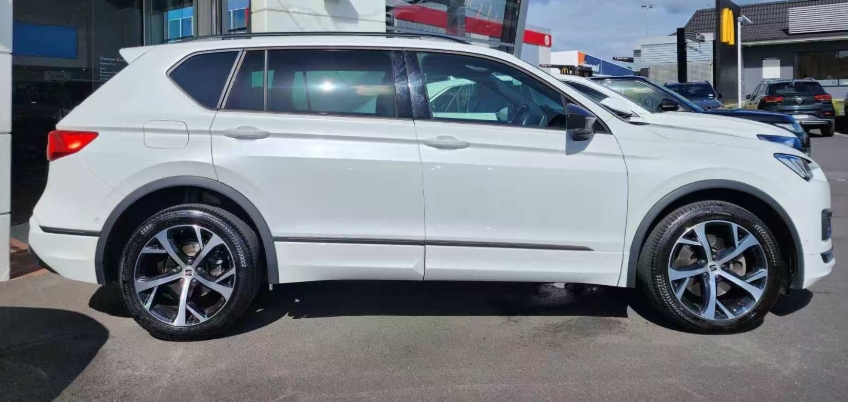
The SEAT Tarraco is a mid-size crossover SUV produced by Spanish automaker SEAT, part of the Volkswagen Group. Introduced in 2018, the Tarraco represents SEAT’s entry into the seven-seat SUV segment, offering a blend of practicality, style, and Volkswagen Group engineering. Positioned above the smaller SEAT Ateca and Arona in the brand’s SUV lineup, the Tarraco has become a key model in SEAT’s strategy to expand its global presence.
Brief History and Development
The SEAT Tarraco was officially unveiled on 18 September 2018 in Tarragona, Spain — the city that inspired its name. The naming followed SEAT’s tradition of naming cars after Spanish locations, chosen via a public vote campaign called “#SEATseekingName.” This campaign received over 140,000 suggestions, with “Tarraco” being the final choice.
Production of the Tarraco began in late 2018, with the model year 2019 marking its market debut. Unlike most SEAT models, which are built in Spain, the Tarraco is manufactured at the Volkswagen plant in Wolfsburg, Germany. This is the same facility that produces the Volkswagen Tiguan Allspace, with which the Tarraco shares the Volkswagen Group MQB A2 platform.
The Tarraco was developed as part of SEAT’s broader SUV offensive, joining the Ateca and Arona to meet the global demand for sport utility vehicles. With up to seven seats, the Tarraco became SEAT’s largest and most versatile vehicle, aimed at families and customers seeking a spacious yet stylish SUV.
.
THIS could come in handy for your auto garage (and everywhere else!):

.
Production Years
- Production start: Late 2018
- Market launch: 2019 model year
- Status: As of 2024, the SEAT Tarraco remains in production, with ongoing updates and special editions to maintain competitiveness.
Design and Features
Exterior Design
The Tarraco introduced a new design language for SEAT, featuring a larger, upright grille, sharp full LED headlights, and a distinctive rear light bar. This aesthetic direction has influenced subsequent SEAT models. The SUV’s dimensions place it firmly in the D-SUV segment, with a length of approximately 4.73 metres, width of 1.84 metres, and height of around 1.66 metres.
Interior and Practicality
Inside, the Tarraco offers a flexible seating arrangement, available in five- or seven-seat configurations. The interior quality reflects its Volkswagen Group roots, with premium materials, a digital cockpit, and advanced infotainment systems. Boot space is generous, ranging from around 230 litres with all seven seats in use to over 1,775 litres with the second and third rows folded.
Trim Levels and Models
Since its launch, SEAT has offered the Tarraco in multiple trim levels, with variations depending on the market. The trim lines generally follow SEAT’s standard naming convention, though some trims are market-specific.
Main Trim Levels (Europe)
- SE
- Entry-level trim (UK and some other markets)
- Standard features include alloy wheels, LED headlights, an 8-inch touchscreen, and basic driver assistance systems.
- SE Technology
- Adds navigation, upgraded infotainment, and additional connectivity features.
- Style
- Mid-level trim in continental European markets.
- Features include larger alloy wheels, enhanced interior materials, and more driver aids.
- Xcellence
- Premium-oriented trim with chrome exterior details, larger wheels, ambient lighting, and advanced safety systems.
- Often includes leather upholstery, adaptive cruise control, and a larger digital instrument cluster.
- FR (Formula Racing)
- Sport-oriented trim launched in 2020.
- Features sportier exterior styling, dynamic chassis control (in some versions), and unique interior finishes.
- FR Sport is an even higher specification with additional luxury features.
- Xcellence Lux / FR Sport (market dependent)
- Range-topping trims with maximum equipment levels, including panoramic sunroof, upgraded audio systems, and advanced driver assistance.
Powertrains
The SEAT Tarraco has been offered with a range of petrol (TSI) and diesel (TDI) engines, as well as a plug-in hybrid variant (e-HYBRID), depending on the market.
Petrol Engines
- 1.5 TSI – 150 PS (110 kW), available with 6-speed manual or 7-speed DSG automatic, front-wheel drive.
- 2.0 TSI – 190 PS (140 kW), 4Drive all-wheel drive, DSG automatic.
Diesel Engines
- 2.0 TDI – Offered in 150 PS (110 kW) and 200 PS (147 kW) versions, with manual or DSG transmission, and FWD or 4Drive AWD.
Plug-in Hybrid (e-HYBRID)
- Introduced in 2021.
- Combines a 1.4 TSI petrol engine with an electric motor for a total output of 245 PS (180 kW).
- 13 kWh battery offers an electric-only range of around 48 km (WLTP).
- DSG automatic transmission, front-wheel drive.
Technology and Safety
The Tarraco offers an array of advanced technology, including:
- Full LED lighting as standard.
- Digital Cockpit with a 10.25-inch display.
- Infotainment systems ranging from 8.25-inch to 9.2-inch touchscreens.
- Wireless Apple CarPlay and Android Auto.
- Adaptive Cruise Control, Lane Assist, and Blind Spot Detection.
- Emergency Assist and Traffic Sign Recognition.
- Park Assist with 360-degree camera (on higher trims).
The model has been awarded a 5-star Euro NCAP safety rating, reflecting strong crash performance and active safety technologies.
Market Position and Competitors
The SEAT Tarraco competes in the mid-size SUV segment against models such as:
- Volkswagen Tiguan Allspace
- Škoda Kodiaq
- Kia Sorento
- Hyundai Santa Fe
- Peugeot 5008
- Nissan X-Trail
SEAT markets the Tarraco as a stylish and dynamic alternative, with sportier driving characteristics than some rivals, thanks in part to its chassis tuning.
Facelifts and Updates
- 2020: Introduction of FR trim with sportier styling.
- 2021: Launch of the plug-in hybrid e-HYBRID variant.
- 2022–2023: Infotainment updates, expanded connectivity features, and minor design tweaks to keep the model competitive.
As of 2024, the Tarraco has not undergone a full generational change but has received incremental updates to technology and styling.
Future Outlook
The SEAT Tarraco’s future is linked to the broader Volkswagen Group strategy for electrification. SEAT, alongside its performance-oriented sub-brand CUPRA, is expected to transition toward more electrified models in the coming years.
While SEAT has not officially confirmed the timeline for a second-generation Tarraco, industry observers anticipate a new version in the mid-2020s, potentially offering:
- Fully electric or hybrid-only powertrains.
- Further integration of advanced driver assistance features, possibly moving toward Level 3 autonomy.
- Updated styling in line with SEAT/CUPRA’s evolving design language.
Given the EU’s push for reduced emissions and the Volkswagen Group’s investment in the MEB electric platform, a future Tarraco could share more components with electric SUVs from Volkswagen and Škoda.
Sales Performance and Reception
Since its introduction, the Tarraco has generally been well received by critics and customers. Reviewers have praised:
- Spacious and flexible interior.
- Strong equipment levels for the price.
- Balanced ride and handling.
- Attractive styling.
Some criticisms have focused on:
- Pricing close to Volkswagen and Škoda equivalents.
- Conservative interior design compared to more adventurous rivals.
- Limited off-road ability despite available AWD.
Sales have been strongest in European markets, particularly Spain, Germany, and the UK.
Conclusion
The SEAT Tarraco represents a significant step for the Spanish brand, expanding its range into a more premium, spacious SUV segment while maintaining SEAT’s sporty DNA. Since its debut in 2018, it has combined Volkswagen Group engineering with SEAT’s distinctive design and value proposition.
With a broad range of trims — from the practical SE to the sporty FR and luxurious Xcellence Lux — and a diverse powertrain lineup including petrol, diesel, and plug-in hybrid options, the Tarraco caters to a wide audience. Its future will likely involve greater electrification, aligning with industry trends and customer demand.
As SEAT continues to evolve, the Tarraco stands as both a family flagship and a symbol of the brand’s ambitions in the competitive SUV market.