The SEAT 124 and SEAT 127 Evolution: Icons of Spain’s Automotive History
The Spanish automaker SEAT — originally an acronym for Sociedad Española de Automóviles de Turismo — has produced a wide variety of vehicles since its founding in 1950. Two models that stand out as milestones in the company’s history are the SEAT 124 and the SEAT 127. Produced during the late 1960s through the 1980s, these cars helped mobilize post-Franco Spain and became familiar sights on Iberian roads for decades. Both were based on Fiat designs but adapted for local needs, and each played a distinct role in SEAT’s development as the country’s dominant domestic carmaker.
Origins and Context
In the 1960s, Spain’s automotive industry was still in its infancy. The country’s market was heavily protected from foreign imports, and SEAT, established in partnership with Fiat, essentially had a monopoly on modern passenger cars for the Spanish public. The agreement with Fiat allowed SEAT to produce licensed versions of Italian models, which were often modified for Spain’s climate, roads, and consumer preferences.
The SEAT 124 and the SEAT 127 arrived at different times but shared the same underlying philosophy: affordable, practical, and robust family transport. The 124 was a larger, more conventional family saloon, while the 127 was a compact supermini designed for urban mobility.
.
THIS could come in handy for your auto garage (and everywhere else!):

.
The SEAT 124 (1968–1980)
Introduction
The SEAT 124 was introduced in Spain in 1968 as a licensed copy of the Fiat 124, which had been named European Car of the Year in 1967. Built at SEAT’s Zona Franca plant in Barcelona, the 124 was aimed at middle-class families and professionals who wanted a modern, comfortable, and relatively spacious car.
Design and Specifications
The SEAT 124 was a rear-wheel-drive saloon with a front-mounted four-cylinder engine. Early versions came with a 1.2-litre petrol engine producing around 60 horsepower. The car was praised for its roomy interior, good visibility, and relatively advanced suspension for the time, which combined comfort with predictable handling.
Production Years and Variants
The SEAT 124 was produced from 1968 to 1980 in several body styles and trim levels:
- 124 Berlina (Saloon) – The standard four-door family sedan.
- 124 Familiar (Station Wagon) – Offered extra cargo capacity for families and small businesses.
- 124 Sport Coupé – A stylish two-door coupé variant based on the Fiat 124 Sport, aimed at younger buyers and enthusiasts.
- 124 Sport Spider – Built in smaller numbers, this convertible was rare in Spain and mostly imported in kit form for assembly.
Trim Levels and Special Editions
Over its production life, the 124 was offered in various trim levels, often identified by engine displacement or letter suffixes:
- 124 – Base model with 1.2L engine.
- 124 D – Diesel variant introduced later in the run for commercial and taxi use (not common initially).
- 124 LS / LSE – Higher-spec versions with improved interior trim, more powerful engines (up to 1.6L), and cosmetic enhancements.
- 124 Especial – Featured visual upgrades and sometimes sportier tuning.
- 124 Pamplona – A special edition celebrating SEAT’s production milestones.
Motorsport and Cultural Impact
The SEAT 124 also enjoyed a notable motorsport career in Spain, particularly in rallying. Modified versions competed in domestic events, and the car’s durability made it a favorite among privateers. In civilian life, the 124 became emblematic of Spain’s economic growth in the late 1960s and 1970s, often used by middle-class families, government agencies, and taxi fleets.
The SEAT 127 (1972–1983)
Introduction
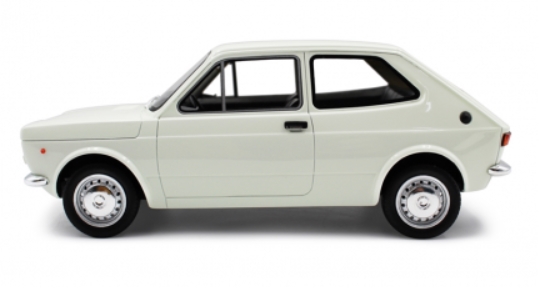
The SEAT 127 debuted in Spain in 1972, following the launch of the Fiat 127 in Italy in 1971. This was one of the first modern hatchbacks to be mass-produced in Spain, though early versions were initially sold as two-door saloons before the full hatchback configuration became standard.
The 127 was designed to be compact, economical, and easy to drive in crowded urban environments, while still offering space for a small family.
Design and Specifications
The SEAT 127 featured a front-engine, front-wheel-drive layout, a major technological shift for SEAT compared to the rear-wheel-drive 124. Engines ranged from 0.9L to 1.0L petrol units, producing between 45 and 52 horsepower. The lightweight body and efficient design made the 127 cheap to run and easy to maintain.
Production Years and Variants
The SEAT 127 was built from 1972 to 1983, with several notable updates:
- 127 2p (Two-door saloon) – Early body style, similar to a conventional small car.
- 127 3p (Three-door hatchback) – Became the signature body style, offering versatility in a small footprint.
- 127 4p (Four-door) – Less common, offered in certain export-oriented versions.
- 127 Furgoneta – Light van version for commercial use.
Trim Levels and Special Editions
Various trim levels and market-specific editions were offered:
- 127 Standard – Basic interior, minimal trim.
- 127 L / Lujo – Improved upholstery, decorative chrome, additional instrumentation.
- 127 Especial – More powerful 1.0L engine, sportier trim.
- 127 CL / GLS – Later high-spec versions with cloth seats, upgraded dashboard, and tinted glass.
- 127 “Samba” Edition – Special late-run model with bright colors and unique decals aimed at younger buyers.
Cultural Role
The SEAT 127 became one of the most popular cars in Spain during the 1970s, thanks to its low running costs and suitability for the increasingly crowded streets of Spanish cities. It was especially popular among young families and first-time buyers. For many Spaniards, the 127 was their first car.
Overlap and Market Position
Although both the SEAT 124 and 127 were sold concurrently for more than a decade, they targeted different segments. The 124 was a medium-sized family car, while the 127 was a compact urban runabout. Together, they covered a broad swath of the Spanish market, and both contributed significantly to SEAT’s dominance during the Fiat-licensing era.
End of Production and Legacy
SEAT 124
Production of the SEAT 124 ended in 1980, replaced in SEAT’s lineup by newer models such as the SEAT Ritmo (based on the Fiat Ritmo/Strada) and the SEAT 131 (for larger family car buyers). Nevertheless, many 124s remained in service for decades, especially in rural areas and as taxis.
SEAT 127
The SEAT 127 was phased out in 1983, succeeded by the SEAT Fura, itself a heavily updated 127. The Fura was one of the last models produced under the SEAT–Fiat agreement before SEAT’s partnership with Volkswagen began in the mid-1980s.
Collector Interest
Today, both the SEAT 124 and 127 enjoy a modest but growing following among classic car enthusiasts in Spain and beyond. The 124 Sport Coupé and Spider are particularly sought after for their style and rarity, while well-preserved 127s are appreciated for their charm and historical importance as everyday classics.
Restoration parts are still available thanks to the interchangeability of many components with Fiat models, though some trim items and body panels can be hard to source.
Future Outlook
While neither model is in production today, their legacy informs SEAT’s current approach to small and mid-sized cars. The company’s modern lineup — now part of the Volkswagen Group — includes vehicles like the SEAT Ibiza and SEAT León, which carry forward the themes of affordability, practicality, and style that defined the 124 and 127.
Looking ahead, the collector market for these cars is likely to grow slowly but steadily, particularly for rare variants and well-preserved examples. As more people develop an interest in classic vehicles from the 1970s and 1980s, the SEAT 124 and 127 will be recognized not only as transportation workhorses of their time but also as cultural touchstones representing Spain’s modernization.
The SEAT 124 and SEAT 127 were more than just cars: they were key players in Spain’s automotive and social transformation during the latter half of the 20th century. From the roomy, rear-wheel-drive 124 that carried families across the country, to the nimble, front-wheel-drive 127 that conquered crowded city streets, these models defined an era of mobility for millions of Spaniards.
In their day, they were admired for reliability, value, and suitability to the Spanish way of life. Today, they are remembered fondly by enthusiasts and historians as milestones in SEAT’s journey from a Fiat licensee to a modern European automaker. Their story is a reminder of how cars can shape — and be shaped by — the culture and economy in which they are created.