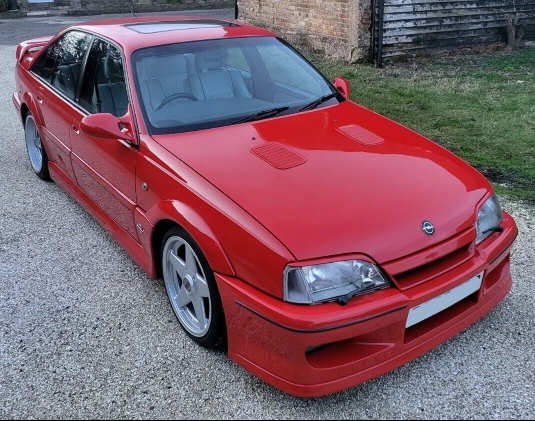
Evolution of The Isuzu Gemini
Of all the nameplates to emerge from the Japanese automotive boom of the 1970s and 80s, few tell a story as varied and compelling as the Isuzu Gemini. It was a car of many identities: a global platform workhorse, a rally-bred champion, a European-tuned corner carver, and ultimately, a symbol of a shifting industrial landscape. The Gemini’s evolution from a humble rear-wheel-drive econobox to a turbocharged, all-wheel-drive cult classic is a fascinating journey through three decades of automotive history.
First Generation (1974–1987): The Global T-Car
The story of the Isuzu Gemini begins not just in Japan, but around the world. In the early 1970s, General Motors, which had acquired a significant stake in Isuzu, conceived of its first “world car”—a single platform that could be adapted and sold in numerous markets under different brand names. This was the T-car platform, and Isuzu’s version, launched in November 1974, was christened the Isuzu Bellett Gemini.
Initially available as a four-door sedan and a two-door coupe, the first-generation Gemini was a conventional but robust rear-wheel-drive subcompact. Its design, penned by the legendary Giorgetto Giugiaro at Italdesign, was clean and reminiscent of its European sibling, the Opel Kadett C. This shared DNA meant the Gemini was also kin to the Chevrolet Chevette in the Americas, the Vauxhall Chevette in the UK, and the Holden Gemini in Australia, making it a truly global vehicle.
Models and Trim Levels (1974-1987):
- Body Styles: 4-door Sedan, 2-door Coupe.
- Initial Trim Levels: The domestic Japanese market offered a range of trims, typically designated by letters.
- LT (Luxury Touring): The base model, focused on economy.
- LS (Luxury Sport): A step up with better interior appointments.
- LG (Luxury Grand): A more premium offering.
- Engines: The initial powertrain was Isuzu’s reliable 1.6-litre SOHC inline-four engine (the G161Z), producing around 100 PS.
In 1977, the “Bellett” prefix was dropped, and the car became simply the Isuzu Gemini. A significant update arrived in 1979, featuring a redesigned “slant-nose” front fascia, rectangular headlamps, and updated tail lights, giving the car a more modern look. This facelift also brought new powertrain options that would define the Gemini’s emerging performance credentials.
The most notable addition was the 1.8-litre SOHC engine (G180Z). More importantly, Isuzu introduced a diesel variant powered by the 1.8-litre 4FB1 engine. This diesel Gemini was remarkably fuel-efficient and exceptionally durable, earning Isuzu a reputation for building tough, economical diesel engines that persists to this day.
However, the pinnacle of the first generation was the ZZ series. Introduced in 1979, the Gemini ZZ featured a 1.8-litre DOHC engine (G180W) with electronic fuel injection, developed in collaboration with Lotus. This high-revving engine produced a healthy 130 PS, turning the humble Gemini into a spirited performer capable of competing with cars like the Toyota Celica. Variants like the ZZ/T, ZZ/L, and the later, more focused ZZ/R became favorites among enthusiasts and privateer rally teams, cementing the Gemini’s reputation for surprisingly capable handling and robust performance. Production of the RWD sedan ended in 1985, but the popular coupe soldiered on until 1987.
.
THIS could come in handy for your auto garage (and everywhere else!):

.
Second Generation (1985–1990): The Handling by Lotus Era
As the 1980s dawned, the automotive world was rapidly shifting to front-wheel drive for its superior packaging and efficiency. Isuzu responded by launching the second-generation Gemini in May 1985. Codenamed the JT150/190/600, this was a complete departure from its predecessor. It was a sharply styled, modern front-wheel-drive car, again penned by Giugiaro, with a distinctive trapezoidal design language.
This generation, known as the “FF Gemini” (for Front-engine, Front-wheel drive), truly established the nameplate as an icon of engineering and performance. Initially launched as a four-door sedan and a three-door hatchback, it was later joined by a five-door hatchback.
The most significant development of this era was Isuzu’s formal collaboration with two European powerhouses: German tuner Irmscher and British engineering firm Lotus Cars.
Models and Trim Levels (1985-1990):
- Body Styles: 4-door Sedan, 3-door Hatchback, 5-door Hatchback (Aska-derived, later replaced).
- Standard Trims:
- C/C: The base model, usually equipped with a 1.5-litre carbureted engine (4XC1).
- C/C-L, C/C-G: Higher-spec versions with better amenities.
- NAVi5: One of the most technologically ambitious trims, the Gemini NAVi5 featured an automated manual transmission—a precursor to modern systems like SMG and DSG. This five-speed gearbox could operate automatically or be shifted manually without a clutch pedal. It was a sophisticated piece of technology for an economy car in the 1980s.
- Irmscher: Aimed at the European sport sedan market, the Irmscher-tuned Geminis featured aggressive body kits, distinctive alloy wheels from German wheel maker ATS, Momo steering wheels, and Recaro seats. Initially offered with a 1.5-litre turbo engine, the later Irmscher R featured the potent 1.6-litre DOHC engine.
- Handling by Lotus: This was the trim that defined the generation. Isuzu commissioned Lotus to fine-tune the Gemini’s suspension. The resulting “Handling by Lotus” models, distinguished by their subtle green-and-yellow badges, were masterpieces of chassis engineering. They possessed a level of handling poise, steering feel, and ride compliance that was virtually unheard of in their class, capable of embarrassing more expensive sports cars on a twisty road. The top-spec model combined the 1.6-litre DOHC 16-valve engine (4XE1-W) with the Lotus-tuned suspension, creating a true “giant-killer.”
A 1.7-litre turbo-diesel (4EC1-T) was also offered, providing a blend of strong torque and excellent fuel economy. In North America, this Gemini was sold as the Chevrolet/Geo Spectrum and the Isuzu I-Mark. This generation’s fun-loving character was immortalized in a series of famous Japanese TV commercials featuring the cars performing synchronized, stunt-driving “dances,” further cementing its legendary status.
Third Generation (1990–1993): The Bubble Economy Apex
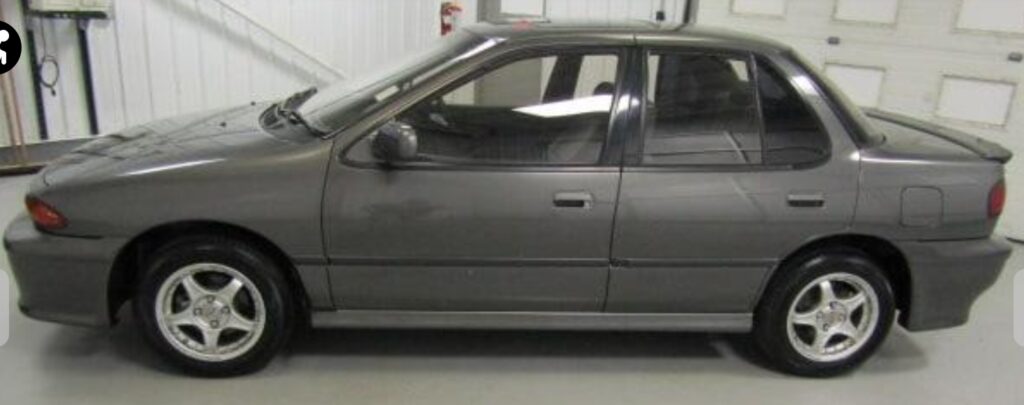
Launched in 1990, at the peak of Japan’s “bubble economy,” the third-generation Gemini (JT151/191/641) was a more sophisticated, powerful, and stylistically rounded car. The design moved away from the sharp angles of the 80s towards a smoother, more organic shape typical of the early 90s. The platform was shared with the Isuzu Impulse and Stylus in the US market.
This generation expanded the body style lineup to its greatest extent, offering a four-door sedan, a three-door hatchback, and, for the first time, a stylish two-door coupe. It also saw the introduction of a permanent all-wheel-drive system, further boosting its performance credentials. The partnerships with Irmscher and Lotus continued, resulting in the most powerful and technologically advanced Geminis ever produced.
Models and Trim Levels (1990-1993):
- Body Styles: 4-door Sedan, 3-door Hatchback, 2-door Coupe.
- Standard Trims: Base trims like C/C and Oz continued, powered by 1.5-litre and 1.6-litre SOHC engines.
- Handling by Lotus: This trim returned, again offering the superb Lotus-tuned suspension on higher-end models equipped with the 1.6-litre DOHC engine.
- Irmscher R: The Irmscher models became even more aggressive, featuring a turbocharged 1.6-litre DOHC engine (4XE1-WT) producing an impressive 180 PS.
- ZZ-4: The new flagship model was the Gemini ZZ-4. It combined the 180 PS turbocharged engine with a permanent (“Nishiboric”) all-wheel-drive system and four-wheel steering. In a compact sedan chassis, this created a formidable all-weather performance machine, a direct competitor to rally-bred icons like the Mitsubishi Lancer GSR and Subaru Impreza WRX.
- Gemini Coupe: The coupe was offered with a wider range of engines, including a naturally aspirated 1.8-litre DOHC (4XF1) in its top specification.
This generation represented the zenith of Isuzu’s passenger car engineering. However, by the early 1990s, the Japanese economic bubble had burst. Facing financial difficulties and a strategic decision to focus on its highly profitable truck and SUV business, Isuzu made the difficult choice to cease in-house development of passenger cars. The third-generation Gemini would be the last one truly engineered by Isuzu.
Fourth (1993–1997) & Fifth (1997–2000) Generations: The Honda Era
The final chapters of the Gemini story are ones of badge engineering. As part of a new partnership, Isuzu began selling rebadged Honda models to maintain a presence in the Japanese passenger car market.
The fourth-generation Gemini, launched in 1993, was a rebadged Honda Domani, a sedan closely related to the “EG” generation Honda Civic. While a competent and reliable car, it shared nothing mechanically or spiritually with its predecessors. The unique character, the Lotus-tuned handling, and the turbocharged Isuzu engines were gone. Trim levels were simplified to names like C/C and G/G, and the engines were Honda’s D-series and, in a top-tier model, the acclaimed B16A VTEC engine.
The fifth and final generation, introduced in 1997, was a continuation of this strategy. It was a lightly restyled version of the next-generation Honda Domani/Civic Ferio. By this point, the Gemini was a shadow of its former self, an anonymous sedan serving a dwindling market. Isuzu officially discontinued the Gemini nameplate in 2000, quietly ending a 26-year legacy as the company completed its withdrawal from the global passenger car market.
Legacy of the Gemini
The Isuzu Gemini’s story is one of transformation. It began as a humble, reliable participant in a global automotive project. It evolved into a technological pioneer with its NAVi5 transmission and a performance icon thanks to its brilliant DOHC engines and legendary Lotus-tuned chassis. For a brief, shining period in the late 80s and early 90s, the Gemini was one of the most exciting and capable compact cars in the world. Its eventual decline into a badge-engineered appliance is a poignant reminder of the brutal economics of the auto industry. Yet, for those who remember its glory days, the Gemini remains a symbol of Isuzu’s engineering spirit—a small car that consistently, and thrillingly, punched far above its weight.