The Backbone of America: Charting the Evolution of the International Loadstar
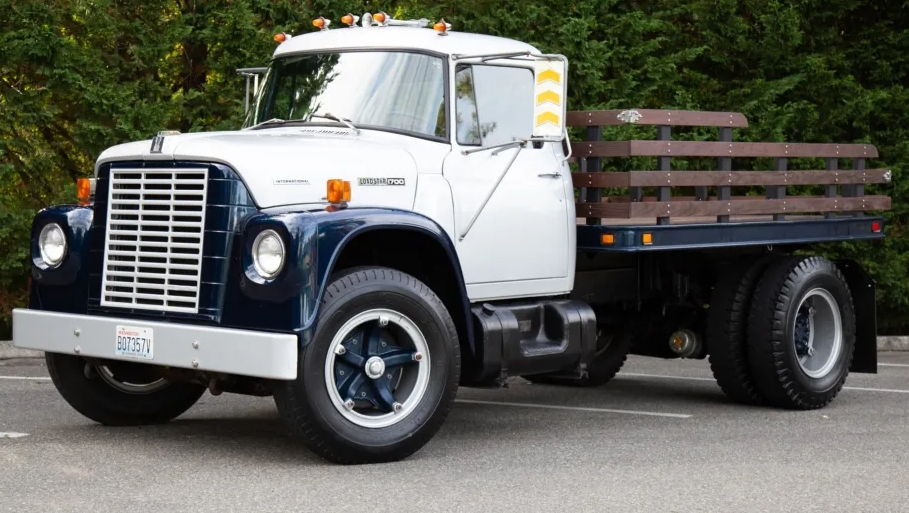
In the pantheon of American trucks, few names evoke the image of rugged, unyielding capability quite like the International Loadstar. For over three decades, it was the ubiquitous workhorse of the nation’s infrastructure, a no-frills, go-anywhere vehicle that could be found on construction sites, in agricultural fields, navigating suburban cul-de-sacs as a refuse hauler, and hauling goods across the country. The Loadstar wasn’t just a truck; it was a testament to International Harvester’s philosophy of building tough, simple, and functional machinery. Its evolution from a rugged post-war hauler into a technologically advanced, emissions-compliant vehicle is a story that mirrors the changes in the American trucking industry itself.
The Genesis: The “Bread Truck” Era (1959-1971)
The Loadstar’s story begins not under its own name, but as a descendant of the iconic International “Travelette.” In 1959, International Harvester, seeking to modernize its medium-duty offerings, introduced the International 400, 450, 500, and 600 series. These trucks, often referred to as the “over-cab” or “bread truck” models due to their distinctive cab-over-engine (COE) design, were the direct predecessors to the Loadstar. They were built with a simple, robust ladder frame, leaf spring suspension, and a variety of gasoline and diesel engines.
Models and Features (1959-1971):
- Models: 400, 450, 500, 600. The numbers generally corresponded to the Gross Vehicle Weight Rating (GVWR) in hundreds of pounds (e.g., the 400 was a 3/4-ton, the 600 a 1-ton).
- Trim Levels: In this era, “trim” was minimal. Trucks were sold as standard cab-and-chassis models, ready for a body. Optional packages typically included upgraded interior trim (like vinyl vs. cloth seats), presence or absence of a radio, and heater/defroster upgrades. The primary distinction was between single-rear-wheel and dual-rear-wheel (dually) configurations.
- Engines: The workhorses were the reliable International Red Diamond and Green Diamond inline-six gasoline engines, with displacements like 220, 240, and 267 cubic inches. Diesel options were limited but available, primarily the International BD-404 diesel. A key feature was the availability of both gasoline and LPG (propane) variants, which were popular for fleet vehicles.
These trucks were utilitarian to their core. The cab was spartan, visibility was exceptional due to the flat-nose design, and they were endlessly customizable for any commercial need. They were the foundation upon which the Loadstar name would be built.
.
THIS might be a great place to get your new car from!
Or for those who are into the “car flipping” business, here’s an excellent resource for you!

.
The Arrival of an Icon: The Loadstar is Born (1972-1978)
In 1972, International Harvester officially christened its medium-duty COE line the “Loadstar.” This was more than a name change; it was a branding exercise that solidified the truck’s identity as a dedicated commercial vehicle. The Loadstar 1600, 1700, 1800, and 1900 were introduced, representing a significant evolution in capability and style.
Models and Trim Levels (1972-1978):
- Models: The numbering system was now three digits, with the last two indicating approximate GVWR (in hundreds of pounds). The 1600 was a 3/4-ton, the 1700 a 1-ton, the 1800 a 1.5-ton, and the 1900 a 2-ton. Cab-and-chassis models were the standard, but pickup truck bodies were also available, often through third-party manufacturers like Diamond T or even International itself.
- Trim Levels:
- Base: A true fleet model with a rubber floor mat, basic bench seat, and no radio.
- Custom: The premium trim. This included a color-keyed interior, a more comfortable cloth or vinyl bench seat, a chrome grille surround, a horn, and often a factory-installed AM/FM radio. The “Custom” trim gave the rugged workhorse a touch of civility.
- Engines: Gasoline power came from the new “Super Duty” V8s, including the legendary 345 and 392 cubic inch V8s. Diesel options were expanded with the International DT-461 and the powerful DT-530, which became favorites for heavy-duty applications.
Aesthetically, the Loadstar 1600-1900 featured a revised front clip with a more pronounced, squared-off grille and integrated headlight bezels, giving it a more modern and purposeful look than its predecessors. The COE design remained, providing a short wheelbase for excellent maneuverability, a key selling point for delivery and service trucks.
The Power Streak Era: Dominance and Durability (1979-1988)
By the late 1970s, the Loadstar was a dominant force in the medium-duty market. The 1979 model year brought a significant facelift and the introduction of the legendary “Power Streak” engine line. This generation of Loadstar cemented its reputation as one of the most durable trucks ever built.
Models and Trim Levels (1979-1988):
- Models: The 1600, 1700, 1800, and 1900 designations continued. The Loadstar was available in a dizzying array of configurations to suit any need, including single-axle, tandem-axle, 4×2, and 4×4 models.
- Trim Levels:
- Fleet: Continued as the no-frills option.
- Custom: Remained the top-tier trim, now often featuring two-tone paint options, upgraded vinyl seating, and more chrome accents.
- SPECIAL NOTE: During this period, the distinction between a “model” and a “trim” becomes more fluid. For example, the Loadstar 1800 4×4 was a specific model designed for off-road and severe-weather work, featuring a transfer case, higher ground clearance, and different axle ratios, rather than just a trim level.
- Engines: The “Power Streak” gasoline V8s (345 and 392) were the primary gasoline offerings. The DT-466 (replacing the DT-461) and DT-530 diesels were the mainstays. These engines were renowned for their “nine-million-pound” design philosophy—overbuilt to an almost comical degree, ensuring hundreds of thousands of miles of service.
This era also saw the Loadstar’s direct competitor, the Ford C-Series, reaching its peak. The Loadstar’s reputation was built on its simplicity and reliability. With its robust suspension, durable powertrains, and straightforward mechanical systems, it was a mechanic’s dream and a fleet manager’s reliable asset.
The Final Generation and the S-Series Shift (1989-1999)
As the 1980s progressed, emissions regulations became stricter, and driver comfort expectations grew. International responded by developing an all-new Loadstar, which debuted in 1989. This was the most modern-looking Loadstar, featuring an aerodynamic, sloped front end that was a departure from the traditional flat-nose COE.
Models and Trim Levels (1989-1999):
- Models: The Loadstar line was simplified and rebadged under the familiar 4-digit system. The 4000 was a Class 4 truck, the 4900 was a Class 5 truck, and the 7300 was a Class 7 truck. These designations were used concurrently with the “Loadstar” nameplate, which was eventually phased out in favor of the “S-Series” (S for “Sloped”).
- Trim Levels:
- Base/Fleet: Utilitarian and built for work.
- 4900i S-Series: The “i” denoted “international” styling, representing a more upscale version with a more comfortable interior, better sound deadening, and improved seating. It was the closest the Loadstar came to a “luxury” trim.
- Engines: This generation saw the introduction of the revolutionary International T444E (the legendary 7.3L Power Stroke for Ford Super Dutys) and the DT466E, both with electronic controls to manage emissions and performance. The traditional DT466 and Caterpillar 3116/3126 diesels were also available.
Production of the “true” Loadstar ended around 1998-1999 as International Harvester (by then the Navistar International Corporation) consolidated its medium-duty line into the highly successful International S-Series. While mechanically and conceptually the direct descendants of the Loadstar, the S-Series name marked the end of an era.
The Legacy and Future Outlook: The Durastar and Beyond
The Loadstar’s DNA is undeniably present in every modern International medium-duty truck. When Navistar launched the Durastar series in 2008 (later renamed the MV Series), it was a direct evolution of the S-Series, and therefore, the Loadstar lineage. These modern trucks carry forward the Loadstar’s core mission: to be a versatile, reliable, and customizable platform for any medium-duty application.
Today, the Loadstar is a beloved collector’s item and a common sight at historical trucking events. Restored examples of the 1600, 1800, and 4900 are prized for their simplicity and rugged good looks. They represent an era when a truck was defined by the steel in its frame and the oil in its pan, not the software in its engine control unit.
The future outlook for the Loadstar’s legacy is bright. While the trucks themselves are long out of production, their spirit of uncompromising utility lives on. As the trucking industry moves toward electrification and autonomous driving, the fundamental role of the medium-duty truck—as the “last-mile” solution for commerce, construction, and community services—remains unchanged. The Loadstar set the standard for that role, proving that the most important quality in a work truck isn’t speed or flash, but the unwavering ability to start every morning and get the job done, day after day, year after year. It was, and remains, the backbone of America.