Zimmer Quicksilver: The Forgotten Neo-Classic Mid-Engine American Luxury Coupe
The Zimmer Quicksilver remains one of the most unusual, rare, and visually striking automobiles ever crafted in the United States. Born from the neoclassical hype of the 1980s and built by the niche manufacturer Zimmer Motor Cars Corporation, the Quicksilver combined mid-engine engineering with bespoke coachbuilt bodywork to produce something unlike anything else in American automotive history. Though only built in very limited numbers, this curious luxury coupe has earned a small but devoted following among collectors today.
Origins — Zimmer Motor Cars and the Neo-Classic Movement
Zimmer Motor Cars Corporation was founded in 1980 in Pompano Beach, Florida, by Paul H. Zimmer and his son Robert “Bob” Zimmer. Inspired by grand American luxury of the past and the booming neo-classic car trend of the late 1970s and early 1980s, the company set out to produce custom coachbuilt automobiles that blended classical styling cues with contemporary mechanicals. Their first success was the Zimmer Golden Spirit, a flamboyant retro coupe built on extended Ford Mustang underpinnings, which remained in production throughout the 1980s and established the Zimmer brand’s reputation for Old-World charm with new-world mechanics.
By the mid-1980s, the neo-classic trend had matured, and Zimmer sought to broaden its lineup with a more modern but still luxurious personal coupe. This led to the creation of the Quicksilver, a distinct departure from the Golden Spirit’s pre-war aesthetic, embracing cleaner lines while retaining bespoke coachwork and rich interior appointments.
.

.
Introduction of the Quicksilver — 1986
The Zimmer Quicksilver was introduced to the market in 1986 as Zimmer’s second production automobile, marking a bold step away from the purely retro styling of the Golden Spirit toward a sleek, mid-engine luxury coupe concept.
Unlike traditional supercars of the era, the Quicksilver wasn’t developed from the ground up; rather, it relied on an innovative, coachbuilt adaptation of the Pontiac Fiero, a compact mid-engine sports coupe made by General Motors. The Fiero’s unique layout made it an ideal donor for Zimmer’s vision—allowing for a balanced mid-engine platform beneath striking new bodywork.
Design and Engineering
- Platform: Based on the Pontiac Fiero chassis (mid-engine, rear-wheel drive).
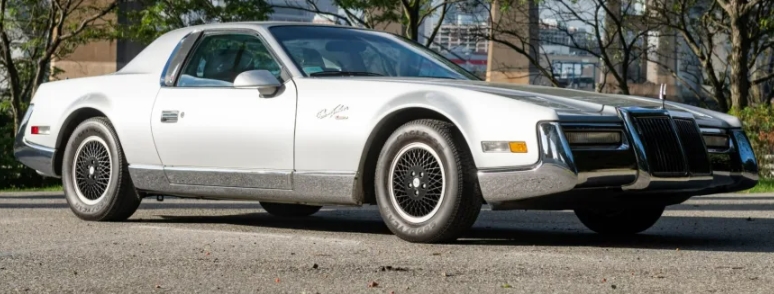
- Bodywork: Custom fiberglass body designed by former GM stylist Don “D.A.” Johnson, giving the Quicksilver its long, sloping nose, pop-up headlights, and chrome accents.
- Chassis Modifications: To achieve the Quicksilver’s proportions, Zimmer extended the Fiero’s frame significantly—adding roughly thirteen inches behind the rear wheels and an additional sixteen inches forward of the front suspension.
- Engine: The standard 2.8-liter V6 from the Fiero, producing roughly 140 horsepower, paired to a three-speed automatic or four-speed automatic transmission depending on the model year.
- Performance: Approximately 0-60 mph in about 9–10 seconds and a top speed near 120–125 mph—adequate but not inspired by sportscar standards of the era.
- Luxury Features: Leather upholstery, wood trim, power steering (added by Zimmer), air conditioning, cruise control, power windows, and bespoke chrome wire wheels.
The result was a distinctive blend of American sport coupe mechanics and hand-crafted luxury appointment, a rare sighting on roads mostly populated by production luxury coupes.
Production Timeline and Models (1986–1988)
While the Quicksilver would never see mass production, it carved out a unique place in the automotive landscape during its short life.
1986 — Debut Year
The first Quicksilvers rolled off Zimmer’s production line in 1986, and this inaugural year set the tone for the model:
- 1986 Zimmer Quicksilver Coupe — The original and primary version of the Quicksilver. Built on new Pontiac Fiero V6 donor cars, each unit featured luxury trim, a stretched chassis, and bespoke coachbuilt fiberglass bodywork.
- Trim / Features: All cars were offered as two-door coupes with full leather interiors, air conditioning, power accessories, and wood trim. No separate trim levels (e.g., base vs. premium) are officially documented, suggesting a single luxury trim per year, albeit with optional customizations available.
Production: Exact yearly figures are sketchy, but total Quicksilver output across its entire run is believed to be about 170 units—making it one of the rarest American cars of the decade.
1987 — Continuation and Refinement
The 1987 Quicksilver continued much in the same vein as the 1986 car, retaining the Fiero-based mid-engine layout, custom bodywork, and premium interior appointments. Most surviving examples from this year show similar specifications, with few documented mechanical revisions beyond incremental refinements in trim and interior options.
Zimmer likely offered buyers a handful of bespoke choices, such as interior leather color, optional wheels, and special audio systems—typical of coachbuilt automobiles—but there are no widely published, factory-standard trim levels like those seen in mainstream production cars.
1988 — Final Year
By 1988, the Quicksilver had reached the end of its production run alongside financial difficulties at Zimmer Motor Cars Corporation. Though some cars may have been assembled from remaining parts into 1988, production tapered off as the company approached bankruptcy that same year.
The 1988 models retained the same core design, engine, and equipment as their predecessors; again, there were no widely recognized distinct trim levels beyond the standard premium setup.
Market Positioning and Reception
Upon release, the Quicksilver occupied a strange niche: priced between $48,000 and $52,000 at launch—roughly twice the price of contemporary luxury coupes like the Cadillac Eldorado—yet powered by a modest V6 and automatic drivetrain underpinnings from the humble Pontiac Fiero.
Critics and buyers alike were divided. Enthusiasts appreciated the Quicksilver’s bold styling, rare configuration, and bespoke nature. Others criticized it as an expensive conversion of outdated mechanicals, a sentiment underscored by modest performance. Nevertheless, the Quicksilver became a collector oddity—a low-volume, exotic American coupe with a story all its own.
Legacy and Future Outlook
After Zimmer Motor Cars Corporation declared bankruptcy in 1988, production of the original Quicksilver ended, and Zimmer would not produce a successor in this vein.
The Zimmer name would change hands and experience a brief revival in the 1990s–2000s focused on the Golden Spirit and other neo-classic conversions, but no new Quicksilver or mid-engine model emerged.
Today, the Quicksilver remains a rare piece of automotive history—often trading hands among collectors for values that reflect both its scarcity and quirkiness. While prices vary widely based on condition and mileage, clean examples have commanded numbers ranging from modest sums to tens of thousands of dollars at auction, depending on desirability.
Though the neo-classic movement has long passed, the Quicksilver stands as a testament to a uniquely American twist on automotive design: blending hand-crafted coachwork with modern mechanicals, creating a collectible that defies easy categorization. As interest in unusual automotive history grows, the Quicksilver’s legacy as an eccentric, rare luxury coupe looks set to endure among enthusiasts and collectors alike.
In summary:
- Produced: 1986–1988.
- Units Built: ~170 examples.
- Platform: Pontiac Fiero mid-engine chassis.
- Body: Custom fiberglass coachwork with chrome bumpers.
- Powertrain: 2.8L V6, automatic transmission.
Despite its commercial challenges, the Zimmer Quicksilver remains one of the most intriguing American automobiles of the 1980s—an embodiment of creative ambition and neo-classic spirit that continues to fascinate automotive historians and collectors alike.