The History of Acura
The Red, White, and Blue Badge: The Rise, Resilience, and Refinement of Acura
In the automotive landscape of the late 1970s and early 1980s, a seismic shift was occurring on American roads. Japanese automobiles, once dismissed as cheap, economy-focused novelties, were rapidly improving in quality and reliability. However, they largely lacked the prestige, performance, and luxury status of their European and American counterparts. Enter Honda, a company already renowned for engineering excellence but lacking a premium offering. In a bold strategic move, Honda decided to challenge the established hierarchy of the automotive world. Thus, Acura was born, becoming the first Japanese premium automotive marque to debut in North America. This is the history of Acura—a story of engineering obsession, racing glory, and the relentless pursuit of the “double-wishbone” suspension.
The Genesis: Honda’s High-Stakes Gamble
The origins of Acura are inextricably linked to the vision of one man: Soichiro Honda. Born in Hamamatsu, Japan, in 1906, Honda was the son of a blacksmith who repaired bicycles. He possessed an innate mechanical curiosity and a rebellious spirit that rejected formal engineering education. By the 1970s, the Honda Motor Company had established a global reputation for reliable engines and motorcycles. However, Honda’s executives, including Kiyoshi Kawashima (President of Honda at the time), recognized a gap in the market. They saw that American consumers were willing to pay a premium for luxury and performance, but Honda’s existing lineup—comprising the Civic, Accord, and Prelude—was firmly planted in the mainstream sector.
The project to create a luxury vehicle began under the internal codename “HX” (Honda Experimental). The goal was not merely to rebadge existing Honda models with leather seats, but to create a distinct product with superior performance, refinement, and technology. The development team was led by Gyo Yamanashi, a Honda engineer who played a pivotal role in the company’s early engine designs. Yamanashi and his team were tasked with creating a vehicle that could compete with BMW and Mercedes-Benz, focusing on a “human-centered” design philosophy that prioritized the driver’s experience.
On March 27, 1986, Acura launched in the United States with two models: the Acura Legend, a mid-size luxury sedan, and the Acura Integra, a sporty compact. The timing was impeccable. The 1980s oil crisis had diminished the appeal of large, gas-guzzling American luxury cars, while the Legend offered V6 power with the efficiency and reliability of a Japanese build.
The Golden Era and the “Champagne Suspension”
The reception to the Acura Legend was nothing short of phenomenal. It was the first Japanese car to break the $20,000 price barrier in the U.S. (approximately $56,000 in today’s dollars) and sell in significant numbers. The Legend featured a 2.5-liter V6 engine and a sophisticated four-wheel double-wishbone suspension, a setup previously reserved for high-performance sports cars.
In 1987, the company introduced the Acura Legend Coupe, a sleeker, two-door version that further cemented the brand’s image of sophistication. However, the true engineering marvel arrived in 1990: the Acura NSX (New Sportscar eXperimental).
The NSX was a milestone that reverberated through the automotive world. It was the world’s first all-aluminum production automobile, featuring a mid-engine layout and a VTEC (Variable Valve Timing and Lift Electronic Control) V6 engine. Developed with input from Formula One legend Ayrton Senna, the NSX was designed to be a supercar that was not only fast but also reliable and easy to drive—something Ferrari and Lamborghini struggled to achieve at the time. It was a direct challenge to the Italian exotics, proving that Japanese engineering could dominate the high-performance sector.
Racing Pedigree: From Street to Track
Acura’s commitment to performance naturally extended to motorsports. While the brand initially focused on luxury, it quickly realized that racing was the ultimate testing ground for technology.
In the late 1980s and early 1990s, Acura entered the IMSA GT Championship with the Legend-based GTO and the exotic NSX. The “RealTime Racing” team, led by Peter Cunningham, became a dominant force in the SCCA World Challenge (now SRO TC America), winning numerous championships with the Acura TSX and later the Acura TL. This grassroots racing success proved that Acura vehicles could withstand the rigors of professional competition, reinforcing the brand’s “precision crafted performance” tagline.
Hardships and the “Lost Decade”
Despite early success, Acura faced significant challenges in the late 1990s and early 2000s—a period often referred to as the brand’s “lost decade.”
The Issue: In 1996, Honda made a controversial decision to phase out the double-wishbone suspension in favor of a MacPherson strut setup across the lineup, including the flagship Legend and TL. This change was made to reduce manufacturing costs and increase interior space. However, automotive enthusiasts and critics noted a significant decline in handling dynamics and steering feel. Simultaneously, Acura’s design language became polarizing. The 2004 TL and 2005 Acura RL featured bold, angular styling that alienated traditional luxury buyers who preferred the understated elegance of Lexus or BMW.
The Resolution: Acura realized it had drifted from its core identity. The resolution began in the late 2000s with a renewed focus on engineering. Honda engineers developed the Super Handling All-Wheel Drive (SH-AWD) system, introduced in the 2005 RL. This torque-vectoring system could send up to 70% of the engine’s torque to the rear wheels and 100% of that torque to either the left or right rear wheel, dramatically improving cornering ability. This technology became a hallmark of Acura’s identity, setting it apart from competitors like Audi’s Quattro or BMW’s xDrive.
Factory Operations and Manufacturing Philosophy
Acura’s manufacturing philosophy is rooted in the concept of Monozukuri—the Japanese art of making things with a commitment to quality and precision. Unlike some luxury brands that rely on a single “halo” factory, Acura vehicles are produced across several global facilities, though specific models are reserved for specific markets.
The primary production hub for Acura in North America is the Marysville Auto Plant in Ohio, which began producing Acura vehicles in 1987. This facility was crucial to Acura’s early success, allowing the brand to bypass import tariffs and respond more quickly to American consumer tastes. The East Liberty Auto Plant in Ohio and the Alliston plant in Ontario, Canada, also contribute to production.
Acura’s engine manufacturing is centralized at the Anna Engine Plant in Ohio. This facility produces the high-precision V6 and VTEC engines that power the Acura MDX, Acura TLX, and RDX. The emphasis at these factories is on “Jidoka” (automation with a human touch), where machines are designed to detect abnormalities and stop immediately, preventing defects from moving down the assembly line.
Marketing and Major Events
Acura’s marketing strategies have evolved significantly since 1986. In the early years, the brand relied on the “Champagne Suspension” commercials, which demonstrated the smoothness of the Legend by stacking champagne glasses on the hood while the car drove over rough terrain.
In the 2000s, Acura shifted toward pop culture integration. The brand famously partnered with the Marvel Cinematic Universe. Starting with Iron Man (2008), Acura vehicles became the official cars of S.H.I.E.L.D. and Tony Stark. The RD-X concept appeared in Iron Man 2, and the MDX and Acura ZDX were featured in The Avengers. This strategy targeted a younger, tech-savvy demographic, associating Acura with innovation and heroism.
More recently, Acura has focused on digital storytelling and experiential marketing, such as the “Acura Performance Pavilion” at major auto shows, where they showcase the NSX and allow consumers to engage with the brand’s heritage.
What Makes Acura Different?
In a crowded luxury market, Acura distinguishes itself through a philosophy of “Human-Centric Engineering.” While German luxury brands (BMW, Mercedes, Audi) often prioritize raw performance and technology interfaces, and Lexus prioritizes absolute comfort, Acura aims to strike a balance.
The brand is famous for its double-wishbone suspension heritage (recently reintroduced in the 2021 TLX), which provides superior wheel control and driver feedback. Furthermore, Acura’s SH-AWD system is widely considered the most sophisticated in its class, offering handling capabilities that defy the physics of their SUVs. Acura also maintains a unique position by being a performance brand first and a luxury brand second; the interior materials may not always match the opulence of a Rolls-Royce, but the driving dynamics are almost always superior to the average luxury crossover.
Sales Figures and Key Models
The First Vehicle: The 1986 Acura Legend Sedan.
- U.S. Sales (1986): Approximately 54,000 units combined (Legend and Integra).
- Significance: It established the credibility of Japanese luxury cars.
The Most Popular Vehicle: The Acura MDX. Introduced in 2000 as a 2001 model, the MDX (Multi-Dimensional Luxury) revolutionized the luxury SUV segment. Before the MDX, luxury SUVs were largely body-on-frame trucks (like the Jeep Grand Cherokee or Range Rover) that rode roughly and had poor fuel economy. The MDX was a unibody crossover with car-like handling, three rows of seating, and V6 power.
- U.S. Sales (Peak Year): In 2005, Acura sold 64,975 MDX units in the U.S. alone.
- Global Sales: While Acura is primarily a North American brand (with presence in China, Hong Kong, and Russia), the MDX has sold over 1 million units globally since its introduction.
- Why it was popular: It offered the practicality of a minivan with the prestige of a luxury sedan and the capability of an SUV, perfectly fitting the needs of the American suburban family.
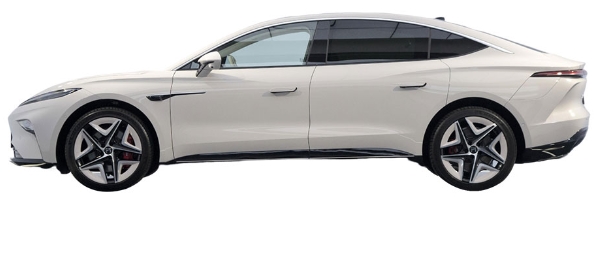
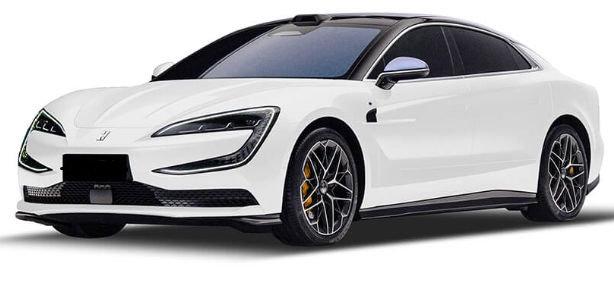
The Latest Vehicle: The 2024 Acura ZDX. As of 2024, the latest vehicle to join the lineup is the ZDX, an electric crossover. It represents a new era for Acura as it transitions to electrification.
- U.S. Sales (Projected): As a newly launched EV in late 2023 / early 2024, sales are in the early adoption phase, with targets in the low thousands for the first full year.
- Significance: Built on the GM Ultium platform (a collaboration between Honda and General Motors), the ZDX signals a shift away from internal combustion engines.
Mergers, Acquisitions, and Corporate Structure
It is important to clarify the corporate structure of Acura. Acura has never been bought out by another company, nor has it ever merged with a separate entity. Acura is not an independent company; it is a division (a brand) of the Honda Motor Company, Ltd.
- Parent Company: Honda Motor Company (Japan).
- Relationship: Honda founded Acura in 1986. While Honda has formed strategic alliances (such as with General Motors for EV development and sourcing the Prologue and ZDX platforms), Honda remains the sole owner of the Acura brand. There was no buyout; Acura was created organically by Honda to compete in the premium segment.
Current Status and Outlook
Acura remains a vital part of Honda’s global strategy and continues to operate today. However, the brand faces a pivotal moment as the automotive industry shifts toward electrification.
Current Status: Acura is currently restructuring its lineup to focus on SUVs and performance sedans. The brand discontinued the Acura ILX and Acura RLX, replacing them with the Integra (returned as a liftback in 2023) and the TLX. The MDX and RDX remain the sales pillars.
Outlook: The outlook for Acura is aggressive and electric-focused. Honda has announced that by 2030, Acura will be an all-electric brand. The recent collaboration with General Motors to utilize the Ultium battery platform is a strategic move to accelerate this transition without bearing the full R&D costs alone.
While sales figures have fluctuated—selling approximately 145,000 vehicles in the U.S. in 2023, down from previous highs due to inventory shortages—brand loyalty remains high. Acura’s challenge is to maintain its “precision crafted performance” identity in an era of silent electric motors and heavy battery packs. If the success of the electric ZDX and the upcoming electric models is any indication, Acura is positioning itself not just as a luxury brand, but as a leader in performance electrification.
Conclusion
From the champagne-soaked launch of the Legend in 1986 to the electric future of the ZDX, Acura has carved a unique path in automotive history. It is a brand born from Honda’s engineering obsession, tested by the harsh realities of market competition, and refined by a commitment to the driver. While it has faced design missteps and the existential threat of electrification, Acura’s core identity—accessible performance, innovative all-wheel-drive technology, and a refusal to compromise on handling—ensures it remains a distinct and beloved fixture on American roads. As the brand pivots to an electric future, it carries with it the legacy of the NSX and the reliability of the Legend, promising that the spirit of “human-centric performance” will endure.