Shelby (Dodge) Lancer: The Overlooked 1980s Turbo Hatchback That Tried to Be European Sport-Sedan Killer
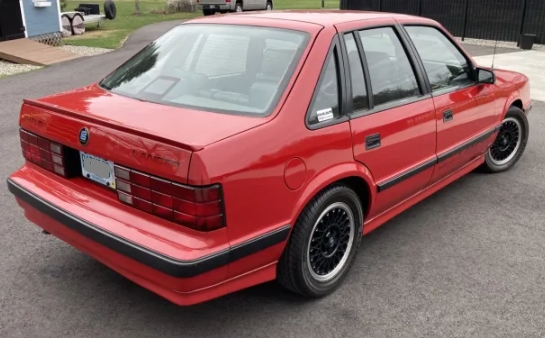
The Shelby Lancer is one of the more unusual entries in Carroll Shelby’s sprawling legacy — a limited-production, turbocharged performance hatchback based on the Dodge Lancer, built during a brief but fascinating period in the late 1980s when American automakers were experimenting with turbocharged four-cylinder performance cars to compete with European rivals like the BMW 3 Series. Though it never achieved mass popularity, the Shelby Lancer is a noteworthy chapter in 1980s performance automotive history, reflecting both Shelby’s adaptability and the era’s automotive trends.
Origins and Development: Why Shelby Built a Sport Sedan
By the mid-1980s, Chrysler had revived the Dodge Lancer nameplate as a mid-size, front-wheel-drive hatchback based on the Chrysler H-platform (a stretched version of the K-platform). Designed to slot between the Dodge Aries and the larger 600, it was related mechanically and visually to the Chrysler LeBaron GTS.
Carroll Shelby, already known for performance variants like the Omni GLH, Omni GLHS, Shelby Charger GLH-S, and others, was brought into the project to inject performance credibility into the Lancer and create an American answer to smaller European sedans. The idea was ambitious: take a relatively mundane American hatchback and give it handling, braking, styling, and performance enhancements to compete on both sides of the Atlantic.
1987 Shelby Lancer — The One-Year, Shelby-Built Car
The Shelby Lancer was produced only for the 1987 model year in its purest form, with 800 cars manufactured by Shelby American in Whittier, California. These were socialized through Dodge dealerships but completed by Shelby teams before delivery.
Purpose and Positioning
Unlike many Shelby cars of the era which focused purely on performance, the Shelby Lancer was intended to be something of a sport-luxury hatchback — a hybrid between an enthusiast’s toy and an upscale daily driver. It was marketed as capable of holding its own against European sedans of the day.
Technical Specifications (1987)
At its heart, the Shelby Lancer was powered by a 2.2-liter intercooled Turbo II four-cylinder engine producing 175 horsepower and 175 lb-ft of torque, a strong figure for a compact American hatchback in the era.
- Engine: 2.2 L Turbo II I4 intercooled
- Power: ≈ 175 hp & 175 lb-ft torque
- Layout: Front-engine, front-wheel drive
- Transmission: 5-speed A520 manual or optional 3-speed A413 automatic
- Suspension: Enhanced with Monroe Formula GP struts, larger sway bars
- Brakes: Four-wheel disc brakes (vented up front) — unusual in its class at the time
- Wheels & Tires: Goodyear Gatorback performance tires on Shelby aluminum wheels
This package gave the Lancer surprising performance: 0-60 mph in roughly 7.7 seconds, a quarter-mile in about 15.7 seconds, and a top speed above 120 mph — impressive numbers for a turbo four-cylinder hatchback in 1987.
.

.
1987 Shelby Lancer Trim Options
Strictly speaking, Shelby produced one core version of the 1987 Lancer, but it came in two distinct configurations based on transmission and interior appointments:
| Configuration | Transmission | Interior | Qty Produced |
|---|---|---|---|
| Manual | 5-speed A520 | Cloth seating | 400 |
| Automatic | 3-speed A413 | Leather seating | 400 |
All were finished in Graphic Red with black trim accents and unique Shelby Lancer graphics. Most cars bore numbered dash plaques and came with a comprehensive list of unique trim and equipment — including the Pioneer 10-speaker CD stereo system, one of the first factory-equipped CD players in an American car.
The manual variant was positioned as the sportier choice, while the automatic offered an upscale feel with leather seats and a more comfortable cruising experience.
Equipment and Notable Features (1987)
What set the Shelby Lancer apart from its standard Dodge counterpart — even beyond the engine and suspension work — was a suite of amenities and performance-oriented equipment not found on regular Lancers:
- Performance Suspension: Monroe Formula GP struts and heavy anti-roll bars gave sharper handling.
- Four-Wheel Disc Brakes: Including vented discs up front — rare for mid-size hatchbacks then.
- Shelby Wheels & Tires: Custom cast wheels and performance rubber.
- Interior Upgrades: Leather or cloth, power accessories, tilt steering, full instrumentation, and premium insulation.
- Pioneer CD Stereo: A high-end 10-speaker system — one of the first CD player installations in a U.S. built car.
- Graphic Red Paint with Shelby Decals: Bold exterior identity unique to the 1987 Shelby-built cars.
These features made the 1987 Shelby Lancer feel like a well-equipped daily driver with a strong performance edge.
Shelby’s Influence and Performance Philosophy
Unlike bleeding-edge performance cars of the era — like turbocharged European imports — the Shelby Lancer didn’t pursue outright peak horsepower. Instead, it reflected Shelby’s philosophy of balanced performance: responsive handling, effective brakes, and enjoyable driving dynamics combined with advanced technology (like the CD stereo) that appealed to tech-savvy buyers.
This approach was similar to Shelby’s work on cars like the Omni GLH-S, delivering meaningful performance without turning the car into a raucous racer — though it still performed quite respectably.
Transition to Dodge Production: 1988–1989
Following the limited production run of the Shelby-built car in 1987, Dodge — perhaps encouraged by the concept’s bold branding even if sales were limited — decided to offer its own factory-built Shelby Lancer variant for the 1988 and 1989 model years, although these were quite different from the 1987 Shelby stormer.
1988-1989 Dodge Lancer Shelby
From 1988 through 1989, Chrysler built the Dodge Lancer Shelby on the same H-platform as the regular Lancer. These cars were produced at Dodge’s Sterling Heights, Michigan assembly plant, not Shelby’s California facility.
While these versions kept the Shelby name, they lacked many of the 1987 model’s bespoke Shelby-specific components — such as Shelby suspension parts, unique wheels, and rear disc brakes. Some visual and handling enhancements remained, but overall the cars were less performance-centric and more a higher-series trim of the Lancer.
Key differences and features include:
- Engine Options:
- The manual versions used the intercooled Turbo II 2.2 L engine producing around 175 hp.
- Automatic versions often were equipped with the non-intercooled Turbo I engine (~146 hp).
- Handling & Suspension: Some handling enhancements carried over, but not the full Shelby suspension kit from 1987.
- Brakes: Rear drums replaced the 1987 model’s disc brakes.
- Equipment: Higher trim levels included power accessories, leather seating, tilt steering, and an updated audio system, though usually not the Pioneer CD system.
Production Numbers (1988–1989)
These later Shelby Lancer variants were rarer than the 1987 Shelby Lancers in some respects:
- 1988: ~279 units produced
- 1989: ~208 units produced
- Total (1988-89): ≈ 487 cars
Despite being factory badged as Shelby products, they were clearly more aligned with mainstream Dodge trim hierarchies than the 1987 cars, which were unique Shelby builds.
Models and “Trim Levels” Across the Lancer Line
While the Shelby Lancer name is often used in conversation, it’s important to distinguish between actual Shelby American products and Dodge-built Shelby Lancer trims:
1987 Shelby Lancer (Shelby American)
- Single primary model with two configurations based on transmission/interior.
- Shelby-specific suspension, brakes, wheels, and trim.
- Bold red paint and Shelby graphics.
1988-1989 Dodge Lancer Shelby (Factory Trim)
- Essentially a higher trim of the Dodge Lancer with some performance appearance cues and enhanced options.
- Available in additional colors (white, red, black).
- No separate Shelby-built status and lacked many bespoke components from the ’87 version.
In broader context, the Lancer platform itself also had base and ES trims, but those were distinct from the Shelby variants and part of the standard Dodge lineup.
Market Reception and Cultural Legacy
The Shelby Lancer — especially the 1987 model — has earned a cult following among enthusiasts because of its rarity, unique place in Shelby’s portfolio, and combination of performance and technology unusual for American cars of its era.
However, it was never a commercial hit; both the 1987 Shelby Lancer and the later Dodge Lancer Shelby variants sold in low numbers, partly because the market was crowded with sporty imports and domestic performance cars that captured more attention.
Despite this, interest has grown over time, especially among classic car collectors and 1980s performance enthusiasts curious about this quirky chapter in American automotive history.
Future Outlook
Today, the Shelby Lancer — particularly the 1987 Shelby American-built model — is appreciated for its rarity and uniqueness rather than raw performance. Values have remained modest compared with muscle cars of the 1960s but are slowly rising as surviving examples become scarcer.
Collectors often seek well-preserved or well-documented original examples, and hobbyists enjoy tuning the Turbo II engine thanks to a robust aftermarket and inherent turbo possibilities.
Although there are no modern reboots or official continuations of the Shelby Lancer name — and Carroll Shelby’s direct involvement ceased long ago — the model continues to be rediscovered and celebrated by fans of classic performance vehicles.
Conclusion
The Shelby Lancer represents a bold but brief experiment in applying Shelby’s performance ethos to a mid-size American hatchback platform. Produced in 1987 by Shelby American as a limited run of 800 unique cars, and followed by 487 factory-built Dodge Lancer Shelby variants in 1988 and 1989, the Lancer stands out for its turbocharged performance, advanced features, and distinctive 1980s character.
Though it never matched the fame of Shelby’s muscle cars or hot hatches like the Omni GLHS, the Shelby Lancer endures as a curious footnote — a performance-oriented mid-80s machine that married European sport sedan ambition with American engineering flair.